
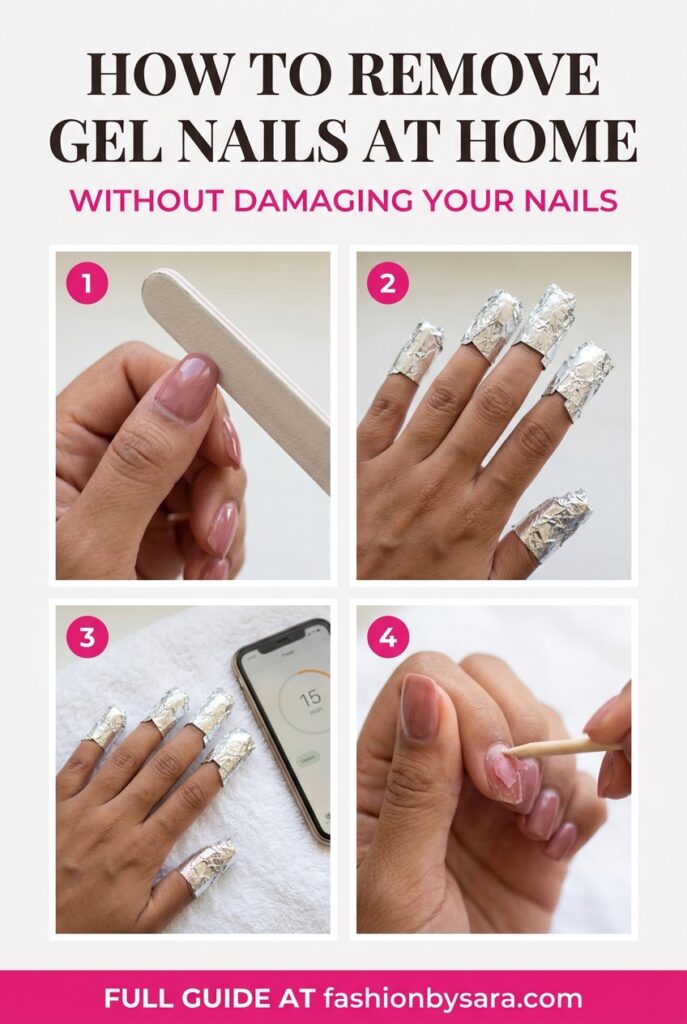
To remove gel nails at home, file off the shiny top coat, wrap each nail in a cotton pad soaked in 100% acetone, cover with foil for 10 to 15 minutes, then gently push the softened gel off and moisturize. The whole process takes about 30 to 45 minutes and costs a few dollars.
The method matters, because most gel damage does not come from the gel. It comes from peeling, picking and scraping it off. This guide shows you how to remove gel nails at home without damaging your natural nails, what to do when the gel will not come off, how to do it without foil or without acetone, and how to help your nails recover afterward.
In this post15 sections
- Gel Removal at a Glance
- First, Check Which Type of Gel You Have
- What You'll Need
- Acetone Safety Before You Start
- How to Remove Gel Nails at Home: Step by Step
- How to Remove Gel Nails Without Foil
- Can You Remove Gel Nails Without Acetone?
- How to Remove Gel Extensions and Builder Gel at Home
- How to Remove Gel Polish From Toenails
- What to Do If the Gel Won't Come Off
- 7 Mistakes That Damage Your Nails
- Nail Care After Gel Removal: A 7-Day Recovery Plan
- When to See a Nail Tech or a Doctor
- Frequently Asked Questions
- Final Thoughts
Gel Removal at a Glance
| Total time | 30 to 45 minutes for both hands |
| Soak time | 10 to 15 minutes for gel polish |
| Difficulty | Easy, beginner friendly |
| Main product | 100% pure acetone |
| Best method | Cotton and foil wraps |
| Golden rule | Never peel, pick or force the gel |
First, Check Which Type of Gel You Have
Not every gel comes off the same way. Gel polish is cured under a UV or LED lamp, and most of it is “soak-off” gel, which means acetone can break it down. Hard gel is different and has to be filed off. Find your type below before you start.
| Type | Soaks off in acetone? | Soak time | Do it at home? |
|---|---|---|---|
| Gel polish (including Shellac) | Yes | 10 to 15 minutes | Yes |
| Soak-off builder gel (BIAB) | Yes, after filing it thinner | 15 to 25 minutes | Yes, with patience |
| Soft gel extensions (full-cover tips) | Yes, after trimming and filing | 20 to 30 minutes | Yes, with patience |
| Hard gel | No | Not applicable | Best left to a nail tech |
| Dip powder | Yes | 15 to 20 minutes | Yes, same wrap method |
If you are not sure what you have, ask your nail tech, or test one nail. If the product has not softened at all after 20 minutes in acetone, it is probably hard gel.
What You’ll Need
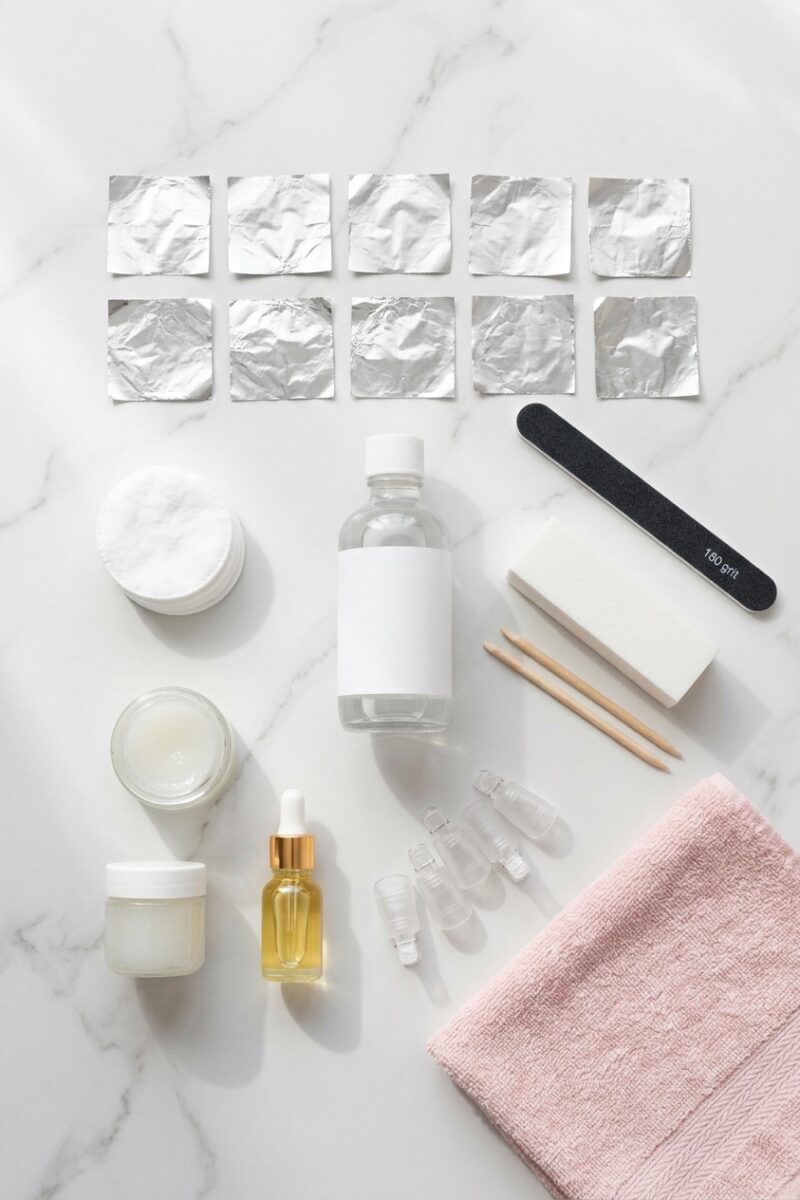
- 100% pure acetone. Regular nail polish remover is too weak for cured gel.
- Cotton pads or cotton balls, cut to the size of each nail.
- Aluminum foil cut into ten squares of about 3 inches, or plastic nail clips.
- A 180 grit nail file to break the top coat.
- An orangewood stick or a plastic cuticle pusher. Wood is gentler than metal.
- Petroleum jelly or thick cuticle oil to protect your skin.
- A soft buffer block for the last traces of base coat.
- Cuticle oil and hand cream for aftercare.
- An old towel to protect your table.
Acetone Safety Before You Start
- Acetone is flammable. Keep it away from candles, cigarettes, stoves and hair tools. Never heat it in a microwave or on a stove.
- Open a window. Work in a room with fresh air.
- Protect your table. Acetone can strip varnish and melt some plastics. Lay down a thick towel first.
- Do one hand at a time if you are new to this, so you always have a free hand.
How to Remove Gel Nails at Home: Step by Step
This is the cotton and foil method. It is the one nail techs use, and it is the most reliable way to take off gel nails at home.
Step 1: File Off the Shiny Top Coat
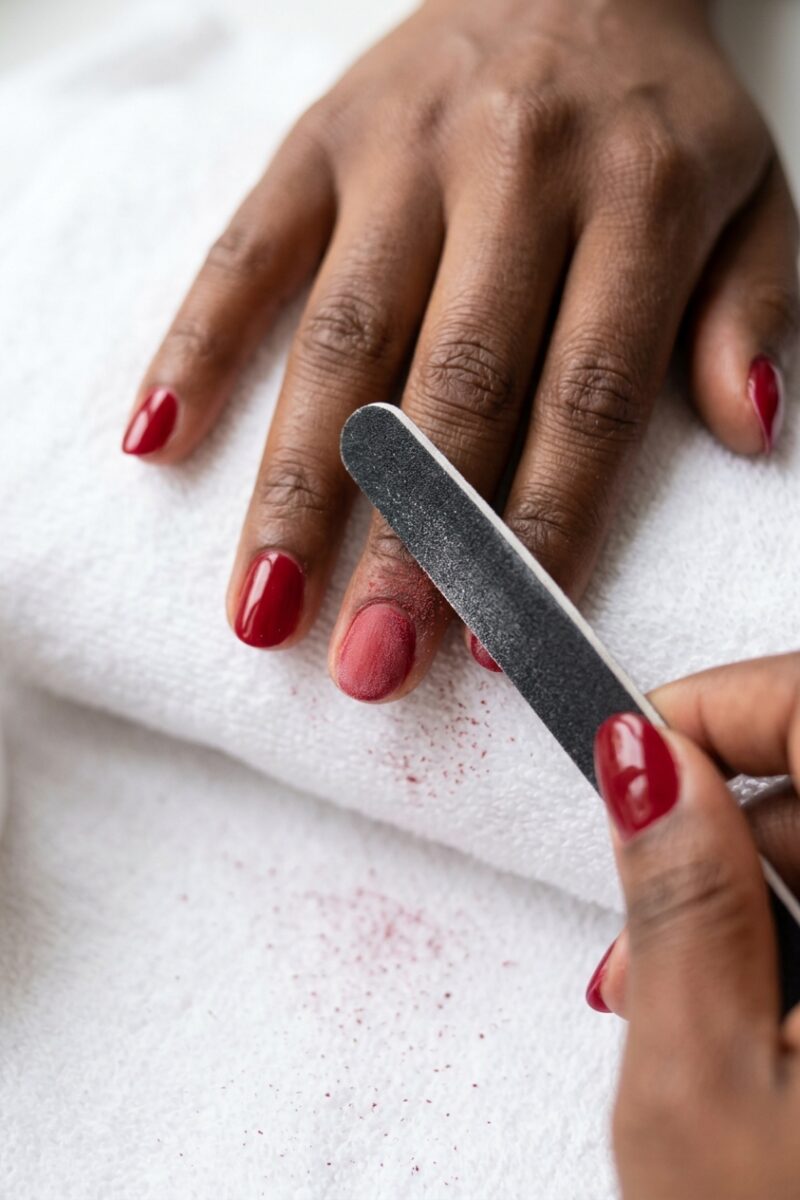
The top coat is a sealed layer that acetone cannot get through. Use the 180 grit file to gently file the surface of each nail until the shine is gone and the color looks matte. You are only removing the top coat, so stop as soon as the gloss disappears. Do not file down to your natural nail.
Tip: This is the step most people skip, and it is the main reason gel “won’t soak off”.
Step 2: Protect the Skin Around Your Nails
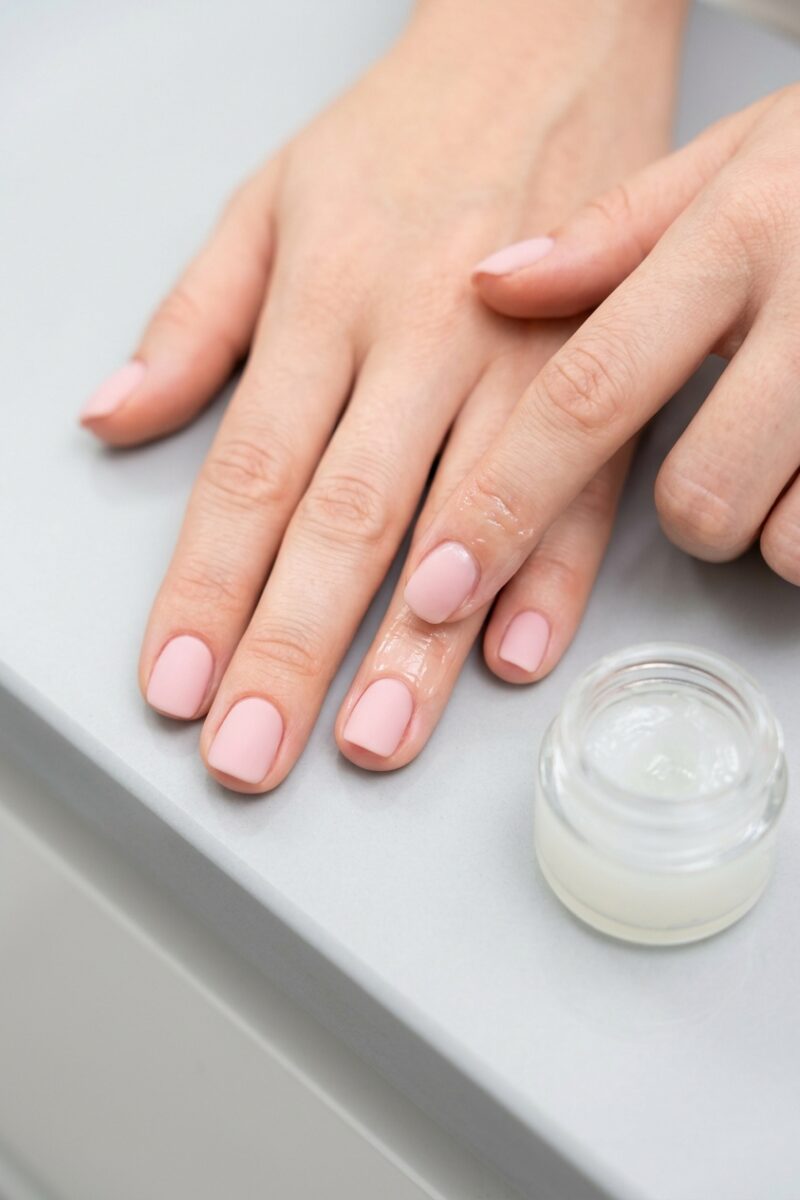
Acetone is very drying. Rub a thin layer of petroleum jelly or thick cuticle oil onto your cuticles and the skin around each nail. Keep it off the nail itself, or it will block the acetone.
Step 3: Soak the Cotton in Acetone
Cut your cotton pads into pieces about the size of each nail. Smaller pieces keep the acetone on the gel and off your skin. Soak each piece in 100% acetone until it is fully wet, and place it flat on the nail.
Step 4: Wrap Each Fingertip in Foil
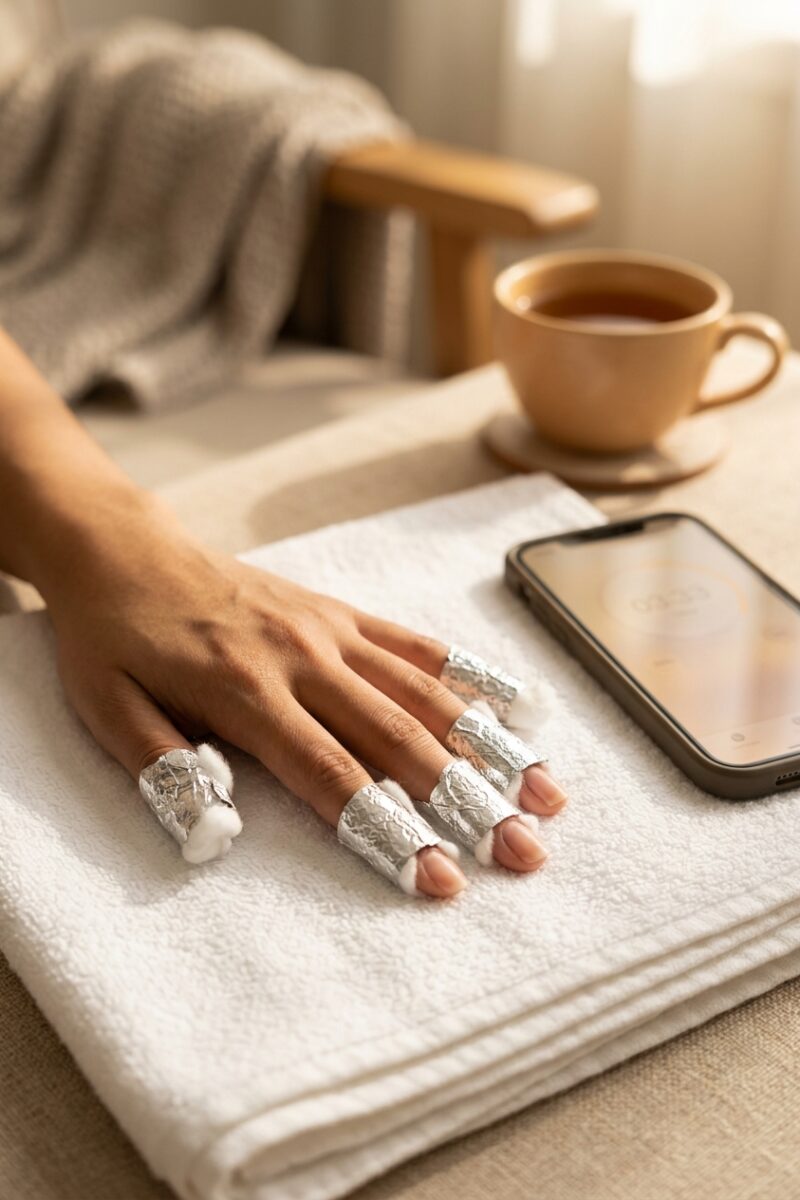
Wrap a foil square tightly around the fingertip to hold the cotton in place. The foil stops the acetone from evaporating and holds in the warmth of your hand, which helps the gel soften faster. Start with the hand you write with, since wrapping gets harder as you go.
Step 5: Wait 10 to 15 Minutes
Set a timer for 10 minutes and leave the wraps alone. For extra speed, rest your hands under a warm towel. After 10 minutes, unwrap one nail to check. The gel is ready when it looks lifted, wrinkled or flaky at the edges. If it still looks smooth, rewrap it and wait 5 more minutes.
Step 6: Gently Push the Gel Off
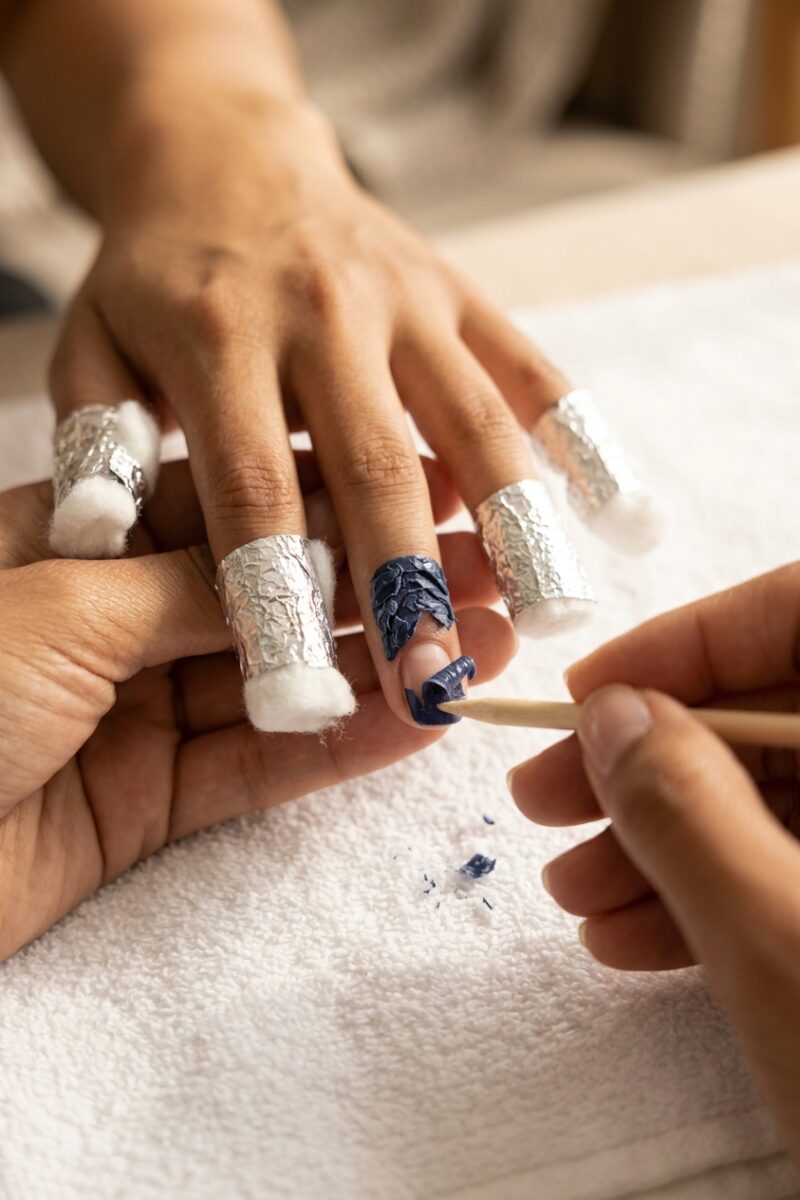
Remove one wrap at a time, so the other nails keep soaking. First wipe the nail with the cotton as you pull the wrap off. Then hold the orangewood stick almost flat and slide the loosened gel from the cuticle toward the tip. It should come away with almost no pressure.
Important: If you have to scrape, the gel is not ready. Rewrap that nail with fresh acetone for 5 more minutes. Forcing it takes off layers of your natural nail and leaves white, rough patches.
Step 7: Buff Away the Last Traces
A thin, sticky film of base coat often stays behind. Wipe it with acetone on a cotton pad, then use the soft buffer block with a few light strokes. Stop when the nail feels smooth. Heavy buffing thins the nail.
Step 8: Wash, Oil and Moisturize
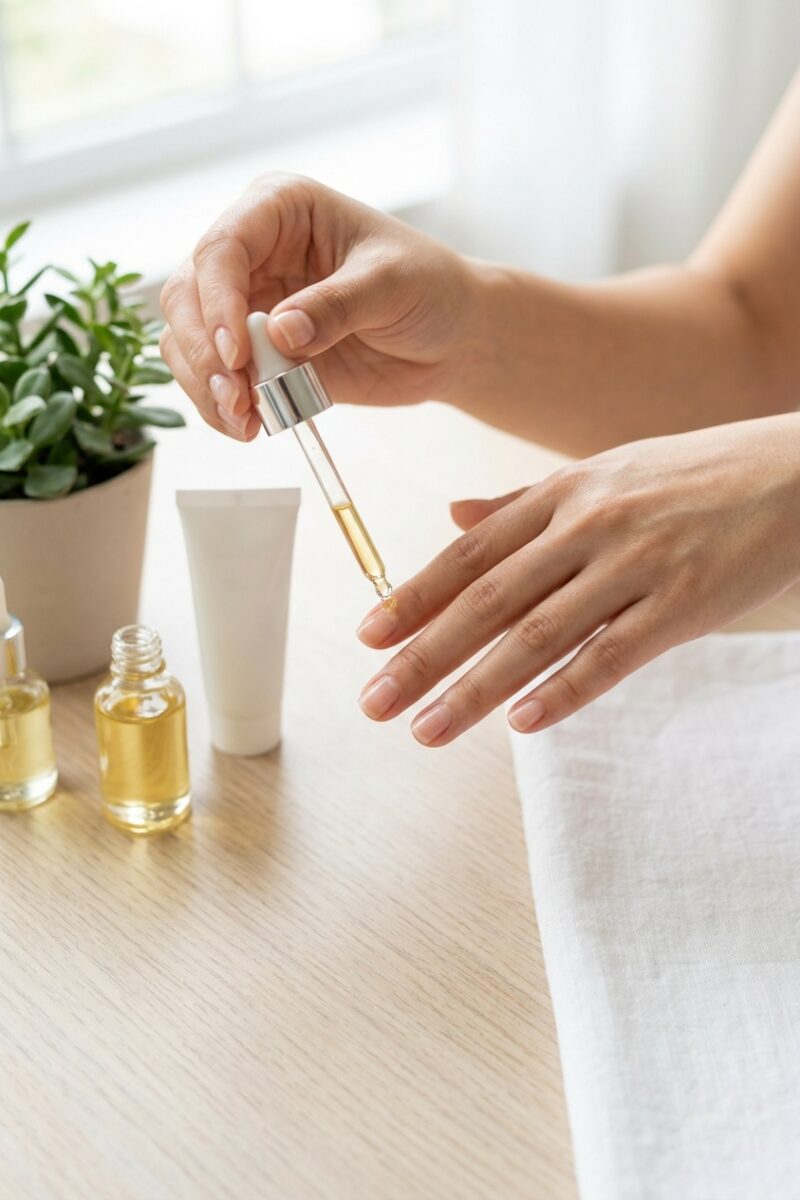
Wash your hands with a mild soap to remove the acetone. Dry them, massage cuticle oil into each nail and the skin around it, and finish with a rich hand cream.
How to Remove Gel Nails Without Foil
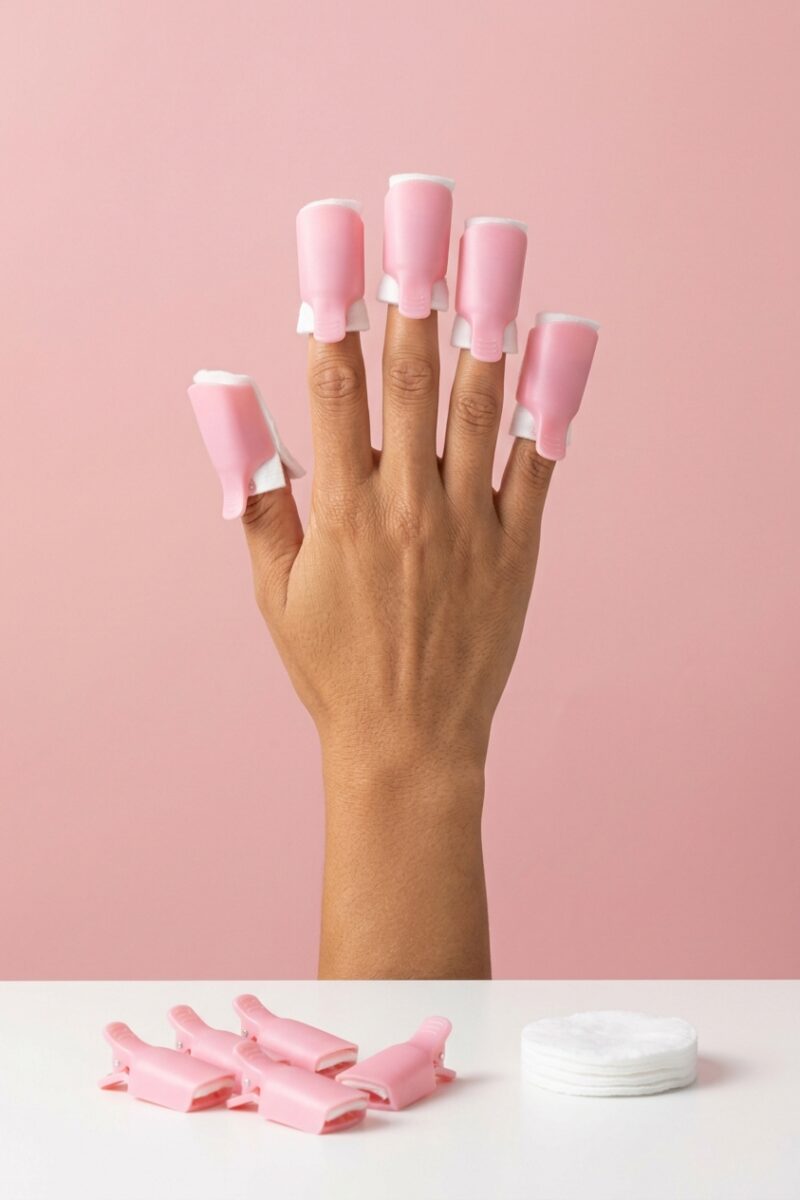
No foil at home? You have three options. In each one, file the top coat and protect your skin first, exactly as in steps 1 and 2.
- Nail clips. Reusable plastic clips hold the soaked cotton on each nail. They are faster than foil and leave your fingers free.
- Plastic food wrap. Wrap a small strip tightly around each fingertip. Dermatologists at the American Academy of Dermatology suggest plastic wrap because it seals tightly and the acetone is less likely to drip.
- A bowl soak. Pour acetone into a small glass bowl and soak only your fingertips for 10 to 15 minutes. It works, but it dries out much more skin, so use plenty of petroleum jelly.
No cotton balls either? A piece of paper towel or a cut-up cotton round does the same job.
Can You Remove Gel Nails Without Acetone?
You can, but it is slower and it only works well on gel that is already lifting at the edges. Fully bonded gel needs acetone. If you want to try, here are the options and what to expect.
- Warm water, soap and oil. Soak your nails for 15 to 20 minutes in warm water with a little dish soap and a spoon of olive oil. Then slide an orangewood stick under any edge that has lifted and work cuticle oil underneath. Stop if you feel resistance.
- Cuticle oil on lifted edges. Drop oil under a loose edge and gently ease the gel up over a few minutes. This suits a manicure that is three or more weeks old.
- Filing it down. File off most of the color with a 180 grit file, leave a very thin layer, and let that layer grow out. Go slowly and stop before you reach the natural nail.
- Non-acetone remover. It can soften gel, but expect a soak of 30 minutes or more and several rounds.
Be honest with yourself here: if the gel is not lifting, a no-acetone method quickly turns into peeling, and peeling causes the damage you are trying to avoid. In that case, 10 minutes of acetone with good skin protection is kinder to your nails.
How to Remove Gel Extensions and Builder Gel at Home
Soft gel extensions and soak-off builder gel are thicker than gel polish, so they need two extra steps.
- Trim the length. Clip extensions down to just past your natural nail tip.
- File the bulk. Use the 180 grit file to thin the product by about half. The thinner it is, the faster it soaks.
- Wrap and soak for 20 to 30 minutes. Use the same cotton and foil method.
- Remove in rounds. Push off the soft outer layer, then rewrap with fresh acetone for 5 to 10 minutes and repeat.
Hard gel does not dissolve in acetone. It has to be filed down, usually with an electric file. In untrained hands, a drill can thin the nail in seconds, so hard gel is the one type worth booking a salon removal for.
How to Remove Gel Polish From Toenails
Use the same steps on your toes. Toenails are thicker and gel pedicures are often worn longer, so plan for a 15-minute soak. Plastic wrap or toe-sized clips stay on better than foil, and sitting with your feet up on a towel keeps the wraps in place.
What to Do If the Gel Won’t Come Off
| Problem | Likely cause | Fix |
|---|---|---|
| Gel looks the same after 15 minutes | Top coat was not filed enough | File until fully matte, then rewrap |
| Only the edges lift | Cotton dried out or the wrap was loose | Use fresh acetone and wrap tighter |
| Gel goes hard again | You unwrapped all the nails at once | Unwrap one nail at a time |
| Thick patches stay behind | Builder gel or extra layers | File the patch thinner and soak 10 more minutes |
| Nothing softens after 25 minutes | Hard gel, or weak remover | Check the bottle says 100% acetone, or see a nail tech |
7 Mistakes That Damage Your Nails
- Peeling or picking the gel. It pulls off the top layers of your nail with it.
- Skipping the top coat filing. The acetone cannot get in.
- Scraping with a metal tool. Metal dents and scratches a nail that acetone has softened.
- Using regular polish remover. It is too weak, so you soak longer and scrape more.
- Rushing the soak. Five extra minutes of soaking is always better than force.
- Over-buffing afterward. A few light strokes are enough.
- Skipping the oil. Acetone strips moisture from the nail and skin, and oil puts it back.
Nail Care After Gel Removal: A 7-Day Recovery Plan
Nails often feel thin, dry or bendy right after removal. Most of that is dehydration from the acetone, and it improves quickly with care.
- Day 1: Trim your nails short and file the edges smooth, so they do not catch. Apply cuticle oil and hand cream before bed.
- Days 2 to 4: Oil your cuticles twice a day. Wear gloves for dishes and cleaning.
- Days 5 to 7: Add a nail strengthener or a clear nourishing base coat if your nails peel.
- After a week: If your nails feel strong, you are ready for your next manicure. If they are still peeling, give them one more week.
White, chalky patches on the surface are common after gel. They are dry, roughened spots on the top of the nail, and they fade with oil and grow out over a few weeks.
When to See a Nail Tech or a Doctor
- The product will not soften in acetone at all (likely hard gel).
- Removal hurts, or the nail is lifting away from the skin underneath.
- You see green, yellow or dark discoloration under the gel.
- The skin around your nails is red, swollen, itchy or blistered. This can be a sign of an allergy to gel products, and a doctor or dermatologist should look at it.
Frequently Asked Questions
What is the easiest way to remove gel nails at home?
The cotton and foil method. File off the top coat, hold acetone-soaked cotton on each nail with foil for 10 to 15 minutes, and gently push the softened gel off with an orangewood stick.
How long does it take to remove gel nails at home?
About 30 to 45 minutes for both hands, including 10 to 15 minutes of soaking. Builder gel and gel extensions take longer, usually 45 to 60 minutes.
How do I remove gel nails without damaging my natural nails?
Never peel or force the gel. File only the top coat, soak long enough for the gel to lift by itself, use a wooden stick instead of metal, and apply cuticle oil afterward.
Can I use regular nail polish remover to take off gel polish?
Not effectively. Regular and non-acetone removers are too weak for cured gel. Look for a bottle labeled 100% acetone.
Does hot water remove gel nails?
Warm water alone does not dissolve gel. A warm, soapy soak can help loosen gel that is already lifting, and warmth helps acetone work faster, but water is not a full removal method.
Can I remove gel nails with a drill at home?
An electric file removes gel fast, but it also removes natural nail fast. Unless you have been trained to use one, the soak-off method is the safer choice at home.
Is it bad to peel off gel nail polish?
Yes. Gel bonds tightly to the nail, so peeling it takes thin layers of the nail with it. That leaves nails thin, rough and more likely to split.
Does acetone damage your nails?
Acetone dries out nails and skin, but the effect is temporary. Protect your skin before soaking, keep the soak as short as you can, and use oil and hand cream afterward.
How soon can I get a new gel manicure after removal?
If your nails feel strong and smooth, you can reapply right away. If they are peeling, thin or sore, take a break of one to two weeks and keep them oiled.
Final Thoughts
Removing gel nails at home is simple when you let the acetone do the work. File the top coat, wrap, wait, and never force gel that is not ready. Ten more minutes of soaking costs you nothing, and it saves weeks of growing out damaged nails.
Once your nails are clean and healthy, try one of these simple nail designs you can do at home or these short nail ideas that look expensive. Save this guide so you have it ready for your next gel removal.






Leave a Reply