

By 60, you have done a lifetime of showing up for other people. You raised families, built careers, cared for parents, hosted the holidays and answered every call. You have earned a quieter mind. Yet peace rarely arrives by itself. A handful of old habits keep it at arm’s length.
Below are 15 things to stop doing after 60 if you want to keep your peace of mind. Each one explains why it drains you, what to do instead and a few words to keep for the moments when the old habit pulls at you. You do not need to change all fifteen. Read the list, notice the two or three that sound like you, and start there.
In this post20 sections
- The Quick List
- 1. Stop Saying Yes Out of Guilt
- 2. Stop Giving Advice No One Asked For
- 3. Stop Rescuing Everyone From Their Own Problems
- 4. Stop Keeping One-Sided Friendships for Old Times' Sake
- 5. Stop Waiting for Others to Reach Out
- 6. Stop Comparing Your Life (and Your Body) to Everyone Else's
- 7. Stop Replaying Mistakes You Cannot Undo
- 8. Stop Holding On to Old Grudges
- 9. Stop Letting the News Run Your Day
- 10. Stop Measuring Your Worth by How Busy You Are
- 11. Stop Saving Joy for "Someday"
- 12. Stop Ignoring What Your Body Is Telling You
- 13. Stop Living With "Just in Case" Clutter
- 14. Stop Dressing to Disappear
- 15. Stop Borrowing Tomorrow's Worries
- Where to Start: Your 7-Day Peace Reset
- When to Ask for Extra Support
- Frequently Asked Questions
- Final Thoughts
The Quick List
| Stop | Start instead |
|---|---|
| 1. Saying yes out of guilt | Pausing before you answer |
| 2. Giving advice no one asked for | Listening with curiosity |
| 3. Rescuing everyone from their problems | Supporting without taking over |
| 4. Keeping one-sided friendships | Investing in people who give back |
| 5. Waiting for others to reach out | Sending the first small message |
| 6. Comparing your life and body to others | Measuring against your own baseline |
| 7. Replaying mistakes you cannot undo | Keeping the lesson, closing the case |
| 8. Holding on to old grudges | Putting the weight down for your sake |
| 9. Letting the news run your day | One short check-in a day |
| 10. Measuring your worth by how busy you are | Scheduling rest on purpose |
| 11. Saving joy for “someday” | Using the good things now |
| 12. Ignoring what your body tells you | Booking the checkups you owe yourself |
| 13. Living with “just in case” clutter | Clearing one small space at a time |
| 14. Dressing to disappear | Wearing what makes you feel like you |
| 15. Borrowing tomorrow’s worries | Acting on what you can, releasing the rest |
1. Stop Saying Yes Out of Guilt

For decades you may have been the one who hosts, drives, babysits and fills in. The habit of saying yes outlives the reasons for it, and the word comes out before you have checked whether you have anything left to give.
Why it steals your peace: Every yes you do not mean takes time and energy from something you care about, and it often leaves resentment behind. People are also quick to learn who never says no.
Try this instead:
- Make “Let me check my calendar and get back to you” your automatic first answer.
- Ask yourself one question: “Would I say yes if this were happening tomorrow?”
- When the answer is no, keep it short. A long explanation invites negotiation.
Words to keep: “I’m not able to take that on right now, but thank you for thinking of me.”
2. Stop Giving Advice No One Asked For

You can see the mistake coming: the job, the partner, the money, the way the grandchildren are being raised. Staying quiet feels almost impossible.
Why it steals your peace: To a grown child, advice they did not ask for can sound like “I don’t trust you to handle your own life.” It creates distance, and you end up worrying about choices that are not yours to make.
Try this instead:
- Ask, “Do you want my thoughts, or would you rather I just listen?” Then respect the answer.
- Swap advice for questions: “What are you leaning toward?”
- If you must share, say it once, kindly, and let it go.
Words to keep: “You know your life best. I’m here if you want to talk it through.”
3. Stop Rescuing Everyone From Their Own Problems

A sister’s money trouble. A friend’s marriage. An adult child who calls every time something goes wrong. You step in, fix it, and wait for the next call.
Why it steals your peace: When you take over other adults’ problems, they stop solving them and you carry the stress. It is also a quiet way of saying they cannot cope without you.
Try this instead:
- Offer steady support, such as listening, a meal or a ride, without taking charge.
- Ask, “What do you think your next step is?” before offering yours.
- Decide money limits before the conversation, not during it. For larger gifts or loans, speak with a financial adviser first.
Words to keep: “I can’t fix this for you, but I believe you can handle it, and I’m on your side.”
4. Stop Keeping One-Sided Friendships for Old Times’ Sake

You know the friend. You always call first, plan the lunch and listen for an hour, and you leave more tired than you arrived. You keep going because you have known each other for thirty years.
Why it steals your peace: Your time and energy are more precious now. How you feel around someone matters more than how long you have known them.
A quick friendship check:
| A friendship that lifts you | A friendship that drains you |
|---|---|
| Both of you call and plan | You always make the first move |
| The conversation goes both ways | You mostly listen to complaints |
| You feel lighter afterward | You feel tired or small afterward |
| They are glad for your good news | Your good news gets brushed aside |
Try this instead: You do not need a dramatic ending. See draining people less often and for shorter visits, and give that time to the friends in the left-hand column.
Words to keep: “I can love someone from history and still choose who shares my present.”
5. Stop Waiting for Others to Reach Out

Nobody has called in weeks, and a small voice says, “If they cared, they’d reach out.” So you wait, and the silence grows.
Why it steals your peace: Most silence is about busy lives, not lost love. Waiting turns a gap into a story about being forgotten, and loneliness after 60 is too important to leave to chance.
Try this instead:
- Send one small message a day: a photo, a memory or “Thinking of you.”
- Put a standing date on the calendar, such as coffee on the first Tuesday of the month.
- Join one thing that meets every week: a walking group, a choir, a class or a faith group.
Words to keep: “Someone has to send the first message. It may as well be me.”
6. Stop Comparing Your Life (and Your Body) to Everyone Else’s

The friend with the bigger pension. The neighbor whose grandchildren live next door. The woman in your class who can still touch her toes. Social media makes it look as if everyone else got it right.
Why it steals your peace: You are comparing your whole life, including the hard parts, with someone else’s best moments. Bodies at 60 also vary widely, and pushing to keep up with someone else’s pace is how injuries happen.
Try this instead:
- Measure yourself against your own baseline: “Can I walk a little further than last month?”
- Mute or unfollow accounts that leave you feeling smaller.
- Each night, write down three things that went well.
Words to keep: “My only competition is the woman I was yesterday.”
7. Stop Replaying Mistakes You Cannot Undo

The marriage you stayed in too long. The job you did not take. The words you wish you could unsay. At 3 a.m., the mind loves a rerun.
Why it steals your peace: You cannot change a minute of the past, but replaying it spends today. You end up judging the woman you were with knowledge she did not have.
Try this instead:
- Write the regret down, then add one line: “What it taught me.”
- If something can still be repaired, such as an apology, do it this week.
- If it cannot, close the notebook, literally, and bring your attention back to something you can see or touch.
Words to keep: “I did the best I could with what I knew then. I know more now.”
8. Stop Holding On to Old Grudges

A sister who said something unforgivable. A friend who disappeared when you needed her. Some hurts are real and some are decades old, and many of us still carry them.
Why it steals your peace: A grudge keeps the hurt fresh for you, while the other person may barely remember it.
Try this instead:
- Remember that forgiving is not saying it was fine, and it does not mean letting someone back in.
- Write a letter saying everything you feel. Then decide whether to send it, keep it or tear it up.
- Each time the memory returns, say your words to keep and move on to the next thing in your day.
Words to keep: “I’m putting this down, not because they deserve it, but because I do.”
9. Stop Letting the News Run Your Day

It starts with breakfast television, continues on your phone and ends with the late bulletin. Most of it is the same few stories, repeated to keep you watching.
Why it steals your peace: A constant stream of bad news keeps your body on alert over events you cannot change, and it crowds out the good things happening in your own home.
Try this instead:
- Choose one trusted source and one time of day, for about 20 minutes.
- Read the news instead of watching it. Print and text are calmer than video.
- Turn off news alerts, and keep the hour before bed headline-free.
Words to keep: “I can be informed without being consumed.”
10. Stop Measuring Your Worth by How Busy You Are

Retirement can feel strange when your whole life was measured in tasks finished. A quiet afternoon brings guilt, so you fill every day with errands and projects.
Why it steals your peace: If your value depends on being busy, you can never rest. Rest is not laziness. It is how your body and mind recover.
Try this instead:
- Put rest on your calendar, like any other appointment.
- Keep one afternoon a week with nothing planned at all.
- When guilt shows up, ask, “Who taught me that resting was wrong?”
Words to keep: “I am worth something on the days I do nothing at all.”
11. Stop Saving Joy for “Someday”
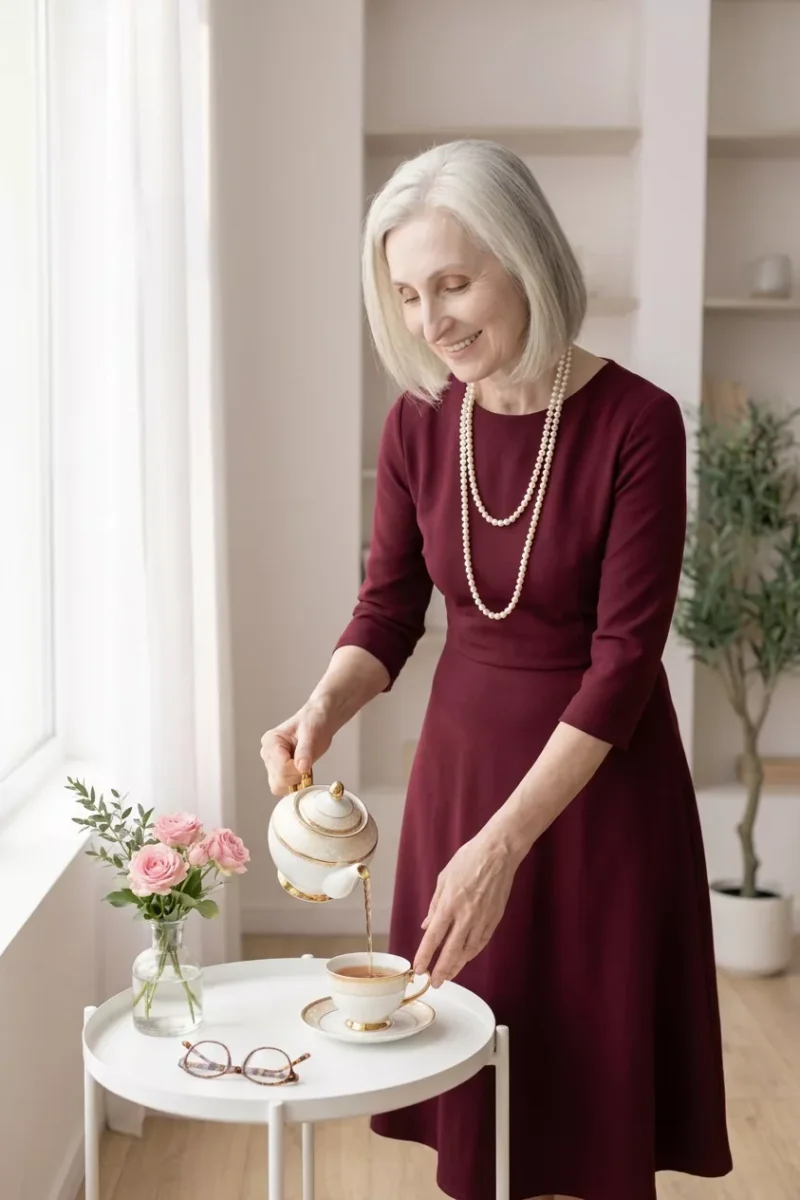
The good perfume. The dress with the tags still on. The china, the candles and the trip, all waiting for a moment that is special enough or a time when everything is perfect.
Why it steals your peace: “Someday” quietly tells you that today does not count. Perfect conditions rarely arrive, and joy postponed often becomes joy missed.
Try this instead:
- Drink your morning coffee from the best cup.
- Wear the nice outfit to the grocery store.
- Build one small pleasure into every ordinary day, such as flowers, music or a walk somewhere pretty.
Words to keep: “Today is the occasion.”
12. Stop Ignoring What Your Body Is Telling You

You remind everyone else to see the doctor, while your own checkup, eye test or hearing test has been “next month” for two years. The new ache gets explained away.
Why it steals your peace: An unchecked worry takes up more room in your mind than an answer does, and most things are easier to deal with when they are found early.
Try this instead:
- Book the appointment you have put off the longest, today.
- Ask your doctor which screenings are right for your age and history.
- Protect the basics: sleep, daily movement you enjoy and time outdoors.
Words to keep: “Taking care of me is taking care of the people who love me.”
13. Stop Living With “Just in Case” Clutter

The spare room full of boxes. Clothes from three sizes ago. Paperwork from a house you sold in 1998. All of it kept because you might need it one day.
Why it steals your peace: Clutter is a to-do list you have to look at every day. It makes cleaning harder, hides the things you love and leaves a big job for your family later.
Try this instead:
- Clear one drawer or one shelf for 15 minutes at a time.
- Keep what you use and what you love. Photograph sentimental items before letting them go.
- Offer family pieces to your children now, while you can tell them the story.
Words to keep: “Every empty shelf is room to breathe.”
14. Stop Dressing to Disappear

Is this too young for me? Too bright? Too much? Many women reach 60 and slowly retreat into beige, baggy and “appropriate”, hoping not to be noticed.
Why it steals your peace: Shrinking to fit other people’s opinions is tiring, and most people are too busy thinking about themselves to be judging you. How you dress also changes how you feel.
Try this instead:
- Ask one question about any outfit: “Does this make me feel like me?”
- Add one color you love near your face, in a scarf, a sweater or a lipstick.
- Need ideas? Start with these fall outfits for women over 50.
Words to keep: “I’m not too old for anything that makes me happy.”
15. Stop Borrowing Tomorrow’s Worries

What if I get sick? What if the money runs out? What if something happens and nobody knows where anything is? Worry about the future can fill a whole afternoon.
Why it steals your peace: Worry feels like preparation, but it rarely changes anything. It just lets tomorrow’s problems ruin today.
Try this instead:
- Sort each worry into “I can act on this” and “I can’t control this.”
- Act once on the first list. Put your will, powers of attorney, account list and passwords in one folder, and tell a trusted person where it is. An estate attorney can check that your papers are valid where you live.
- For the second list, give yourself a 15-minute “worry window” each day, then close it.
Words to keep: “Today has enough to hold. Tomorrow can wait for tomorrow.”
Where to Start: Your 7-Day Peace Reset
Changing fifteen habits at once is a recipe for stress. Instead, try one small step a day for a week.
| Day | One small step |
|---|---|
| Monday | Say “Let me check and get back to you” to the next request. |
| Tuesday | Turn off news alerts and choose one daily check-in time. |
| Wednesday | Text one friend who always leaves you feeling lighter. |
| Thursday | Clear one drawer and take the donation bag out of the house. |
| Friday | Book the health appointment you have been putting off. |
| Saturday | Use something you have been saving: the good cup, the nice dress or the perfume. |
| Sunday | Write down one regret, one lesson and one thing you are grateful for. Then close the notebook. |
When to Ask for Extra Support
Everyone has anxious and low days. But if worry, sadness or poor sleep are with you most days for two weeks or more, or you have lost interest in things you used to enjoy, please talk to your doctor or a counselor. Asking for help is a strong, sensible step. This article is general information and is not medical, legal or financial advice.
Frequently Asked Questions
What should you stop doing after 60?
Stop saying yes out of guilt, giving unasked-for advice, rescuing other adults, keeping one-sided friendships, waiting for others to reach out, comparing yourself to others, replaying old mistakes and grudges, letting the news run your day, measuring your worth by busyness, saving joy for someday, ignoring your health, keeping clutter, dressing to disappear and borrowing tomorrow’s worries.
How do I say no to family without starting an argument?
Keep it short, warm and firm: “I’m not able to take that on right now.” Skip long explanations, which invite debate, and offer an alternative only if you truly want to.
What if my adult children get upset when I stop giving advice?
Tell them why: “I trust you to make your own decisions, and I’m always happy to share my view if you ask.” Most grown children come to value being treated as capable adults.
How do I avoid loneliness if I step back from draining friendships?
Put the time you free up into one regular group, such as a class, a walking club, a choir or volunteering, and into the two or three friends who give as much as they take. Seeing the same faces every week is how new friendships grow.
How do I stop feeling guilty when I rest?
Plan rest the way you plan appointments, and remind yourself that rest is how your body and mind recover. It gets easier with practice.
Is 60 too late to change my habits?
Not at all. Habits can change at any age. Choose one change, make it small enough to do every day and give it a few weeks.
Which habit should I stop first?
Start with the one that drains you most often. For many women, that is saying yes out of guilt or watching too much news, and both are quick to change.
Final Thoughts
Peace of mind after 60 is less about adding things and more about putting things down. You do not have to carry every request, every opinion, every old hurt and every headline. Choose one item from this list, take the first step this week and notice how much lighter the day feels.
For a gentle start to each morning, visit my daily blessings. And when you are ready to stop saving your good things, these fall outfits for women over 50 are a lovely place to begin. Save this pin and come back to it whenever you need a reminder.






Leave a Reply