
This post may contain affiliate links. If you buy through them, we may earn a small commission at no extra cost to you. Read our disclosure.
If warm colors tend to look at home next to your skin, start with ivory, camel, olive and chocolate. Those four give you a neutral base. Then try a shade such as terracotta, rust, peach or green-leaning teal near your face. The best choice depends on how light, deep, bright or muted you like your colors.
You can use this guide with clothes you own. Each shade comes with a complete outfit, a simple comparison you can make in daylight and five optional shopping links. If you only try two colors, hold ivory and crisp white under your chin and see which you prefer with the same makeup, hair and lighting.
Affiliate disclosure. As an Amazon Associate I earn from qualifying purchases. These AI-generated images show styling combinations. Paid links open individual listings or Amazon search results for similar pieces. Check the selected shade and size before ordering.
In this post7 sections
Which warm color should you try first?
| If you want | Try | Compare with |
|---|---|---|
| You want a light neutral | Ivory or warm oatmeal | Optic white or gray-beige |
| You want a dark neutral | Chocolate or inky navy | Jet black or a brighter blue |
| You prefer muted colors | Olive, moss or terracotta | Clear green or bright orange |
| You want a brighter accent | Paprika, warm coral or honey gold | Blue-red, cool pink or lemon yellow |
If cooler shades consistently appeal to you in the same light, compare this list with our guide to colors for cool undertones over 50. You can wear favorites from either guide.
Warm neutrals to build outfits around
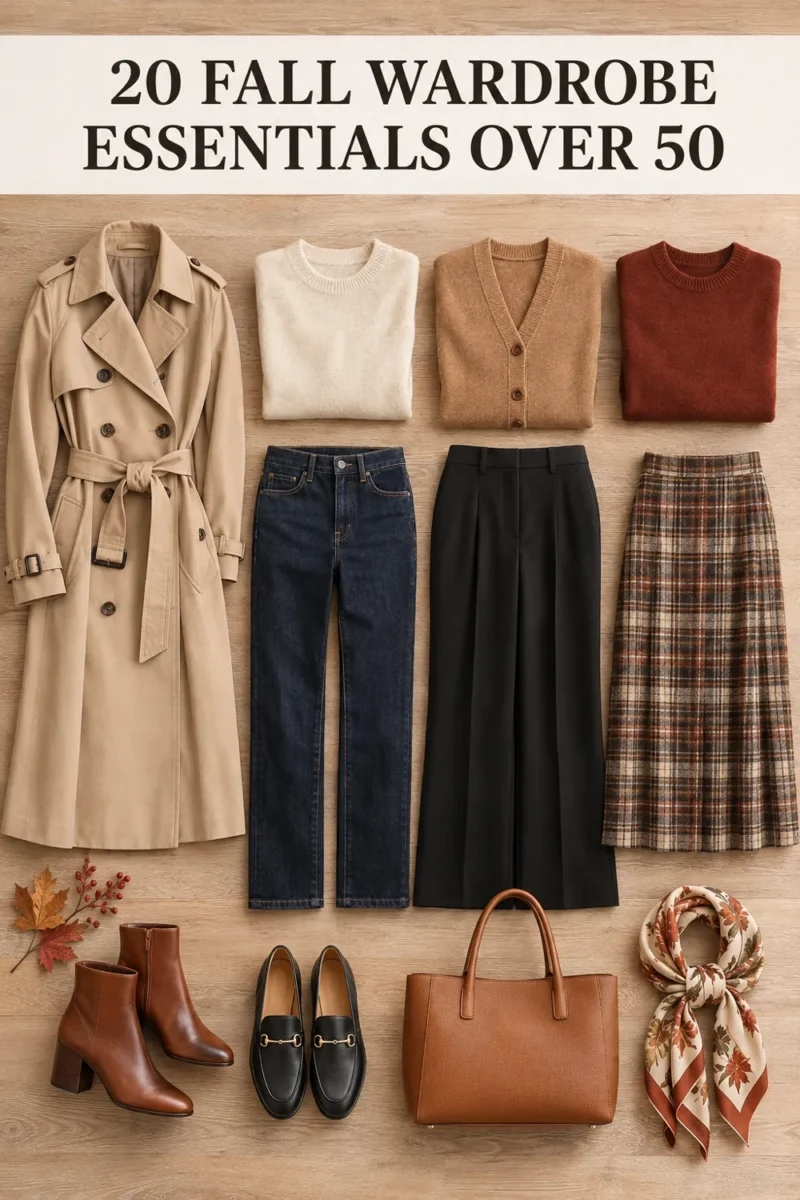
Start here if you want pieces that work with denim, brown shoes or a dark coat. Ivory and oatmeal are useful near the face, while camel and chocolate give the outfit depth.
1. Ivory
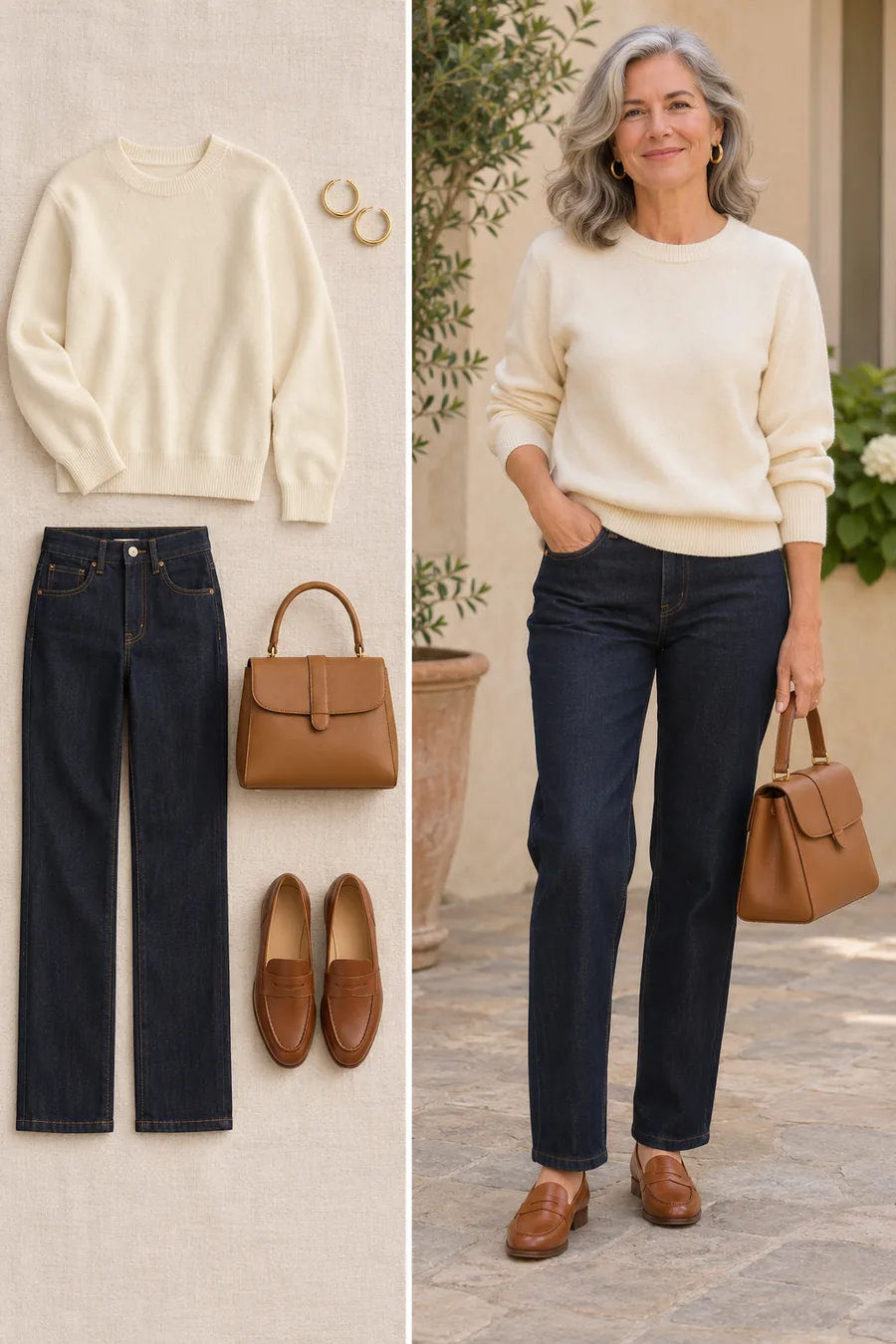
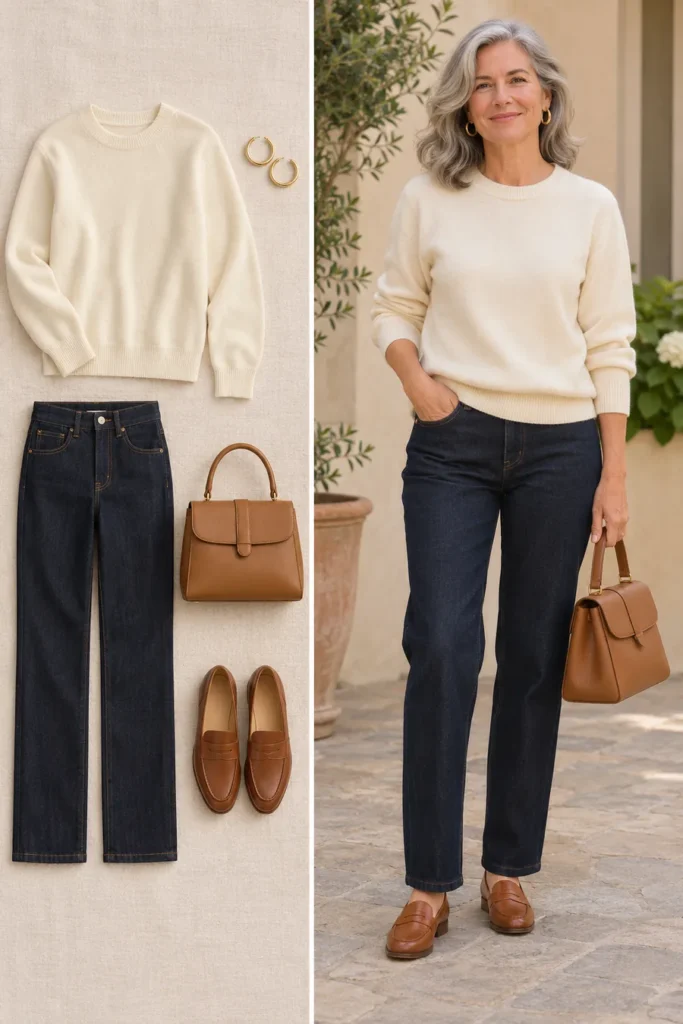
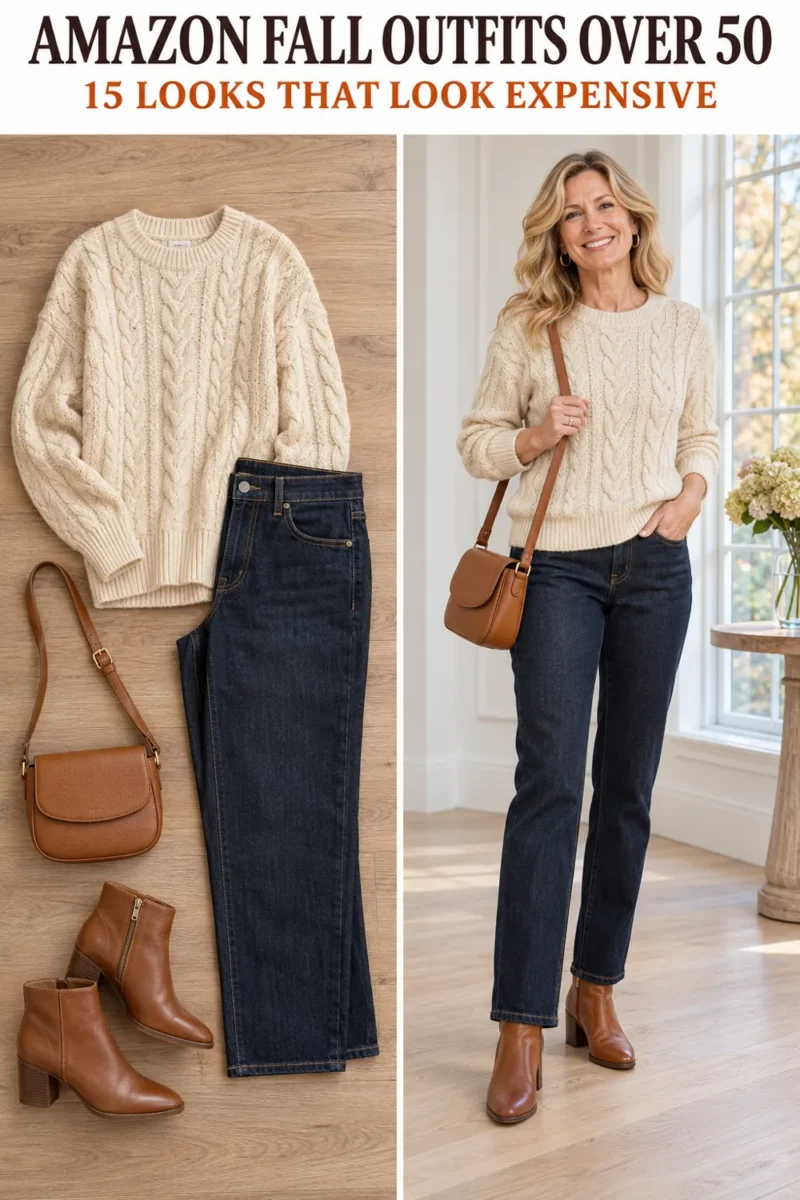
Start with ivory when crisp white feels too stark. Look for a creamy white with a slight yellow cast rather than a gray or blue cast. In a cotton crewneck, that subtle difference sits right next to your face. Pair it with dark straight jeans and repeat the warmer tone in cognac loafers or a tan bag.
Hold an ivory tee and an optic white tee under your chin in the same light. If both work, keep the white you own and use ivory where you want a softer look. When shopping online, compare the product photo against a white background and check the color name again at checkout.
2. Camel
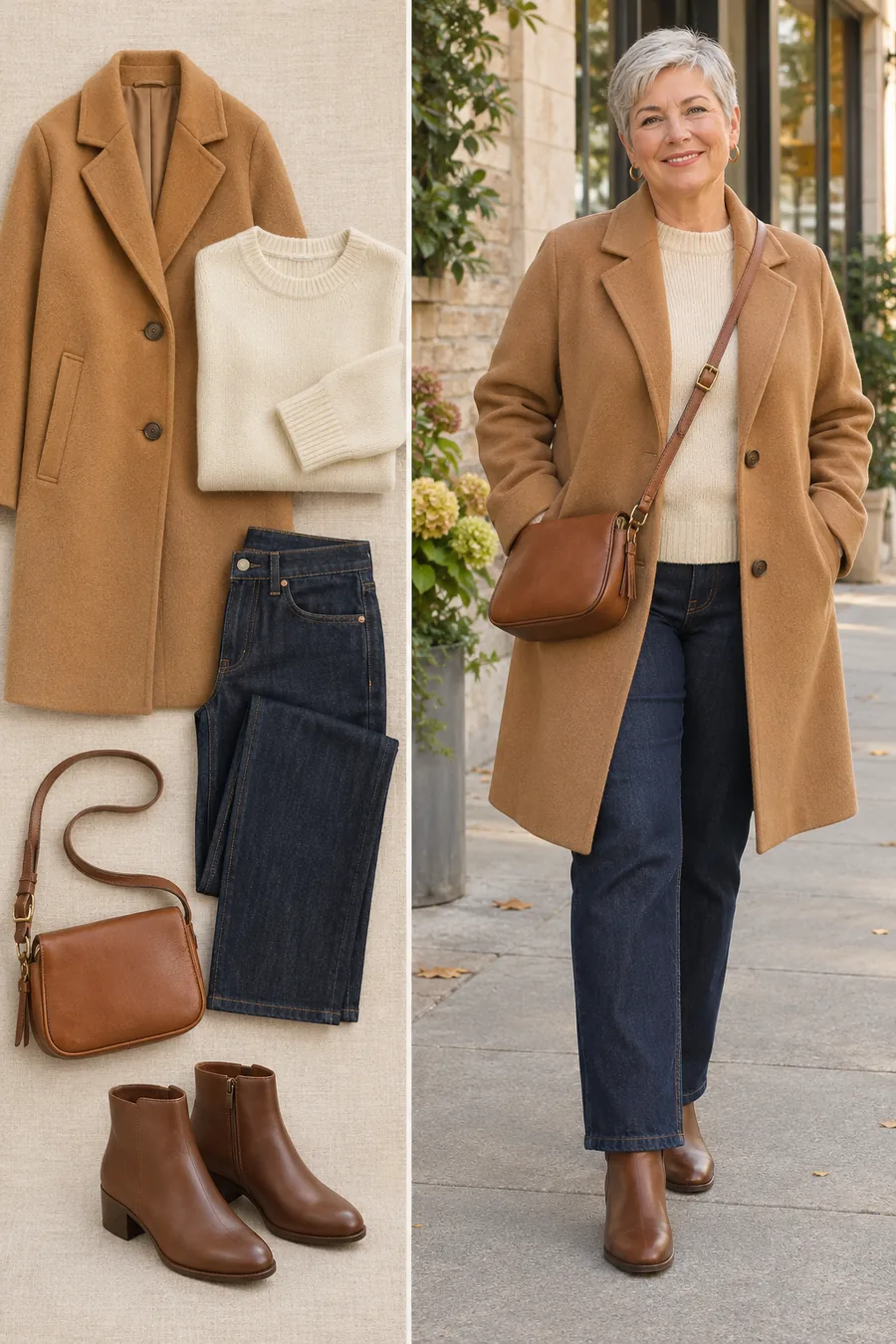
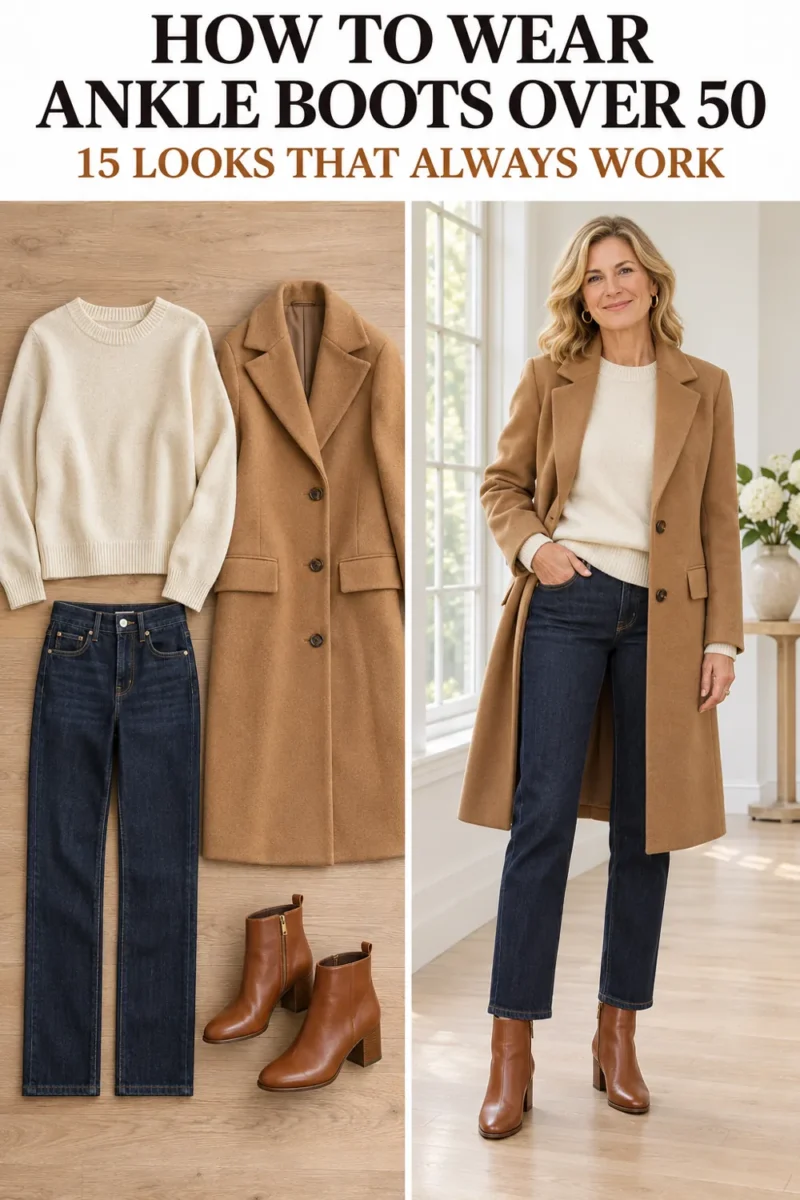
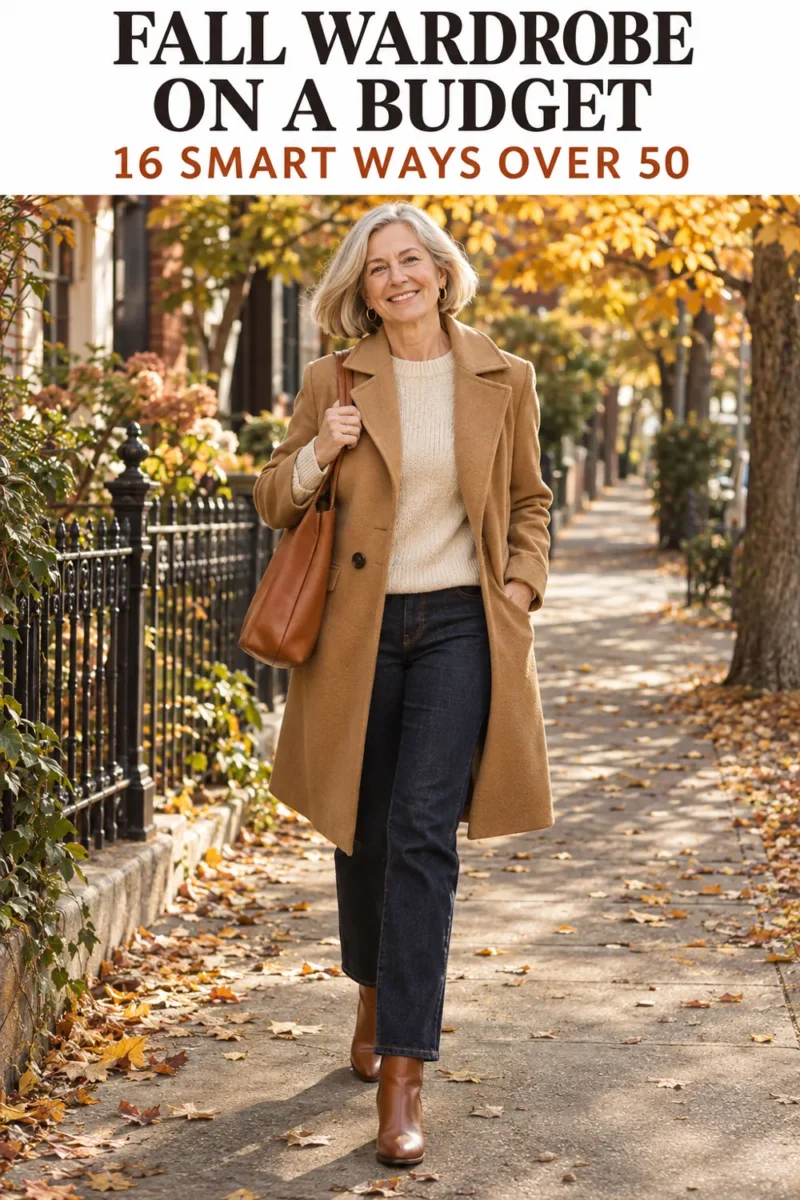
Camel is a useful coat color because it works with ivory, dark denim and brown footwear. A medium golden camel has a little more warmth than a gray beige. Wear the coat over a cream knit for contrast, and use brown ankle boots if you want the outfit to feel less dressy than it would with tall boots.
Camel comes in different depths. If pale camel feels too close to your complexion, try a richer tan, or keep the coat open so the ivory top breaks up the color. Test the coat over the thickest sweater you plan to wear. A pretty color won’t make up for sleeves that bind at the elbows.
3. Oatmeal
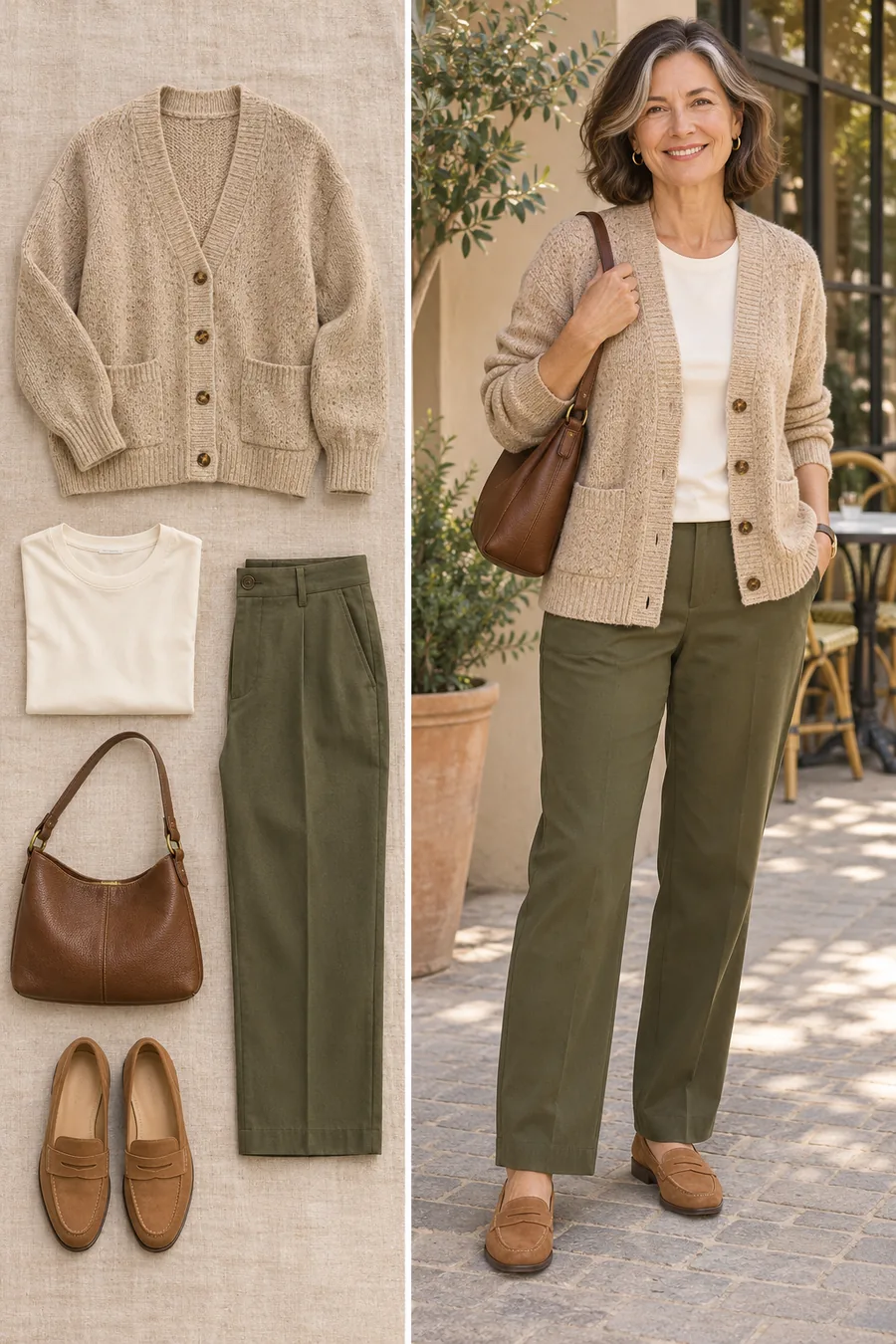
Oatmeal is a soft neutral with visible flecks. Some versions are golden and some look closer to gray. Choose a warm beige blend if you want it to sit easily beside an ivory tee. An oatmeal cardigan, olive trousers and tan loafers are enough for a weekend lunch or an afternoon out.
If the whole outfit feels muted, switch the tee to a clearer cream or use a bag in deeper brown. Check the knit in daylight before deciding on the shade. A textured cardigan can look noticeably lighter in an online studio photo than it does in your own hallway.
4. Chocolate brown
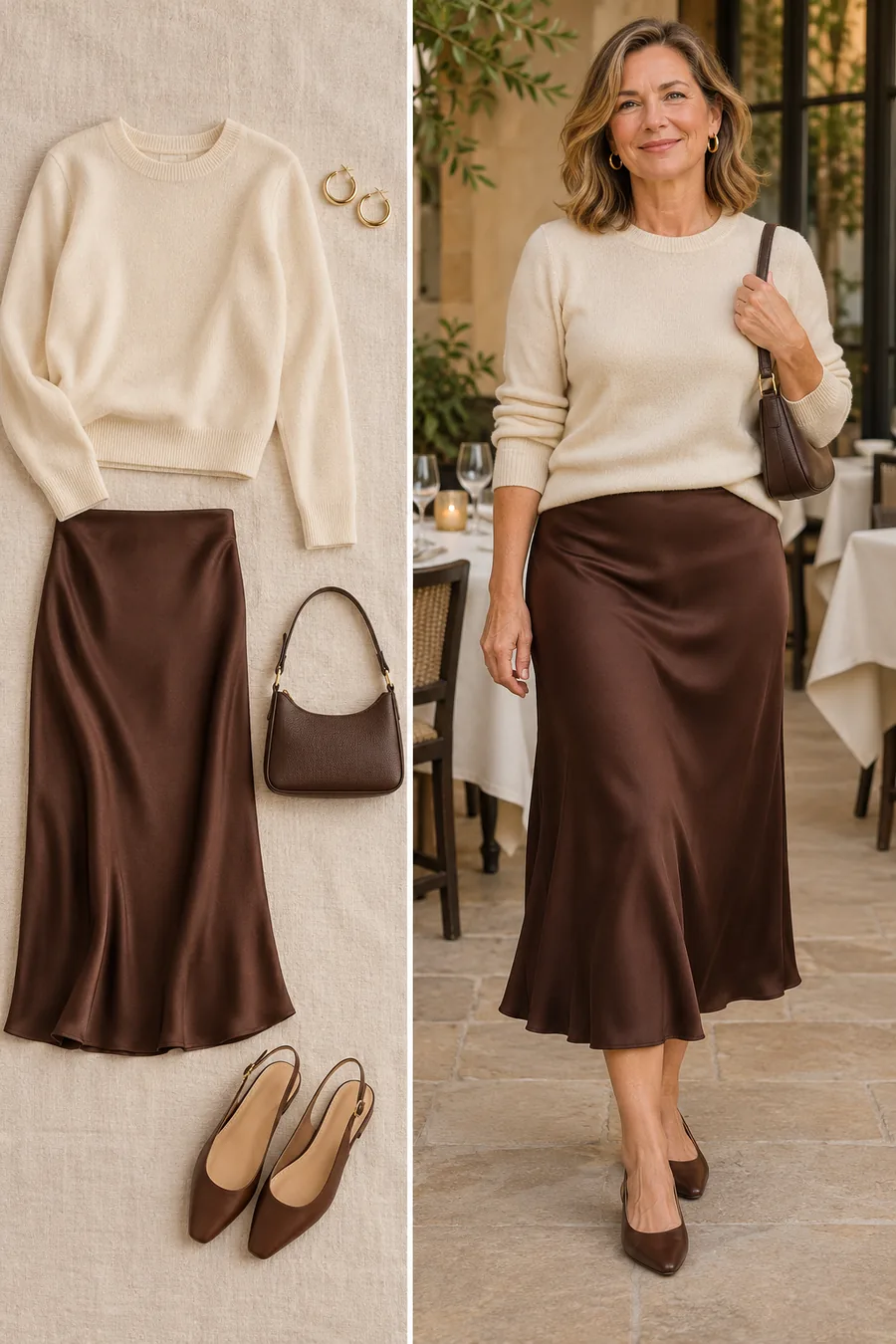
Chocolate brown gives you the depth of a dark neutral with a warmer cast. A satin midi skirt brings the color into an evening outfit, while a cream fine-knit top gives the look contrast near your face. Brown slingbacks keep the bottom half quiet, and small gold hoops tie in the warmth.
If you already own black shoes, wear them and repeat black in a small bag. Check the satin in bright light for cling and try sitting in the skirt before dinner. To see whether chocolate works as a top, compare a brown sweater with your usual black one while wearing the same makeup or no makeup.
Earthy greens, warm teal and clay tones
These shades give you color without needing to coordinate a whole new wardrobe. Pair each one with an existing neutral to see how much warmth and contrast you like.
5. Olive green
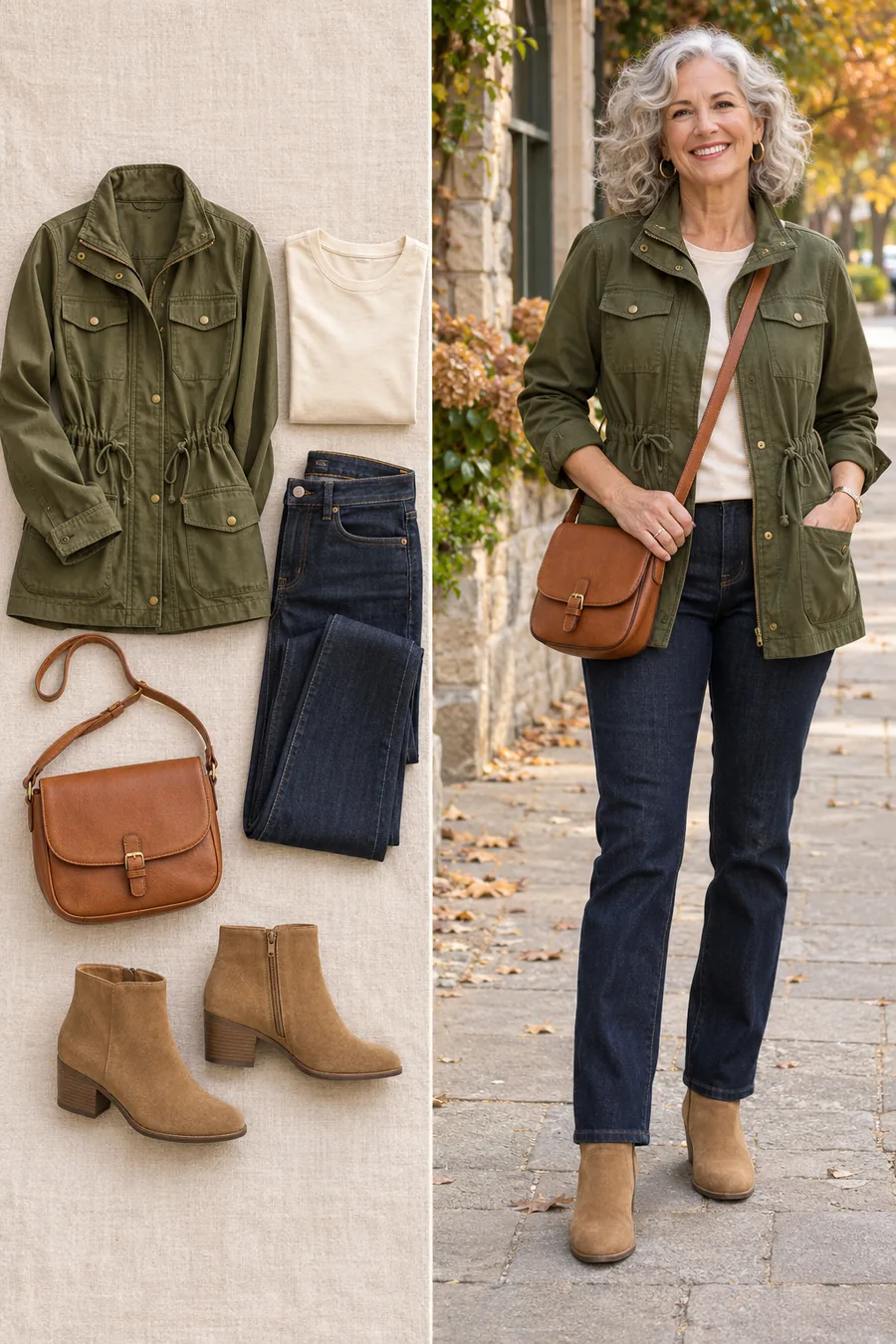
Olive works well as a casual neutral. An olive utility jacket, cream tee and dark indigo jeans give you three distinct colors without much effort. Choose a jacket with enough room for a tee and a thin sweater if you want it to work through changing weather. Tan ankle boots bring out the brown in the green.
Olive can read yellow, gray or almost brown depending on the fabric. If a dusty version looks dull on you, compare it with a clearer olive. You can also wear it away from your face in chinos or a skirt and use ivory, peach or a warm striped top above it.
6. Moss green
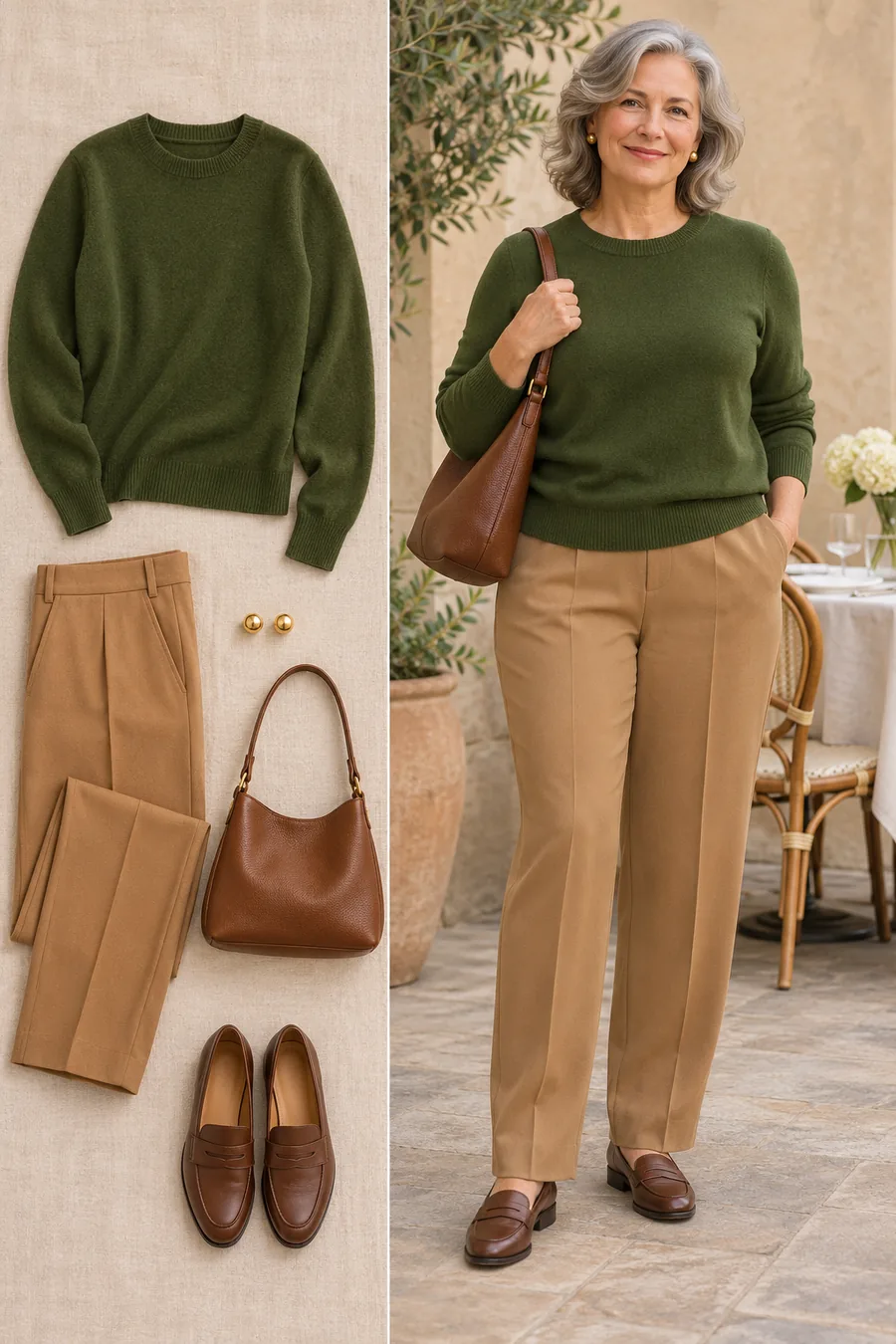
Try moss when you want a green with more depth than a pale sage. A fine-knit moss sweater works with camel trousers for a daytime restaurant or casual office. Brown loafers and a warm brown bag keep the look simple. A little gold at the ear is optional if you want a detail near your face.
Moss and olive can overlap on shopping sites. Judge the actual swatch and customer photos if available. If the combination of moss and camel feels too muted, put ivory between them as a collar or tee, or switch to dark jeans for stronger contrast. One change is usually enough to see which version you prefer.
7. Warm teal
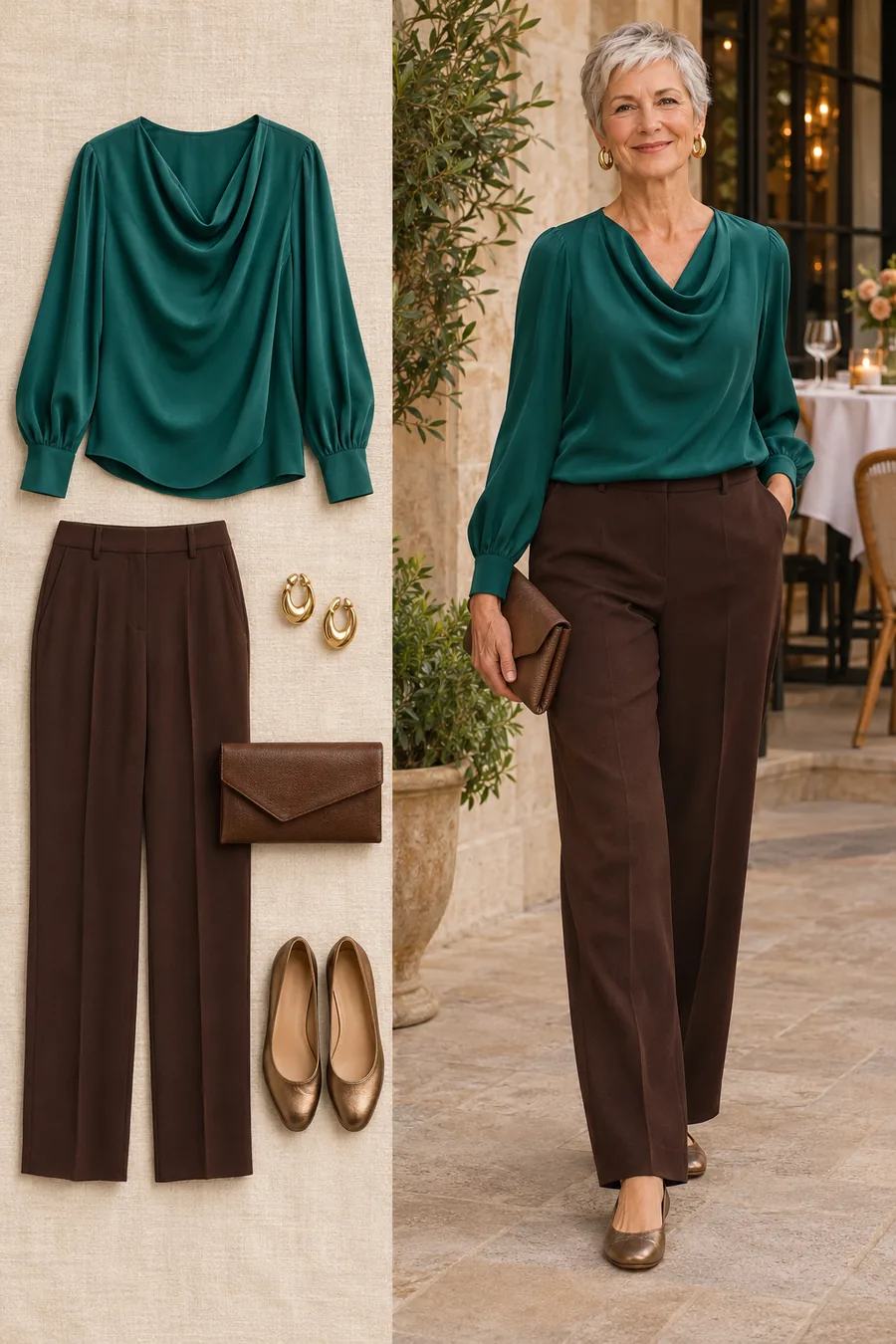
A green-leaning teal brings some blue into a warm palette without using a bright icy shade. A draped teal blouse with chocolate trousers works for a dinner where you want color above the table. Bronze flats repeat the warm finish, but plain brown shoes are just as easy to wear.
Compare teal with a cooler blue or a greener bottle shade in daylight. Pick the one you enjoy seeing near your face. Before buying a draped blouse, look at the neckline seated and with a jacket on. If the color feels too strong as a top, try it in a small bag with cream and brown.
8. Terracotta
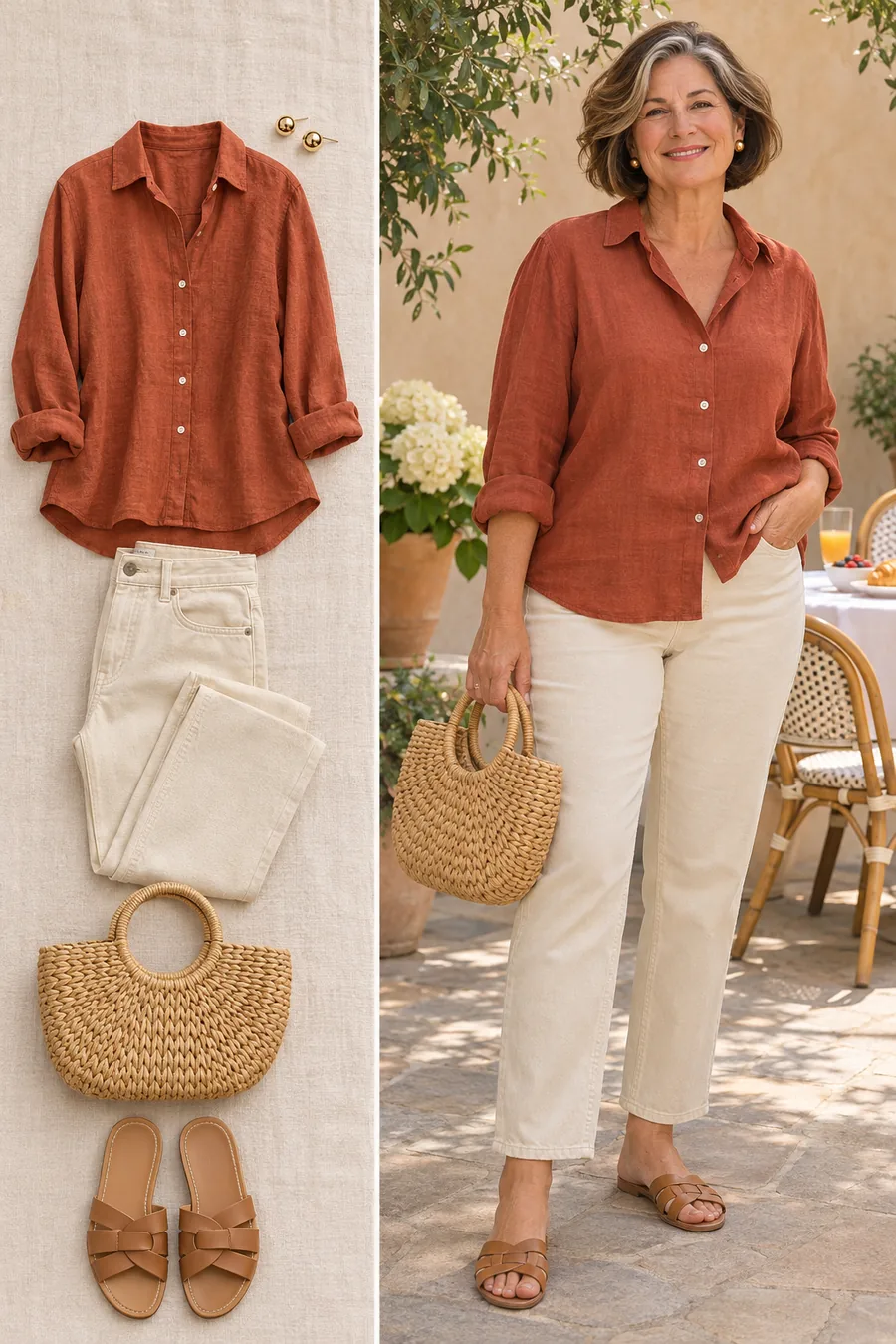
Terracotta is a clay-like orange-brown with a softer finish than bright orange. A button-up in this color works with ecru jeans, flat tan sandals and a woven bag. Leave the shirt untucked if the hem falls cleanly. Roll the sleeves once for a relaxed brunch outfit.
Some versions lean pink and some lean burnt orange. Compare them with ecru or cream rather than judging either on a hanger. If you want a lighter version of the same idea, try a peach top. If the linen blend is sheer in sunlight, put on the camisole you plan to wear before deciding whether the shade works.
9. Rust
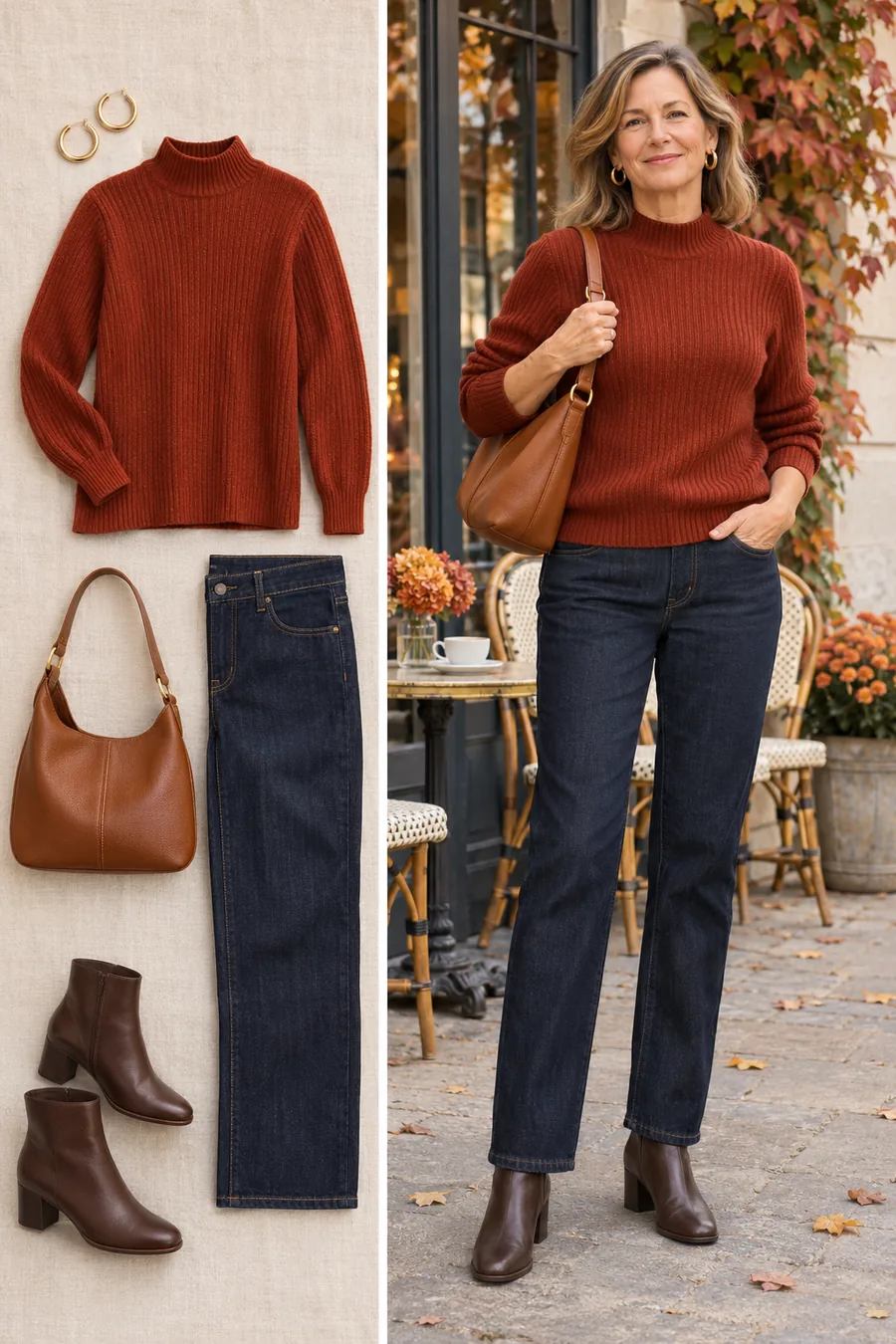
Rust usually looks deeper and redder than terracotta. Try a ribbed rust sweater with dark jeans, chocolate ankle boots and a cognac bag. The darker denim makes the warm color easy to see, and the boots keep the outfit useful on a cooler day. If you prefer a softer contrast, wear cream trousers.
A mock neck puts a large block of color right near your face. If you like rust in smaller amounts, choose a V-neck over a cream tee or try a scarf instead. Check both in the same light. Two versions with the same color name can look quite different when one is matte and the other has sheen.
Warm reds, peaches, yellows and an everyday navy
These colors give you different levels of brightness. Try a soft peach for low contrast, paprika for stronger color or an inky navy with warm neutrals for an everyday outfit.
10. Paprika red
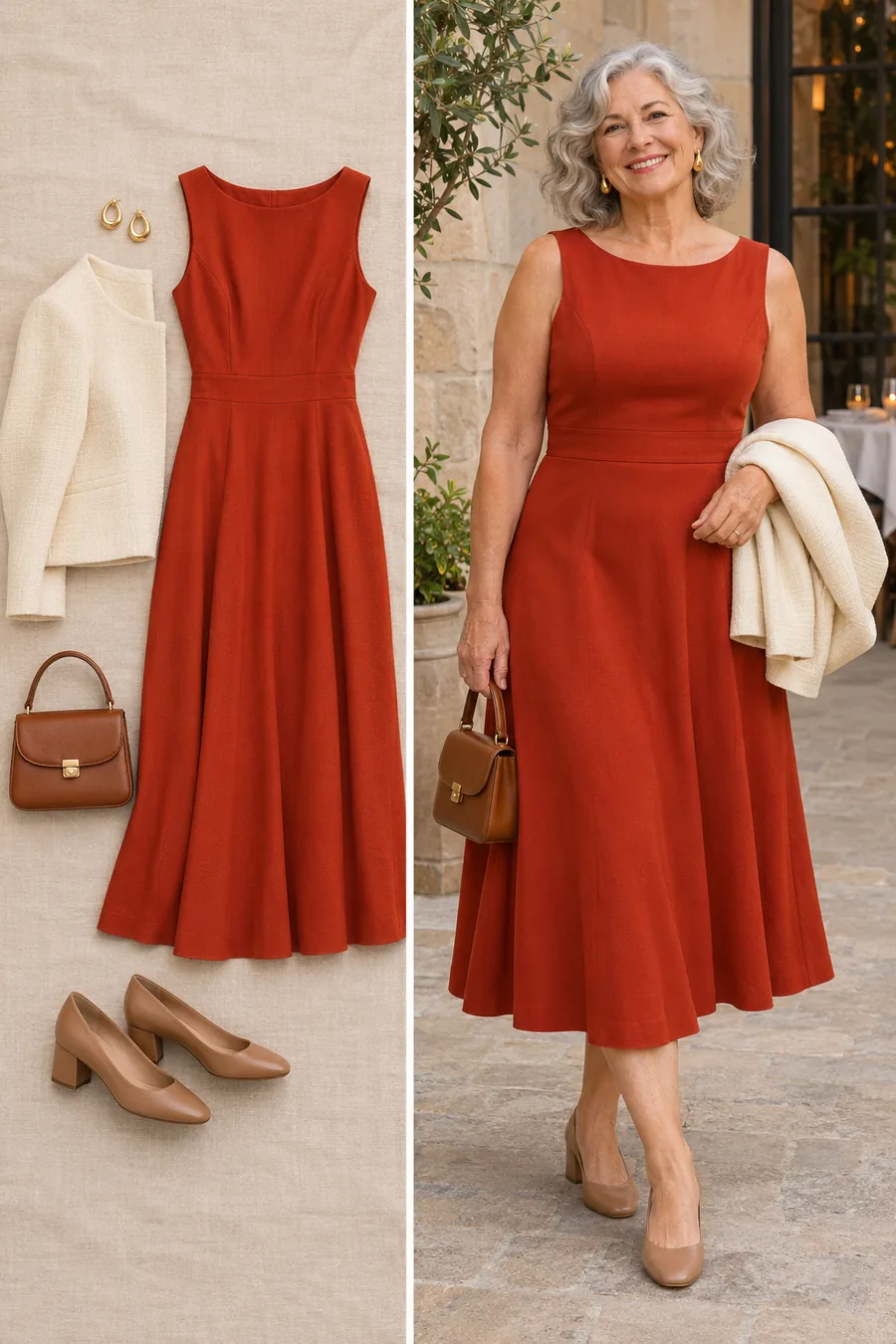
Paprika is an orange-leaning red that can be an alternative to a blue-red. Try it in a midi dress with tan low block heels and a small cognac bag. An ivory cropped jacket gives you a layer for a restaurant and breaks up the red if you prefer less color near your face.
If you like the shade but feel unsure about a whole dress, try a paprika blouse with dark trousers first. For the dress, check the neckline seated and walk in the shoes before committing to the hem. Warm red can look much stronger in bright sun than at dinner, so consider when you’ll wear it most.
11. Peach
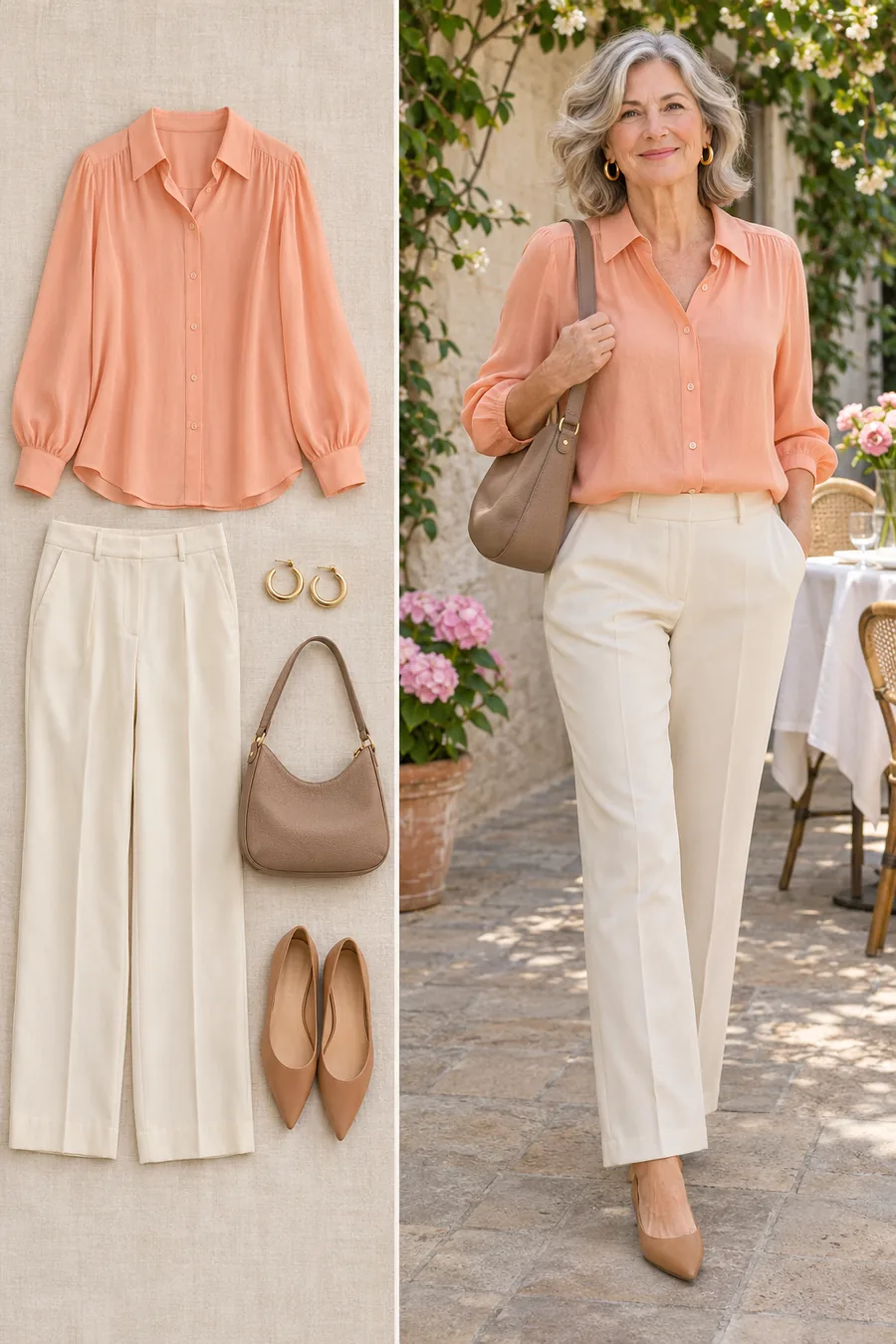
Soft peach is a way to try warmth with very little contrast. A peach blouse and ivory trousers are an easy spring lunch combination. Tan flats and a taupe bag give the light outfit an anchor. Look for a peach with enough color that it’s distinct from your skin when you see the two together in daylight.
If very pale peach seems to disappear, choose an apricot shade or add a deeper brown belt. Check a light blouse and pale trousers in daylight with the underlayers you plan to wear. If you only want one lighter piece, keep the blouse and trade the ivory trousers for dark denim or chocolate.
12. Warm coral
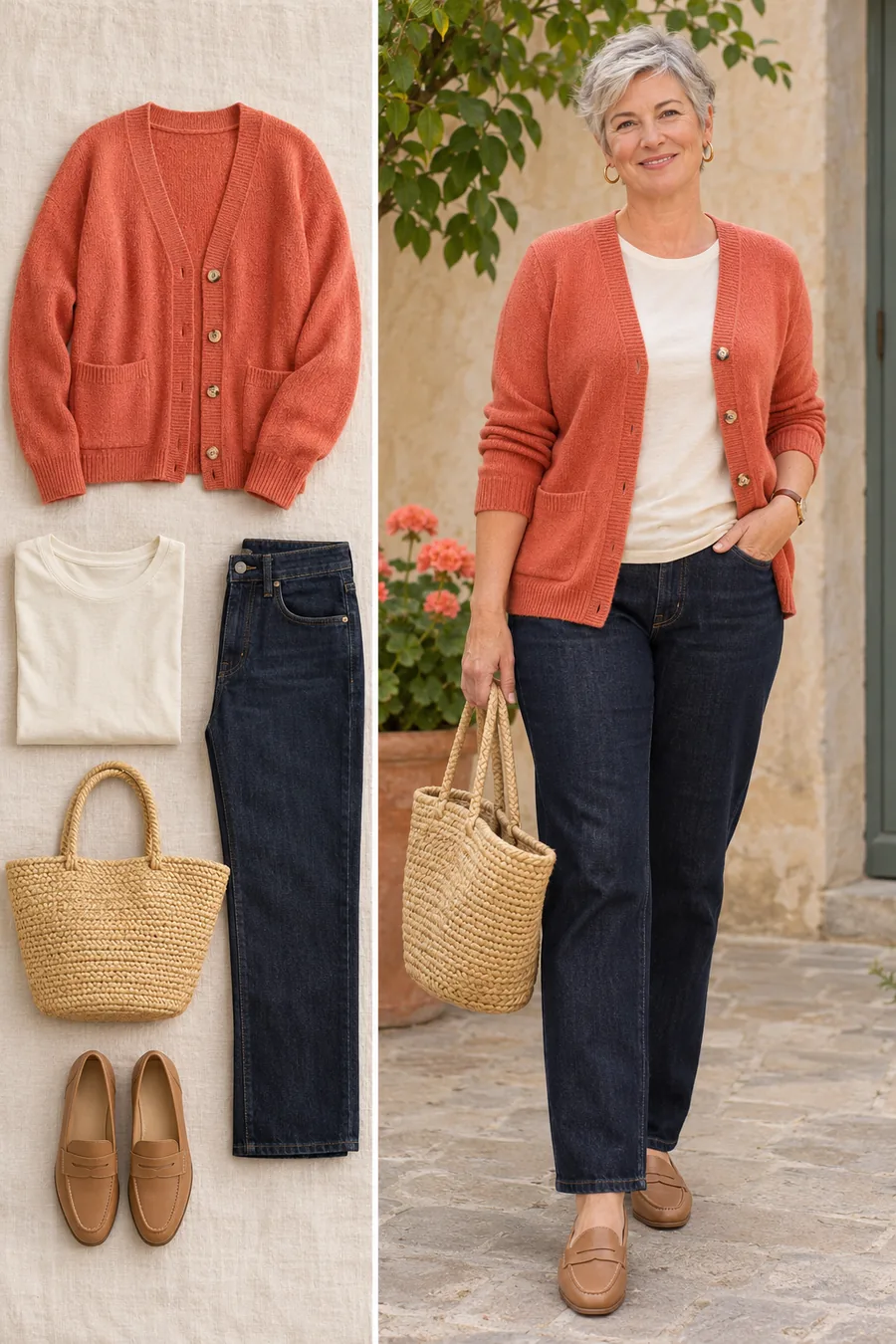
Warm coral sits between peach and orange-red. A muted coral cardigan over an ivory tee gives you control over how much color sits near your face. Wear it with dark jeans and tan loafers for a weekend outing. A woven bag adds texture if you already have one.
Check whether the coral leans orange or pink. If you prefer the orange-leaning shade, use that as your search term rather than buying by the label alone. Try wearing the cardigan open first. When you button it, the larger area of color can change the look more than you’d expect from a small swatch.
13. Mustard
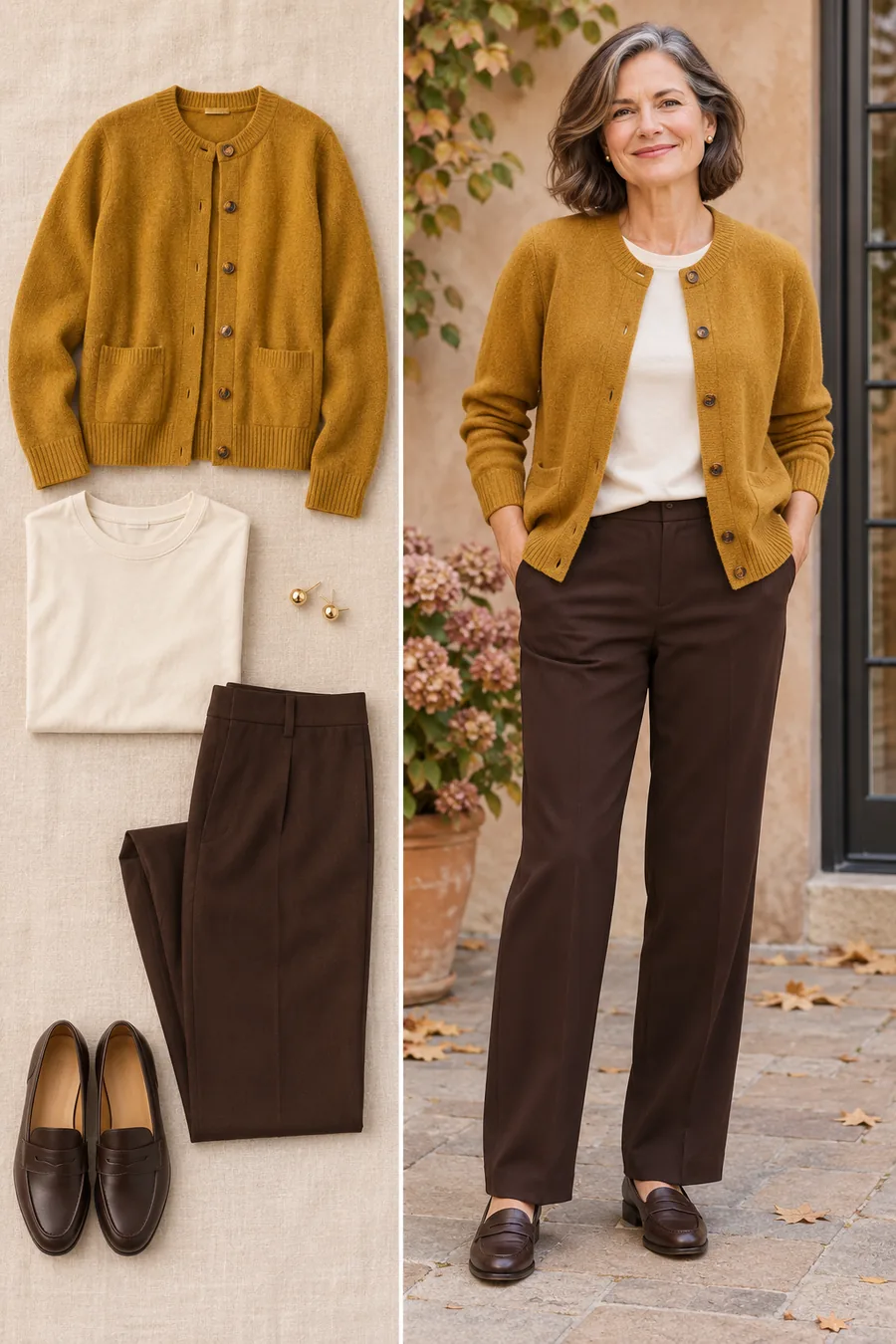
Mustard can work well when it has a soft brown cast, especially with cream and chocolate. A muted mustard cardigan over a cream tee is an approachable version of this combination. Choose darker loafers to connect with the trousers, and leave the cardigan open to keep some cream near the neckline.
If mustard feels too strong beside your skin, try it in a scarf with only a little showing, or use it in a bag. Compare a warm muted mustard with a clearer yellow if you enjoy both. The version you reach for in natural light is more useful than a broad rule about which colors you should wear.
14. Honey gold
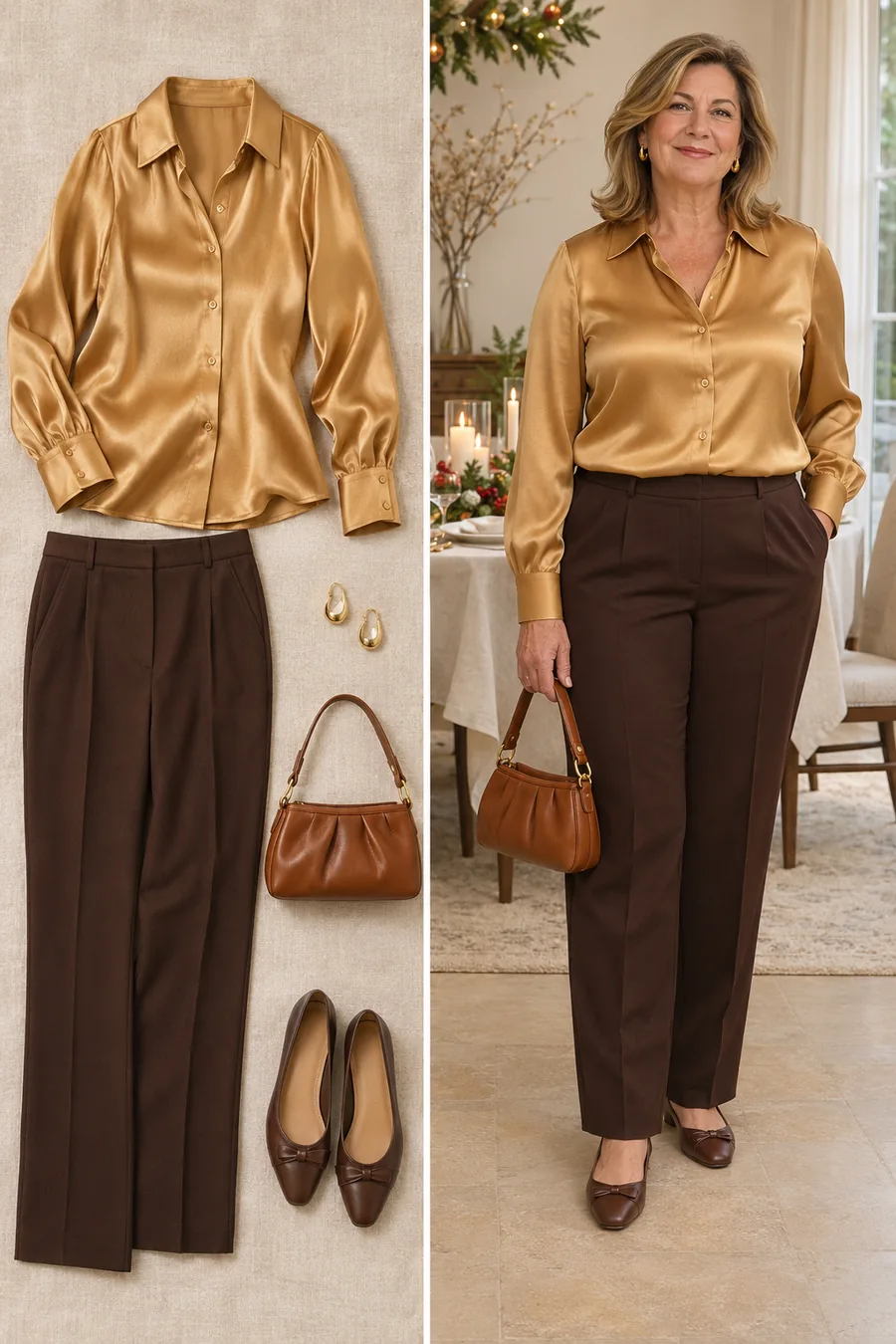
Honey gold is warmer and softer than a bright metallic yellow. A satin honey-gold blouse can dress up chocolate trousers for a holiday dinner. Because the fabric already catches the light, small earrings and brown dress flats are enough. A cognac evening bag brings in a deeper version of the warm color.
Look at the blouse near a window and under a warm indoor bulb. A shiny fabric changes character between the two. If you want the color with less shine, look for a matte honey-gold knit instead. For a satin top, check that the buttons lie flat when you reach forward or sit at a table.
15. Warm navy
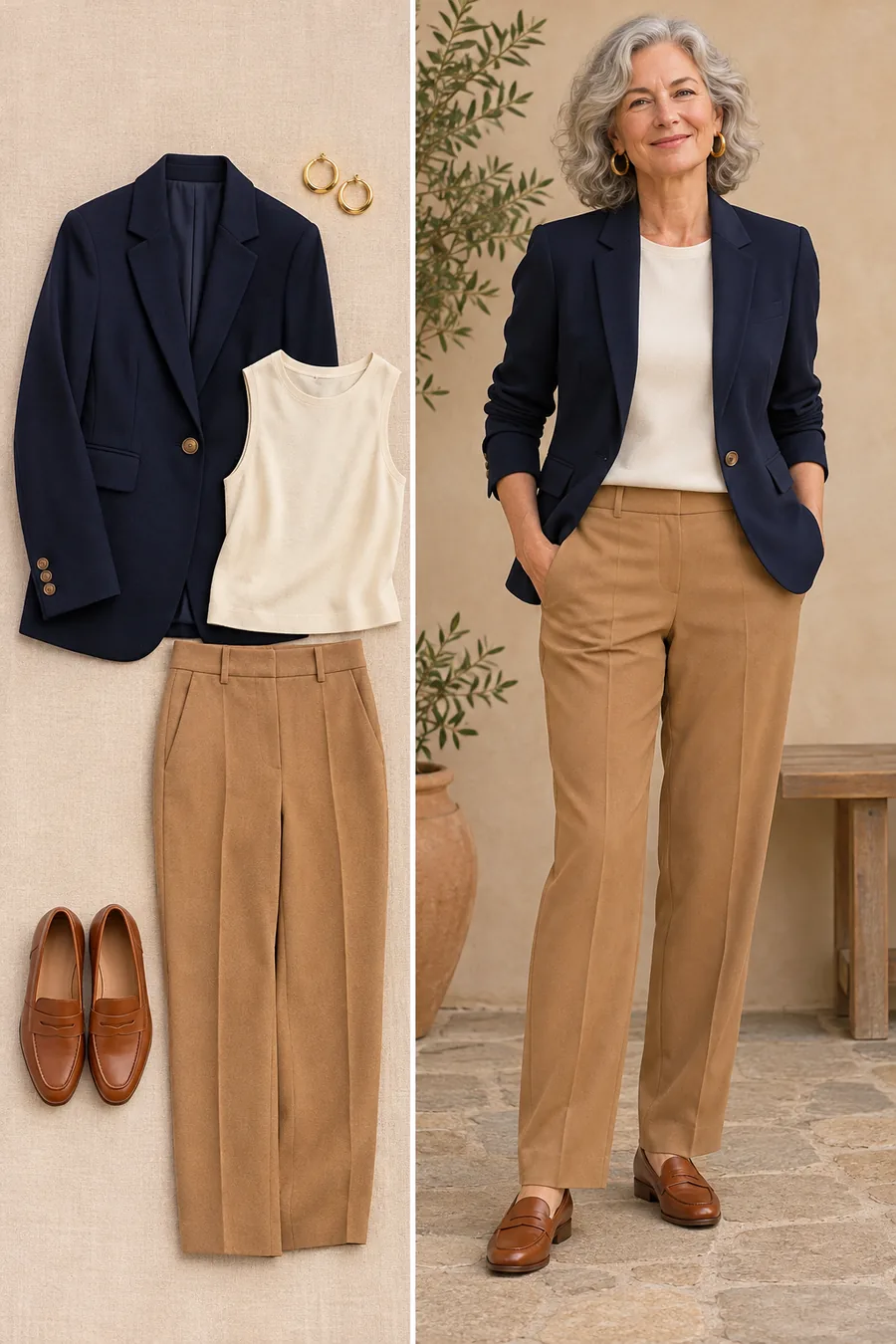
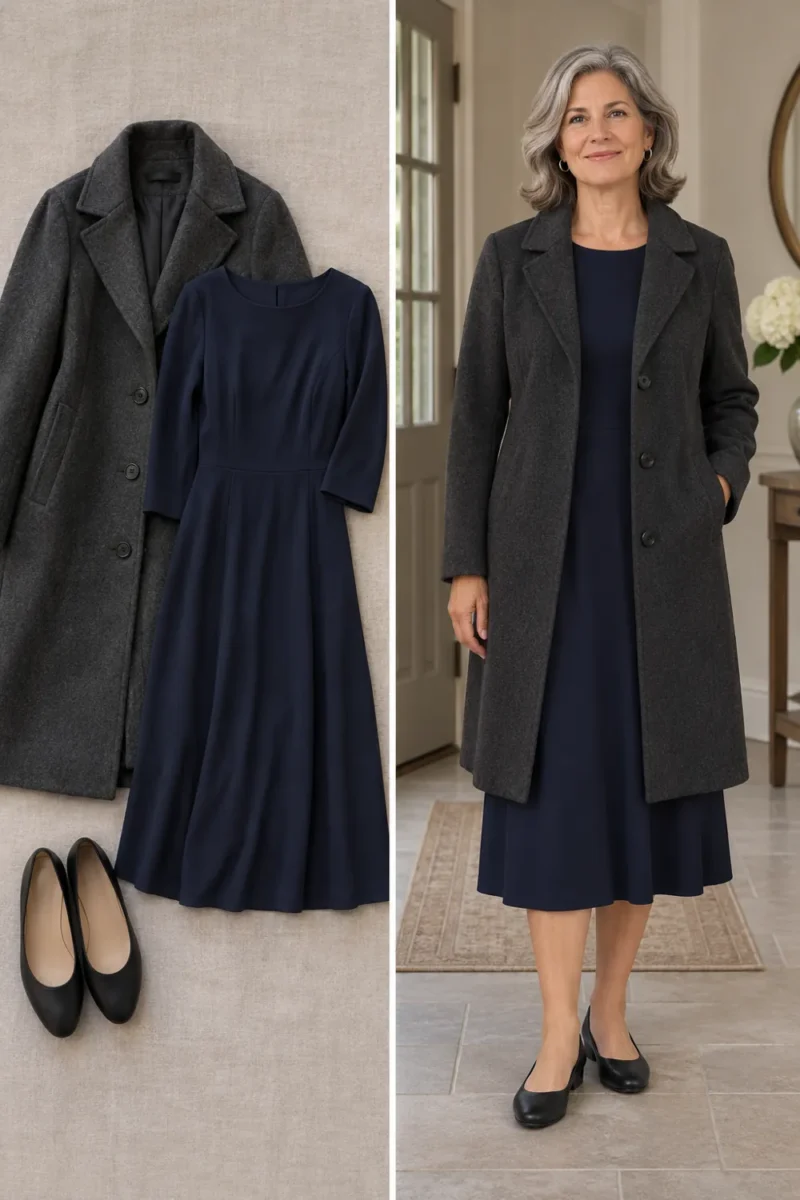
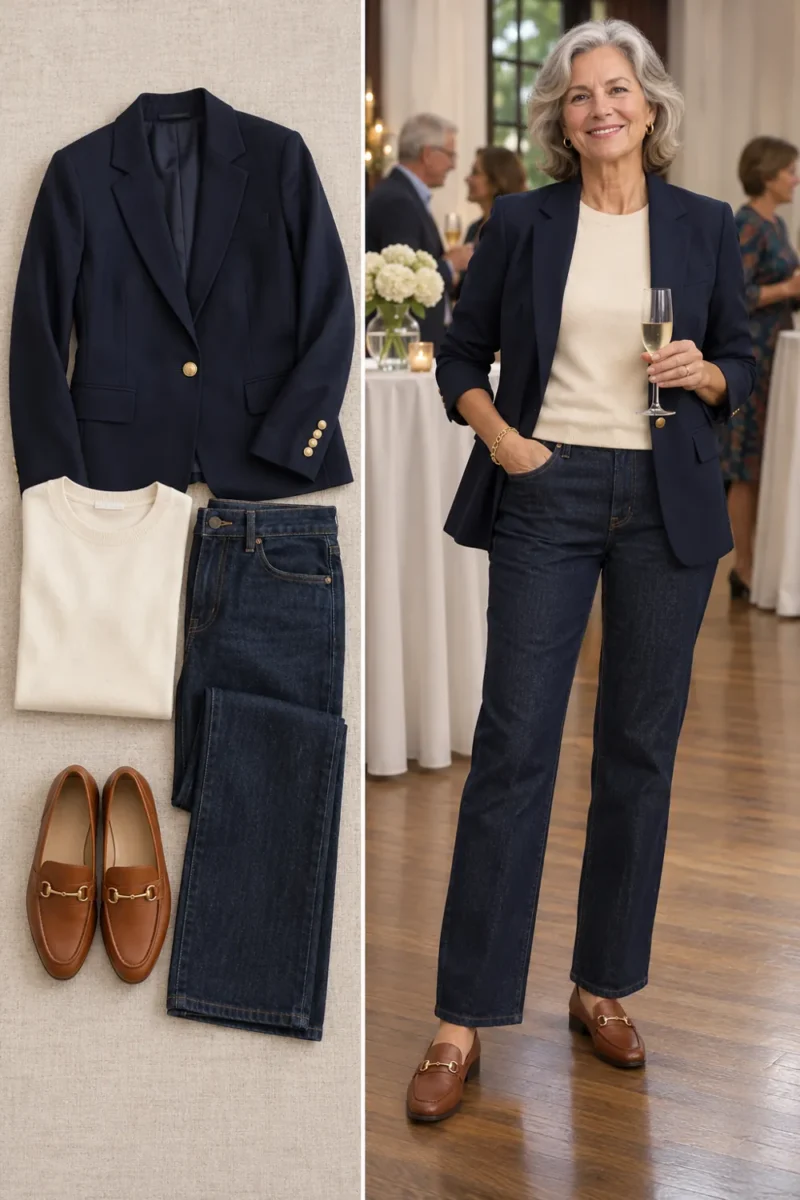
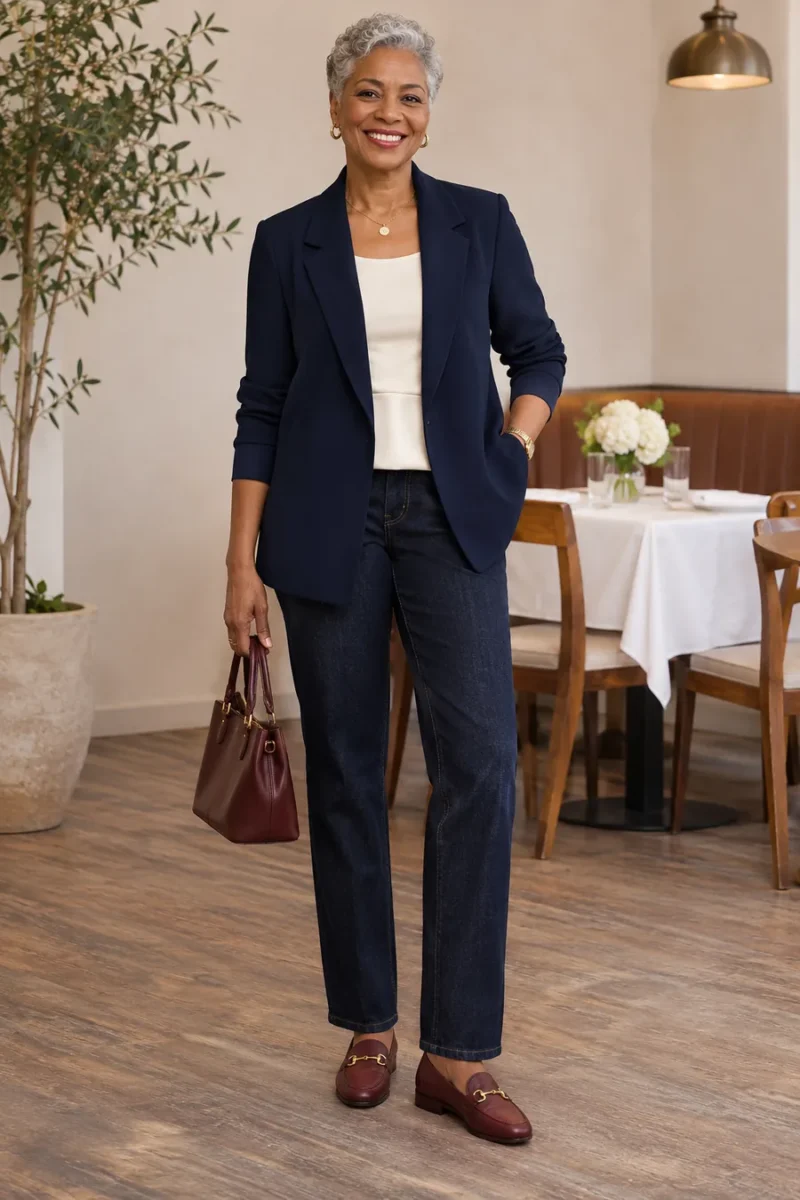
Warm navy is a practical dark neutral if you like blue but prefer less contrast than black. Look for an inky navy that reads softer beside camel and ivory. Try it as a blazer with an ivory shell, camel trousers and cognac loafers. The cream shell gives you another shade near your face if navy alone feels too deep.
Put your navy pieces next to each other. Two navies can differ enough that a matching suit look feels off. Use an intentionally different color on the bottom, such as camel, if you don’t have a matching set. If you love your cooler navy blazer, keep it and change the top or accessories.
How to test colors at home before you shop
Compare clothes near a window. Stand facing indirect daylight. Hold one fabric under your chin and then swap it for another. Compare garments of similar depth and finish. Comparing pale cream with a dark shiny blue won’t tell you whether warmth, depth or sheen made the difference.
Look for the effect you actually want. Notice whether your features stand out and whether the shade looks balanced with your hair and skin. Then ask whether you like that result. A muted color can feel restful. A clearer one can be useful for a portrait or evening outfit. Try both before deciding one is wrong for you.
Test depth and brightness separately. Compare pale peach with deeper apricot first. Then compare a muted terracotta with a brighter orange at a similar depth. If you like rich colors but dislike bright ones, reach for chocolate, moss and rust. If you prefer clear colors, try paprika or warm coral before writing off the entire family.
Move a favorite color when needed. If black, cool gray or a bright white is already in your wardrobe, try keeping it in trousers, shoes or a bag and add ivory or peach near your face. You can also use a scarf or an open neckline to change the amount of color you see beside your skin.
Make an online shopping shortlist. Take a daylight photo of a top you like, then use it to compare the available swatches. Read the selected color, since names such as beige, coral and olive can cover several different shades. Keep one item you can compare at home before ordering a full outfit.
For more on comparing undertones in natural light, see Vogue’s guide to skin undertones.
Warm undertone color FAQs
What are the easiest colors to try for warm undertones over 50?
Ivory, camel, olive and chocolate are practical starting points. For a first comparison, try ivory and crisp white near your face, then compare camel and gray-beige. Pick the shade you prefer in the same light.
Can I wear blue if I have warm undertones?
Yes. Green-leaning teal and inky navy work well with warm outfits. If you love a cooler blue, try pairing it with ivory, camel or cognac. You can also use that blue away from your face.
What if I have gray hair and a warm undertone?
Try two levels of contrast. Start with ivory and camel, then compare ivory with a richer neutral such as chocolate or navy. Your hair gives the outfit another color to work with, so check the whole combination in daylight.
Can warm undertones wear black or white?
Yes. If a high-contrast combination feels too strong, wear black as a bottom or use ivory near your face. If you enjoy crisp white or black as a top, use the version you like and build the outfit around it.
Is every warm shade right for every warm undertone?
Warm shades vary in depth, brightness and softness. If rust works but mustard feels too strong, try the mustard in a smaller accessory or compare it with a softer honey shade. You can use a few colors that suit your wardrobe without adopting a whole palette.
Build more outfits from your favorite colors
If camel is your starting neutral, see these camel outfit ideas for women over 50. To plan more combinations around pieces you already own, use our fall capsule wardrobe guide.
Leave a Reply