
This post may contain affiliate links. If you buy through them, we may earn a small commission at no extra cost to you. Read our disclosure.
A trench coat makes most sense when it fits over the clothes you already wear and feels easy to take on and off throughout the day. You might want one for the walk to lunch, the school pickup or a journey with several indoor stops. Those plans help you choose the length, lining and shape before you think about a particular color.
For women over 50, the fitting questions are practical. Can you reach forward with your cardigan underneath? Does the belt sit comfortably when you’re seated? Does the long hem clear your everyday shoes? This guide walks through those checks, then shows 15 ways to wear a trench with jeans, trousers, dresses and skirts.
In this post10 sections
- Choose your trench by how you plan to use it
- The fit checks that make the biggest difference
- What the research says about fabric and rain protection
- Three ways to handle the belt
- 15 trench coat outfits to try
- Give one trench a place in three outfits
- Care for the coat you actually own
- A final check before ordering
- Frequently asked questions
- Keep reading
Choose your trench by how you plan to use it
| Your usual plan | A cut worth comparing | What to check |
|---|---|---|
| Several short stops in mild weather | A knee-length or short coat | How easily you can carry it indoors |
| A long day with a dress or skirt | A midi or roomier cut | Whether the skirt settles freely inside the coat |
| A train ride or time in a car | A softer shape with a workable closure | Your reach and comfort while seated |
| Cooler mornings with a knit layer | Enough sleeve and upper-body room | The fit over your actual cardigan |
| Time outside in rain | A coat with clearly described weather protection | Coverage, closure, hood and seam construction |
The fit checks that make the biggest difference
Start with your normal layers
Wear the shirt, tee or fine knit you expect to put under the coat. Button or fasten the trench, then reach forward as if holding a steering wheel. Check where you feel resistance. A tight upper arm needs a different fit from a coat that simply feels long. If one size fits over a tee and another works with a cardigan, choose according to how you’ll use the coat most often. Check your shoulder bag over both versions before deciding.
Compare body length while you are moving
Use your actual shoes and walk past a mirror. A knee-length trench, a midi and a long coat will show different amounts of the outfit below. Look at the side and back, then sit and climb a step if you can. Note whether the coat catches behind your calf or brushes the ground. The product’s stated length is more useful when you compare it with a coat you own. Use the same measurement method as the retailer where possible.
Check the waist and belt loops
Fasten the trench without pulling the fronts hard across your chest, then place the belt at its loops. See if the waist feels comfortable when you sit. A belt can give an already roomy coat shape, but tightening it won’t create more space through the upper arm or back. If the loops sit far above or below where you want the belt, compare a different proportion. Petite and tall sizes can be worth trying when sleeve and body placement are both off.
Choose the front closure you enjoy using
A double-breasted front brings extra fabric across the body when closed. Try it with your usual top and see how the lapels and buttons sit. A single-breasted or simple button-front style may feel easier if you prefer less overlap. If you expect to wear the coat mostly open, check how the front panels hang and where the belt ends fall. Put a phone or keys into the pocket you will actually use to see if the added weight changes the drape.
Look inside the sleeves
A smooth sleeve lining can help a coat slide over knitwear. Check the outer fabric and lining separately in the product details. Stretch in the shell won’t necessarily mean equal movement through every internal layer. Put both sleeves on without twisting your top underneath, then bend and straighten the arms. If you need to pull the knit back into position every time, compare a smoother base, more sleeve room or another coat.
Check the skirt or trouser underneath
Put the whole base outfit on with its shoes before choosing the trench. Straight jeans give a different outline from wide-leg trousers or a full midi skirt. If the coat compresses the skirt and it stays bunched after you stand, try a roomier cut or another outer length. With wide trousers, check that both the trouser and coat hems clear the ground as you turn. Use a photo from the side if the front view is hard to judge.
Read the label before deciding about care
Look for washing, drying, pressing and specialist-cleaning instructions on the coat you are buying. Decorative buckles, lining, shaping and finishes can change what care the whole garment needs. If the listing does not show enough detail, ask the retailer before relying on a cleaning method. After wearing it, hang the coat on a hanger that supports its shoulders and let it air appropriately. For stains or a water-repellent treatment that needs attention, use the maker’s guidance for that specific coat.
What the research says about fabric and rain protection
A trench silhouette can appear in several fabrics and constructions. Burberry’s mid-length Kensington is described as water-resistant cotton gabardine, with a cotton body lining and viscose sleeve lining. Quince’s Comfort Stretch Long Trench Coat lists a cotton-spandex shell, polyester lining, a water-resistant finish and dry-clean care. These details are useful comparisons when you’re reading another listing.
Columbia’s guide to rain protection explains that water-resistant and water-repellent garments suit lighter or shorter exposure, while waterproof construction includes further protection such as sealed seams. Read the coat’s own description against the conditions and time you expect to spend outdoors.
| Product detail | Why it matters | What to look for in a listing |
|---|---|---|
| Outer fabric | Affects how the coat hangs and feels | Actual fiber percentages for the selected version |
| Lining | Changes how the coat slides over layers | Body and sleeve lining information |
| Length | Changes coverage and how much outfit shows | A measured length you can compare with your own coat |
| Belt and closure | Affect fit while standing and seated | Button overlap, belt-loop position and removable-belt details |
| Weather claims | Help you match the coat to the forecast | Water-resistant, water-repellent or waterproof description and any seam information |
| Care | Affects what owning the coat involves | Washing, drying, pressing or specialist-cleaning instructions |
Three ways to handle the belt
Wear the front open. A loose back knot can keep long belt ends out of your way while the base outfit stays visible. Check the knot’s thickness while seated, especially in a car.
Knot the front lightly. Bring the belt together where the loops sit and leave enough ease to move. A simple knot is easy to loosen when you go indoors. Keep the ends above the coat’s lower edge.
Use the buckle or set the belt aside. Try the fastening as designed if you like a more defined shape. If the belt is removable, compare the coat without it. Check how the loops and fronts look before choosing which version you prefer.
15 trench coat outfits to try
Use these outfit illustrations to compare lengths, colors and the base layers beneath the coat. The photos are AI-generated styling illustrations. Shopping options include product listings and searches for similar items, so compare the retailer’s own images, color choices and measurements.
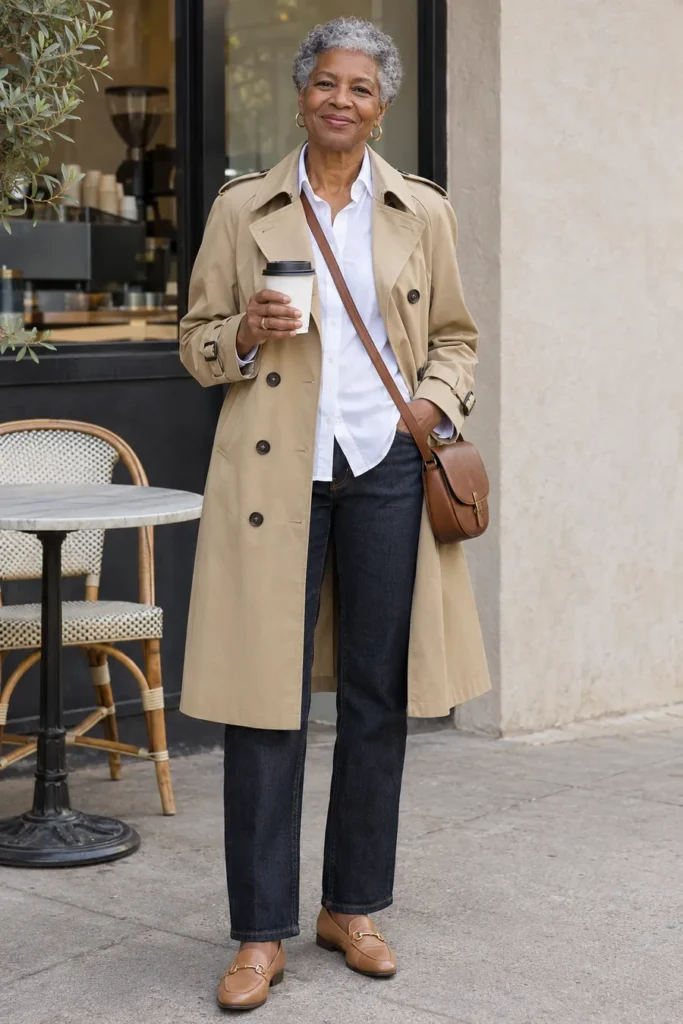
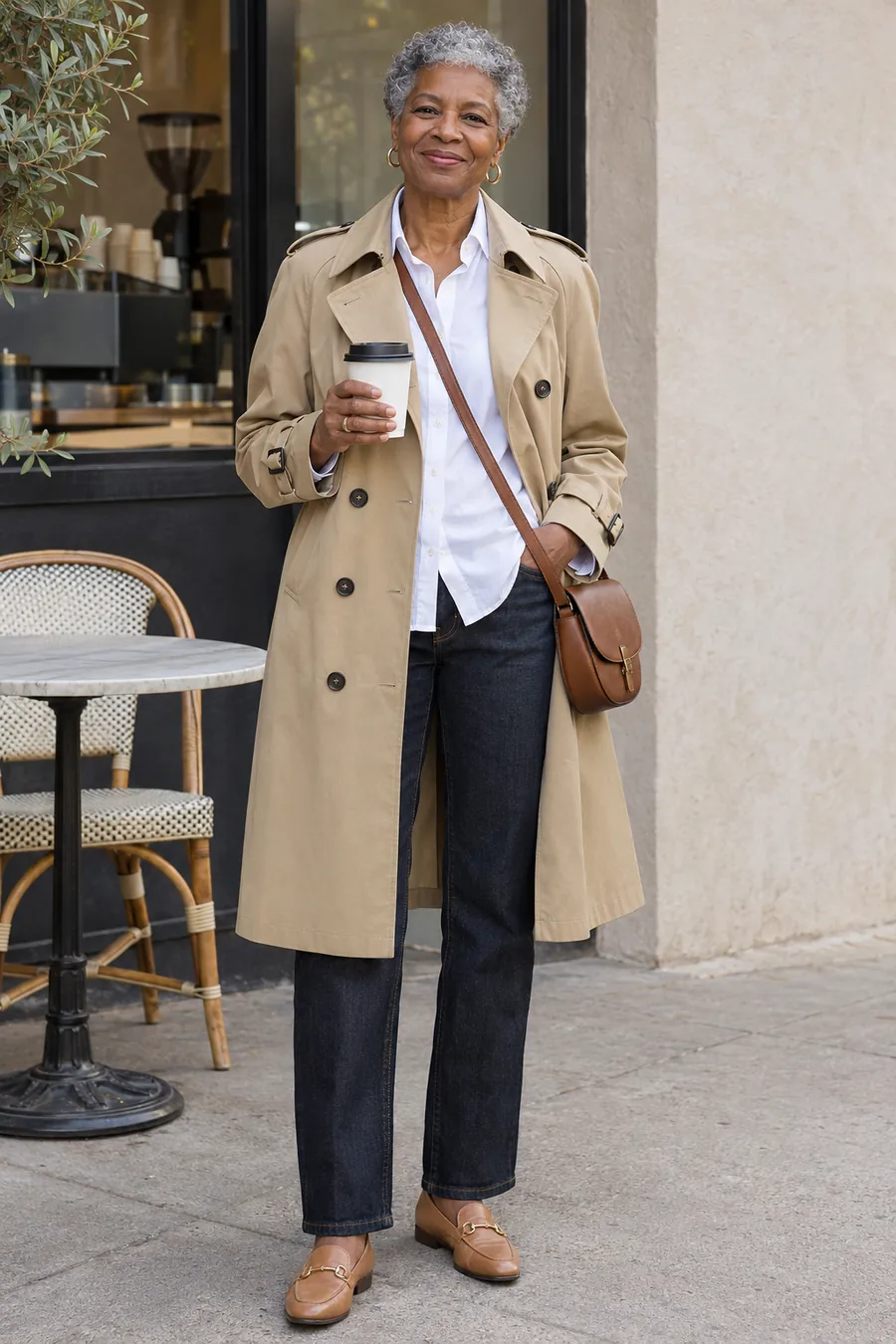
1. Classic beige trench with dark jeans and loafers
Wear it for a weekday coffee stop.
Start with the jeans and loafers, then put the trench over the white shirt. Leave the front open so you can see a clear strip of white and denim through the center. If the belt swings against your hands, make a loose knot behind you or secure it using the coat’s belt loops. Check the side view with your bag on. A crossbody strap can push one front panel farther back than the other, so adjust the strap before you decide that the coat is too wide. An even dark wash makes this an easy option for a lunch that allows denim. The jean hem should stay clear of the back of your loafer when you walk. On a colder day, add a thin knit underneath the shirt or choose a warmer base that still fits inside the sleeves.
Shop this outfit
A beige or taupe trench is worth comparing if you often wear denim, white shirts and warm brown accessories. Check the measured coat length first. Keep your current jeans and shoes if they already fit the route, and add the coat only when its sleeves work over your shirt.
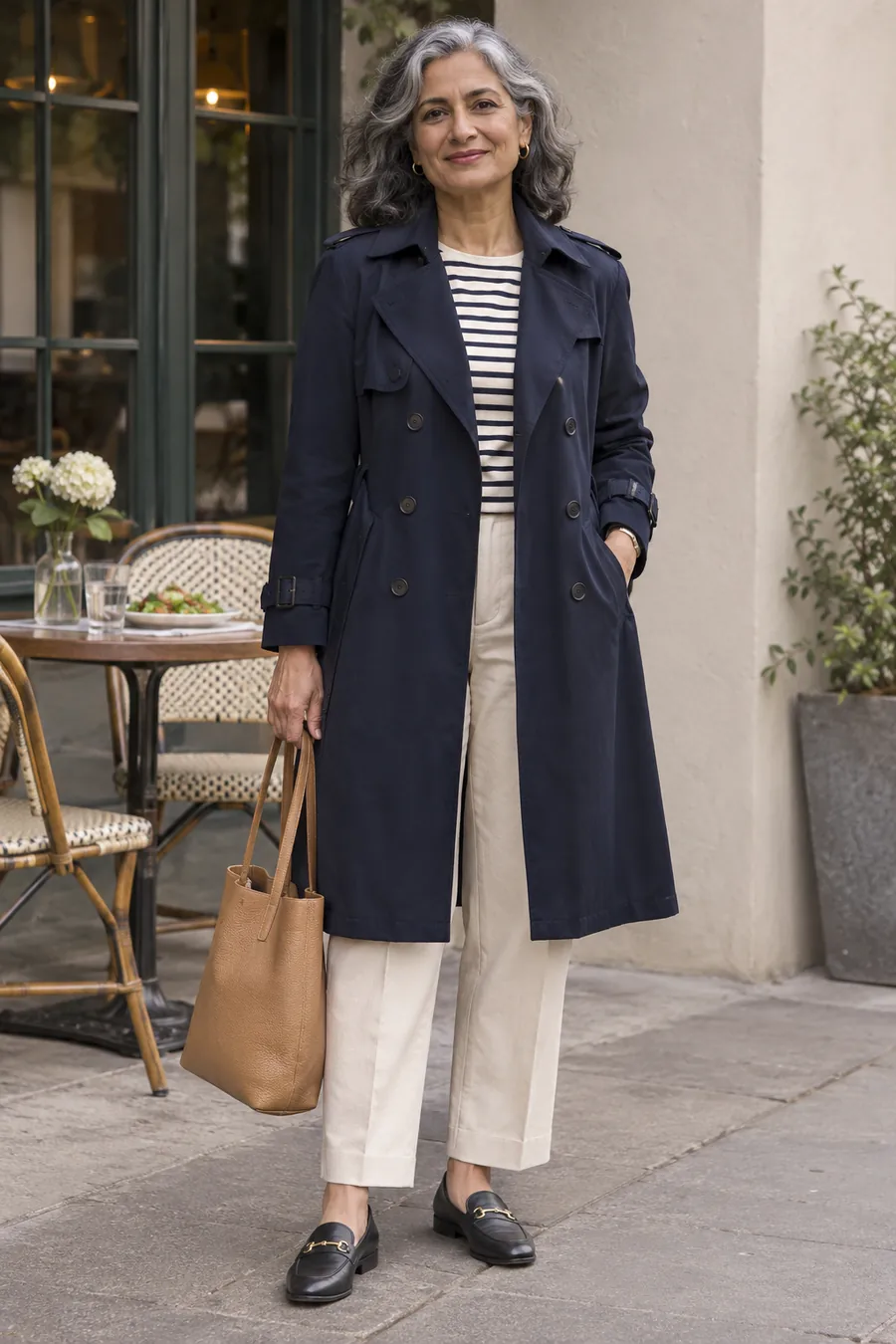
2. Navy trench with cream trousers
Wear it for a cool-weather lunch outside a neighborhood café.
Navy outerwear gives cream trousers a useful darker frame. Start with a fine stripe and keep the coat open until you need it closed for warmth. Put the loafers on before choosing the trouser length because pale fabric that gathers over a dark shoe can look heavier than expected. A tan tote adds a warm neutral and can hold the trench when the restaurant is warm. Test the loaded strap over the shoulder so the coat collar stays where you want it. If your trousers are wide, compare a shorter or straighter coat shape against them. If they’re narrow at the ankle, a roomier coat can give an easy balance. Check the cream fabric in strong light, especially around the pockets, before putting the final outfit together.
Shop this outfit
Try navy if most of your wardrobe is cream, gray or blue. Compare the lining and shoulder room before choosing a size. A tan tote can be useful beyond this outfit, especially if it holds the coat during an indoor stop.
3. A short trench with wide-leg jeans
Wear it for a daytime gallery visit.
A short trench lets wide-leg denim show from the waist downward. Wear a plain white tee beneath it and see how the front falls with the belt loose. A small tuck can define where the jeans start, provided it feels comfortable while seated. The main practical check is the denim hem. Walk forward, turn and step backward in the brown loafers to see whether it drags. The red bag gives one bright accent without adding another print. Keep it at a height that doesn’t catch on the trench’s lower edge. A cropped coat covers less of your outfit in rain, so choose this combination for a route and forecast that suit it. If the short coat rides up every time you raise an arm, compare the shoulder and armhole fit with a roomier alternative.

Shop this outfit
Look at the actual body length of a short trench against a jacket you own. A small difference can change how much of the jeans shows. Choose the denim hem for your loafers, then compare bags only after the jacket and jeans sit comfortably together.
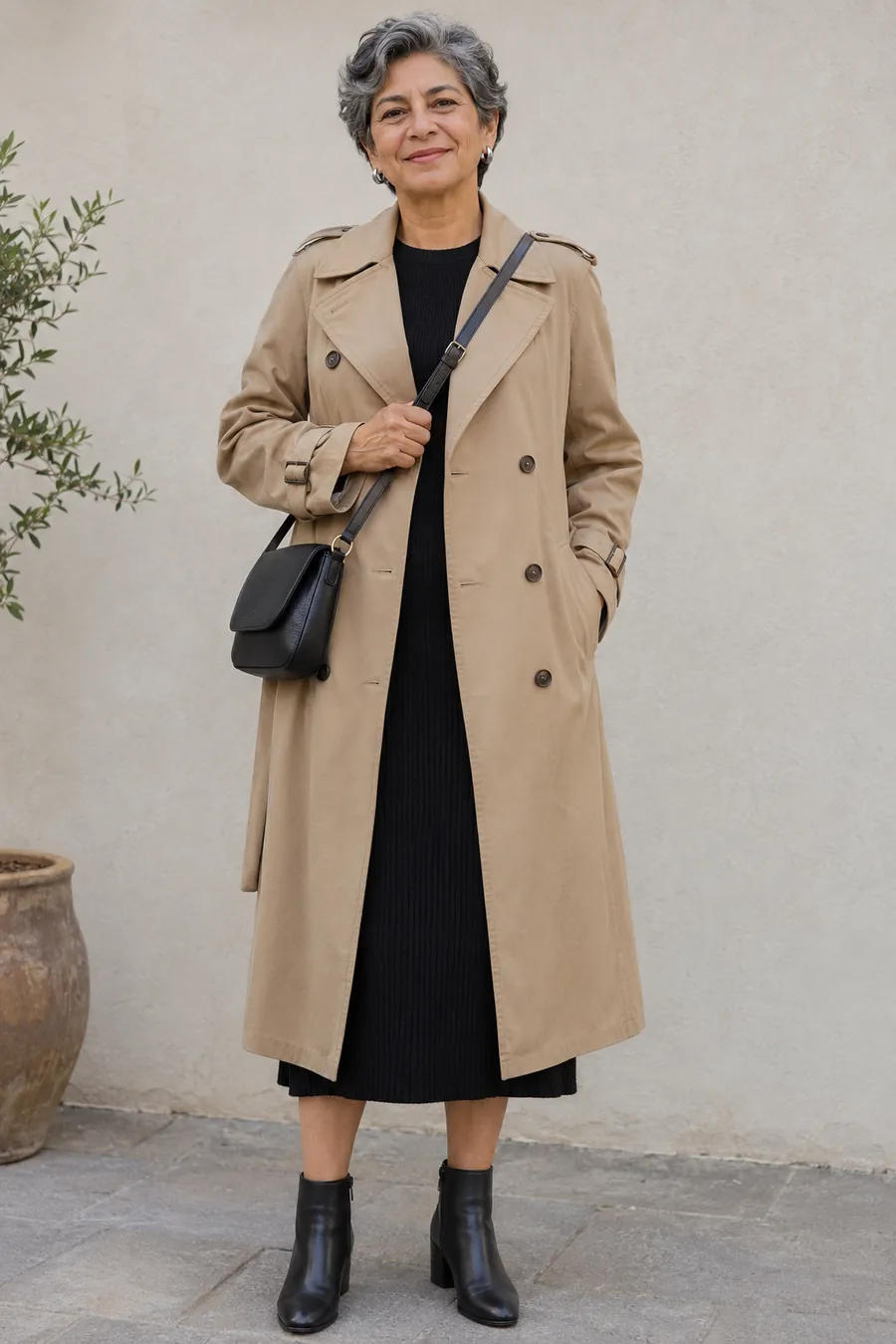
4. Beige trench over a black knit dress
Wear it for an informal dinner in cool weather.
A black knit dress and dark boots give a beige coat a clear base. Try the coat over the dress and check how its lining moves against the knit. If the dress gathers at your waist as you put the coat on, smooth it once, then walk and sit to see whether the problem returns. A smoother lining or less textured dress can help. Look at the two hems together, including from behind. You might like the dress showing below the coat or prefer a longer outer layer. Choose the result that looks intentional to you and still allows your normal stride. A small black crossbody keeps essentials close when you also need to carry the coat indoors. Try the boots on stairs before relying on the outfit for a whole evening.
Shop this outfit
For a dress, compare the trench’s length and room through the hip as well as its color. A smooth lining can make it easier to put over knitwear. Try your existing boots beneath the dress before adding a new pair to the outfit.
5. Olive trench with ecru denim
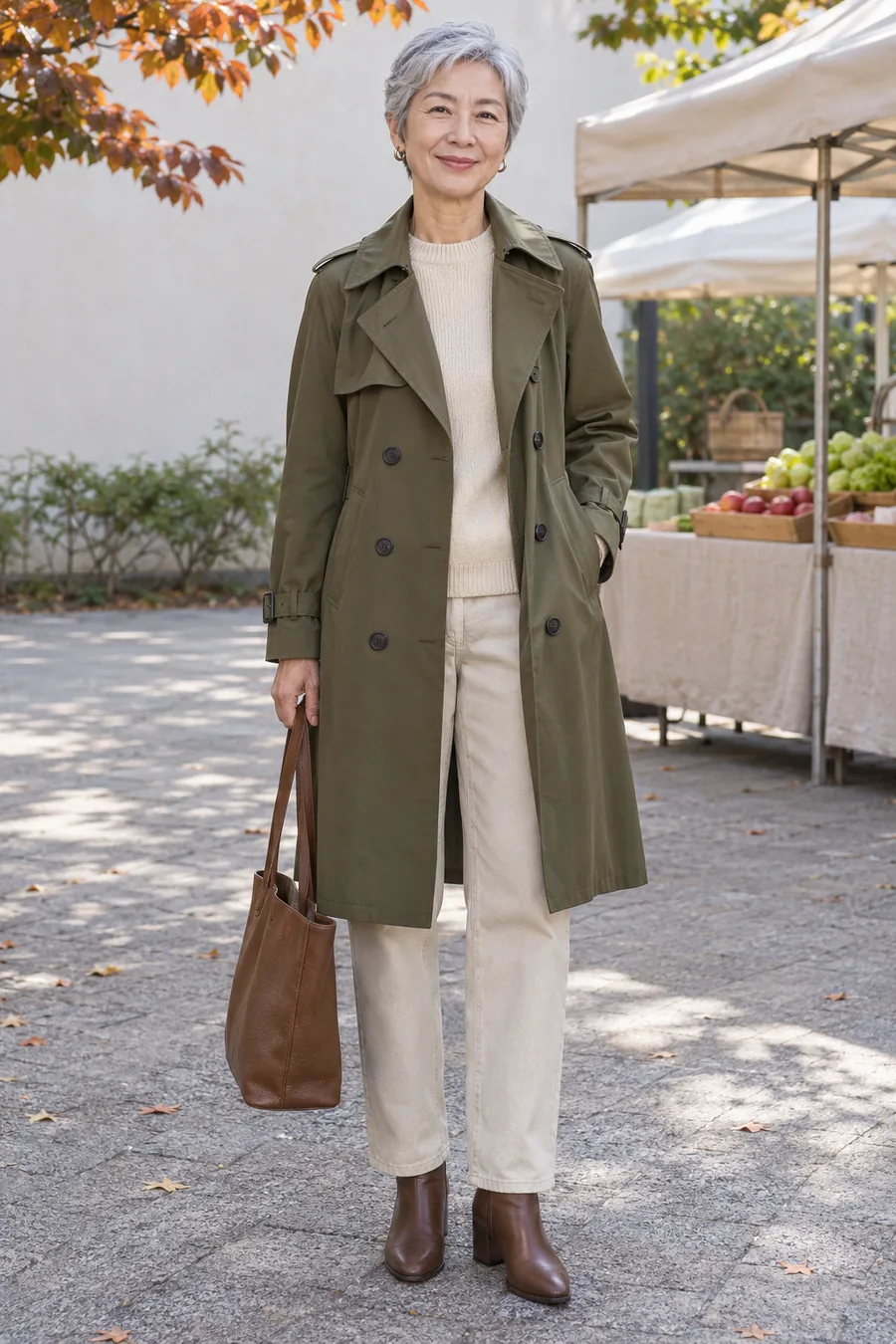
Wear it for a clear autumn morning at a market.
Olive and ecru work well on a clear autumn day when you want a quieter combination. Try a cream knit thin enough to slide comfortably through the coat sleeves. Check the pale denim near a window, especially where the pocket lining ends. Brown ankle boots bring the warm tones together and can be practical on a dry market route. The jeans need enough opening to fall over the boot without catching as you move. If the tote is heavy, test it over the coat while carrying a few ordinary items. A narrow strap can press into a soft shoulder and change how the lapels sit. Leave the trench open if you prefer more of the cream-and-ecru base showing, or tie it gently when the air turns cool.
Shop this outfit
Olive is useful if you already repeat cream, ecru and brown. Compare a true green with a browner olive in natural light. Check how much knitwear the coat can take underneath so the new color also fits the way you dress.
6. A softly belted trench with tailored trousers
Wear it for a meeting followed by lunch.
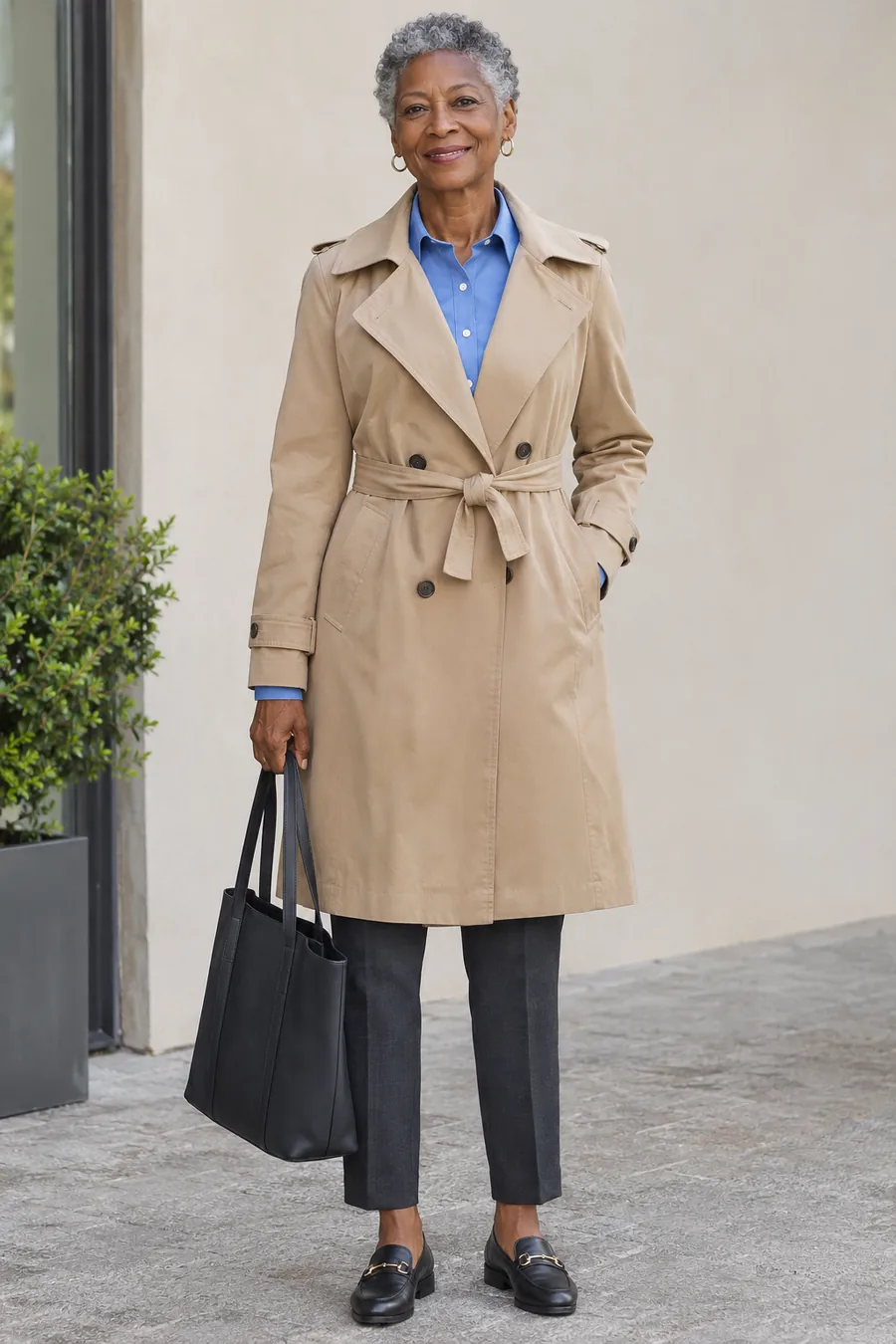
Put the blue shirt and charcoal trousers on before choosing the tightness of the trench belt. A gentle knot can give the coat shape while leaving room to reach and sit. Center the knot or move it slightly to the side, then check that the ends stay away from your knees as you walk. If the waist seam or belt loops feel too high, compare another proportion or coat length. You can also wear the coat without cinching it if the cut already falls well. Use a tote with enough room for paperwork and keep your shoes comfortable for the actual route. If the meeting room is heated, choose a shirt you like with the trousers alone. The coat can then hang without the outfit depending on it to look finished.
Shop this outfit
If you like a defined waist, check belt-loop placement and how easily the coat closes over a shirt. The belt should sit where it feels comfortable. Use your usual work bag in the try-on so you can judge the coat while carrying what you need.
7. A trench with a striped top and navy trousers
Wear it for a museum visit and short walk.
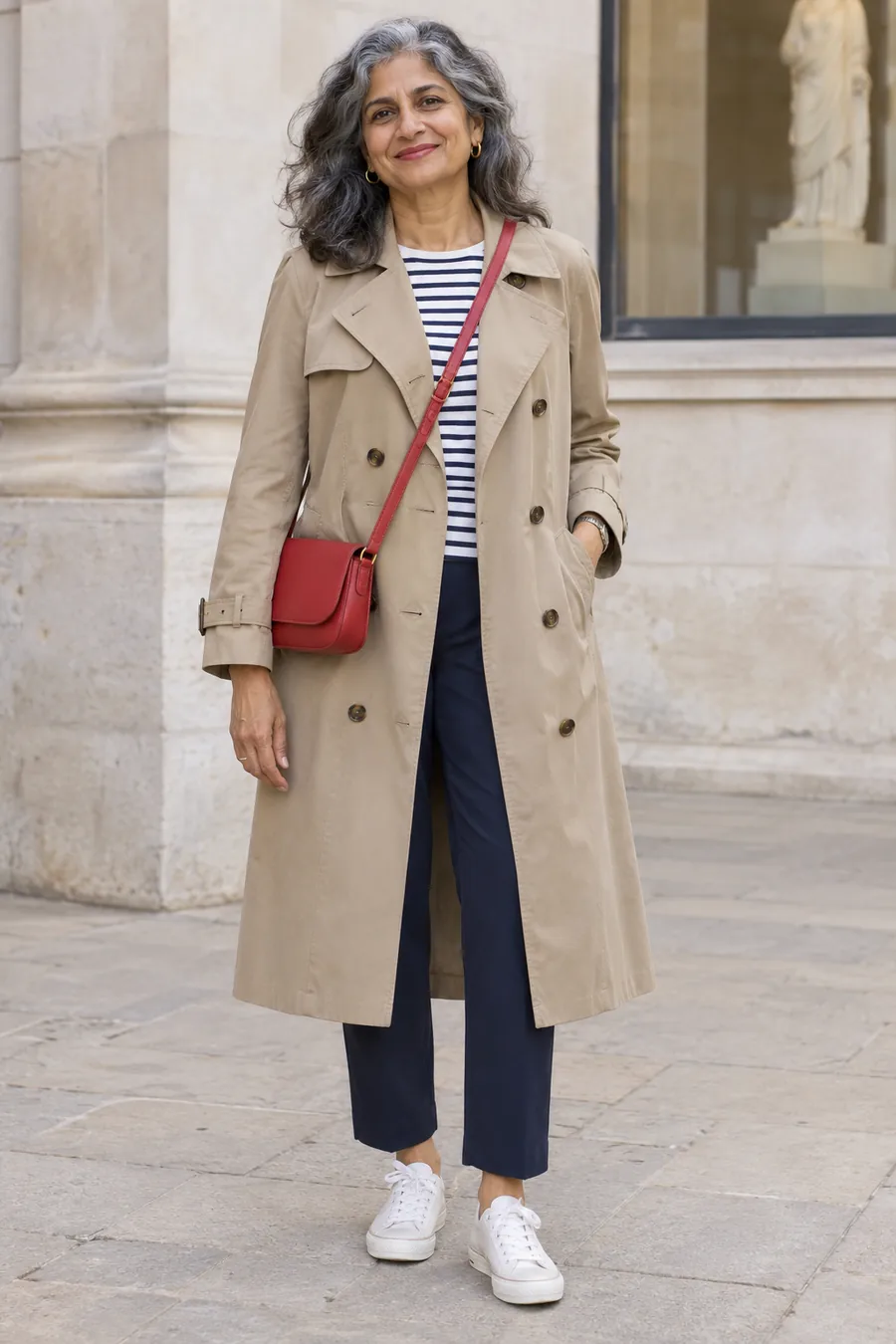
A striped tee and navy trousers make a base you can wear through several indoor stops. The stone trench softens the darker lower half, and white sneakers repeat the lighter parts of the stripe. Check how high the trouser hem rises while seated if you’re planning a matinee or a long café stop. Choose socks that feel comfortable with the sneakers and temperature. The red crossbody provides one color point, but its strap should sit cleanly over the lapel. If it keeps rolling the collar, try wearing the bag under the open coat or on the other shoulder. Put the belt where it will stay out of your hands as you browse. A coat you can take off and carry comfortably is useful when the day alternates between outside air and warm rooms.
Shop this outfit
A stone coat can be a lighter option over navy. Check the fabric against the stripes and choose a lining suited to your room temperatures. The sneakers are a useful place to reuse a pair you already know works for longer standing.
8. A light trench with a floral midi dress
Wear it for an afternoon family gathering.
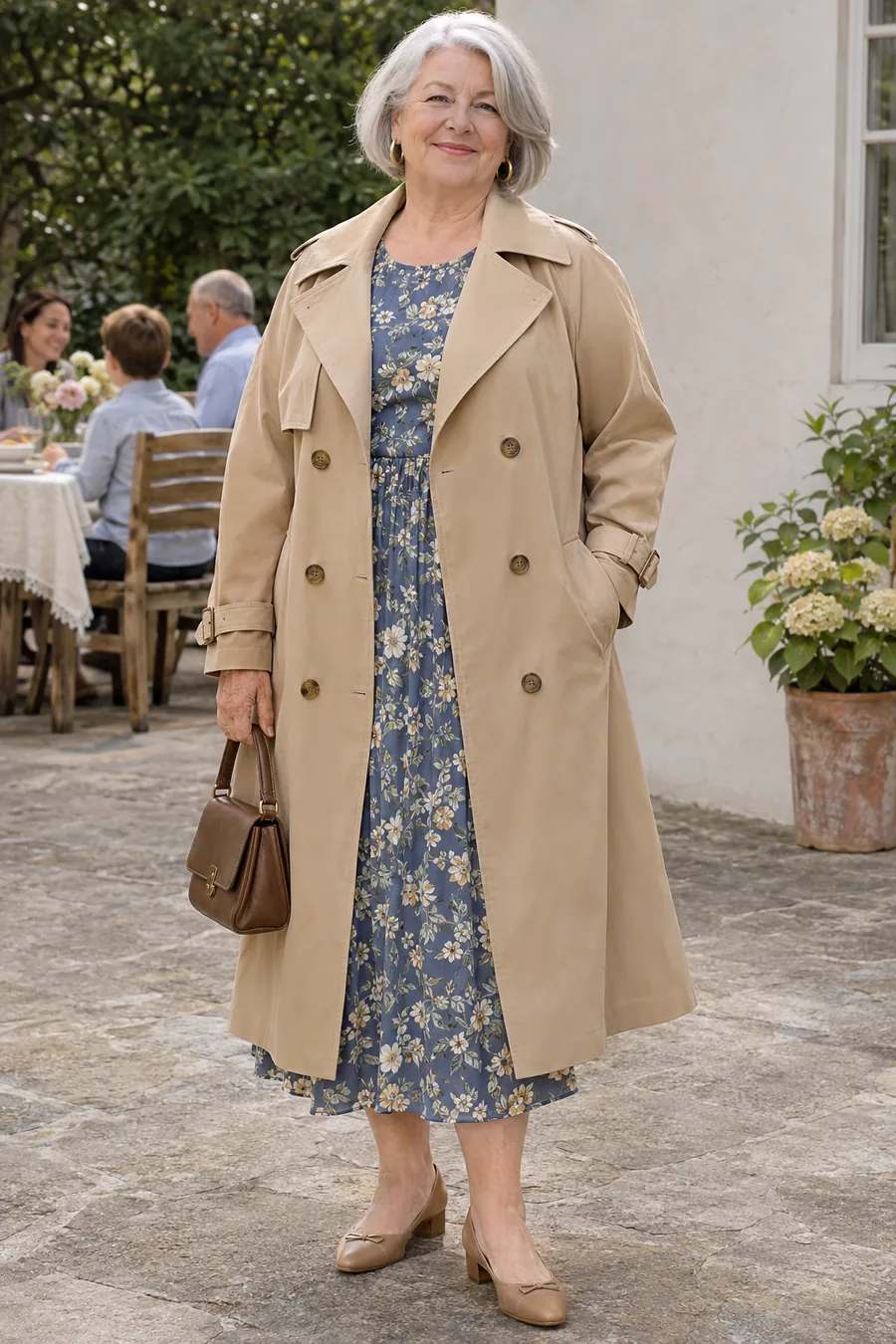
Use one of the quieter colors in a floral dress to guide the trench shade. A light tan or stone coat can work with many blue and cream prints. Try the dress with the shoes first and make sure the skirt allows a comfortable step. Then add the coat and compare where each hem ends. If the dress has a full skirt, check that it doesn’t bunch inside a close coat while you sit. A roomier cut may be easier than a larger size that drops too far at the shoulder. Small gold earrings and a brown bag keep the print as the main detail. If you plan to take the coat off for the meal, choose the dress for the room temperature and use the trench for the journey.
Shop this outfit
Choose the coat with the dress you plan to wear, rather than choosing each in isolation. Look at both hems with the shoes on. A small handbag works for a short visit; use a larger one if you need a layer, glasses or a return-journey essential.
9. Dark trench over a tonal black base
Wear it for a café in a city neighborhood.
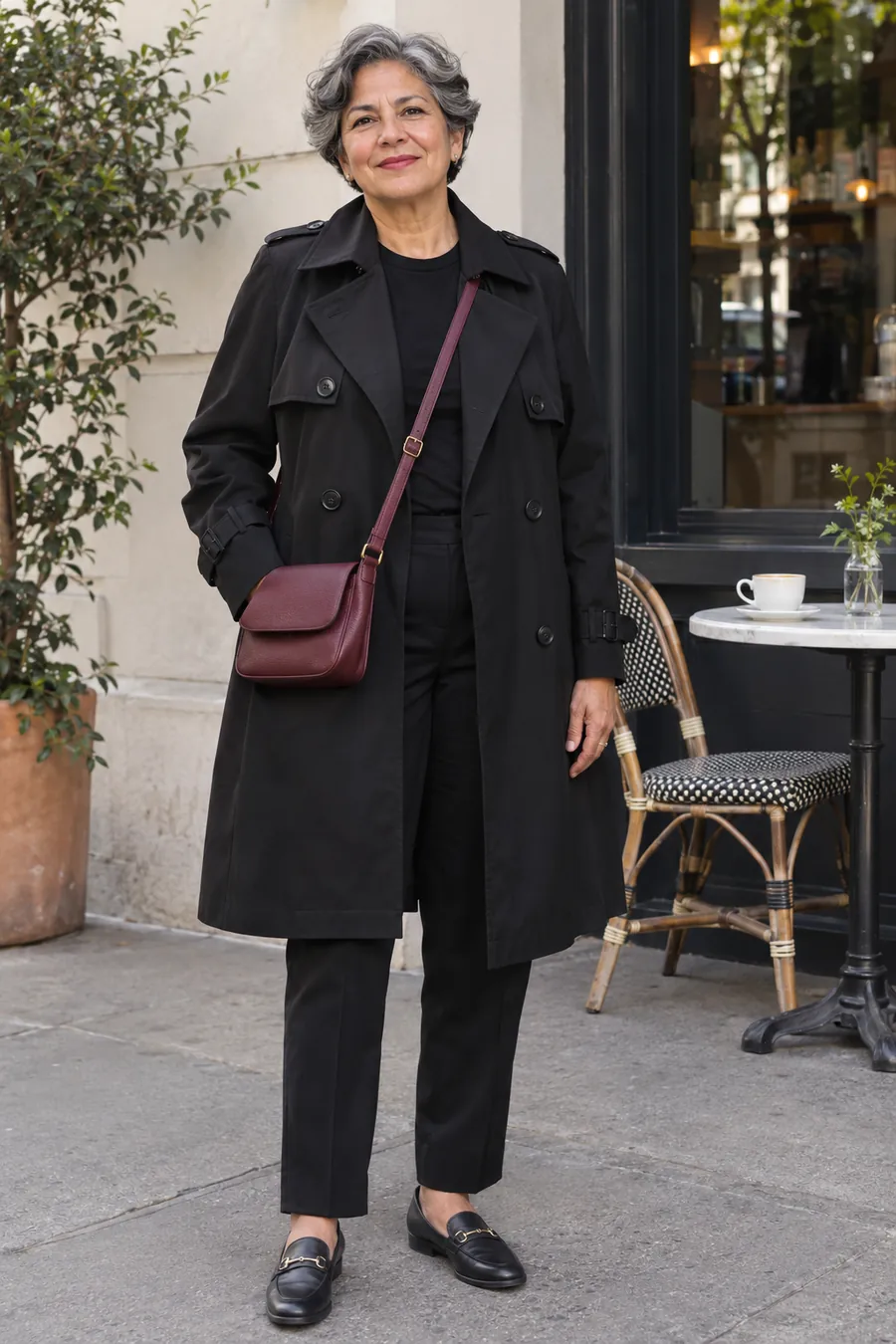
A black trench over black separates can be easy to repeat when you change the texture of one base piece. Try smoother trousers beneath a soft cotton tee so the fabrics remain visible in daylight. The burgundy bag gives a small warm accent. Put the coat on with the bag at your usual height and see whether the strap crosses the button line awkwardly. Open the coat while seated if the fronts gather at your lap. A lower shoe works when the trouser hem clears the ground, but check the back as well as the front. If the dark coat feels visually heavy, compare a lighter top at the neckline using the same trousers and shoes. Keep the version you can put together without adjusting every layer.
Shop this outfit
For a dark trench, compare how the fabric reads beside your black trousers. Texture can make the pieces distinct. A burgundy bag supplies a small accent you can also use with navy or gray, giving the accessory another place in your wardrobe.
10. A trench and cardigan for a cooler morning
Wear it for a clear chilly morning with room for a knit layer.
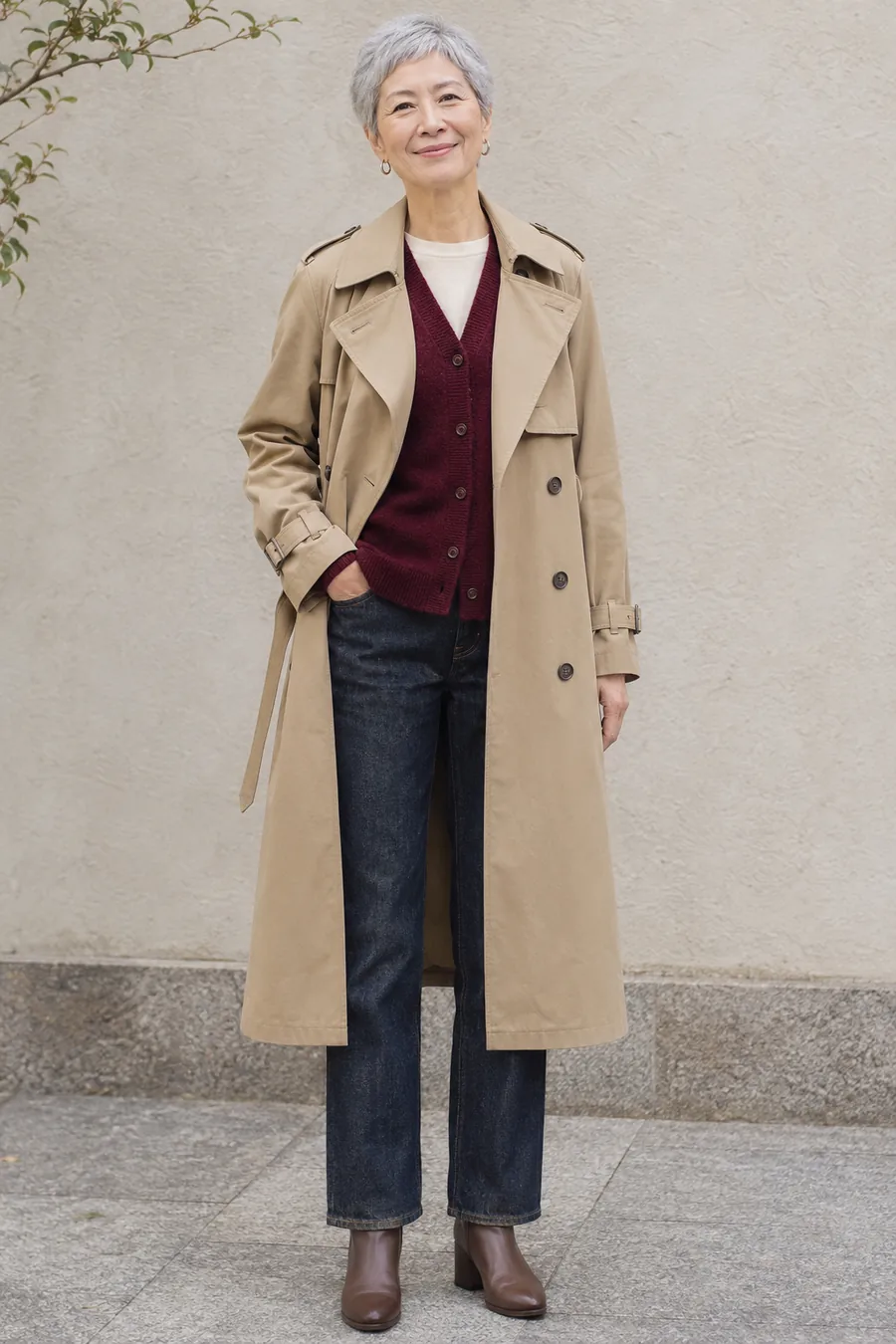
A burgundy cardigan under a beige trench gives you a layer you can keep on once the coat comes off. Try both together at home and bend your elbows several times. A coat that fits comfortably over a tee may pull with cardigan sleeves inside it. Choose a thinner knit or a little more coat room if needed. The dark jeans and brown boots make a simple lower half. Check the cardigan’s hem under the belt because thick ribbing can bunch at the waist. You can leave the cardigan open or fasten only the buttons that sit smoothly. If the morning will be much colder than the afternoon, choose a bag with space for the knit. A trench’s lining and outer fabric will affect its warmth, so judge the whole coat and your layers together.
Shop this outfit
Check the coat over the cardigan before ordering your usual size. Read the sleeve and bust measurements for the selected style. If you need another layer, a fine cardigan that works with two outfits can be a more useful addition than one thick knit.
11. A rain-ready trench outfit for short errands
Wear it for short errands in light showers.
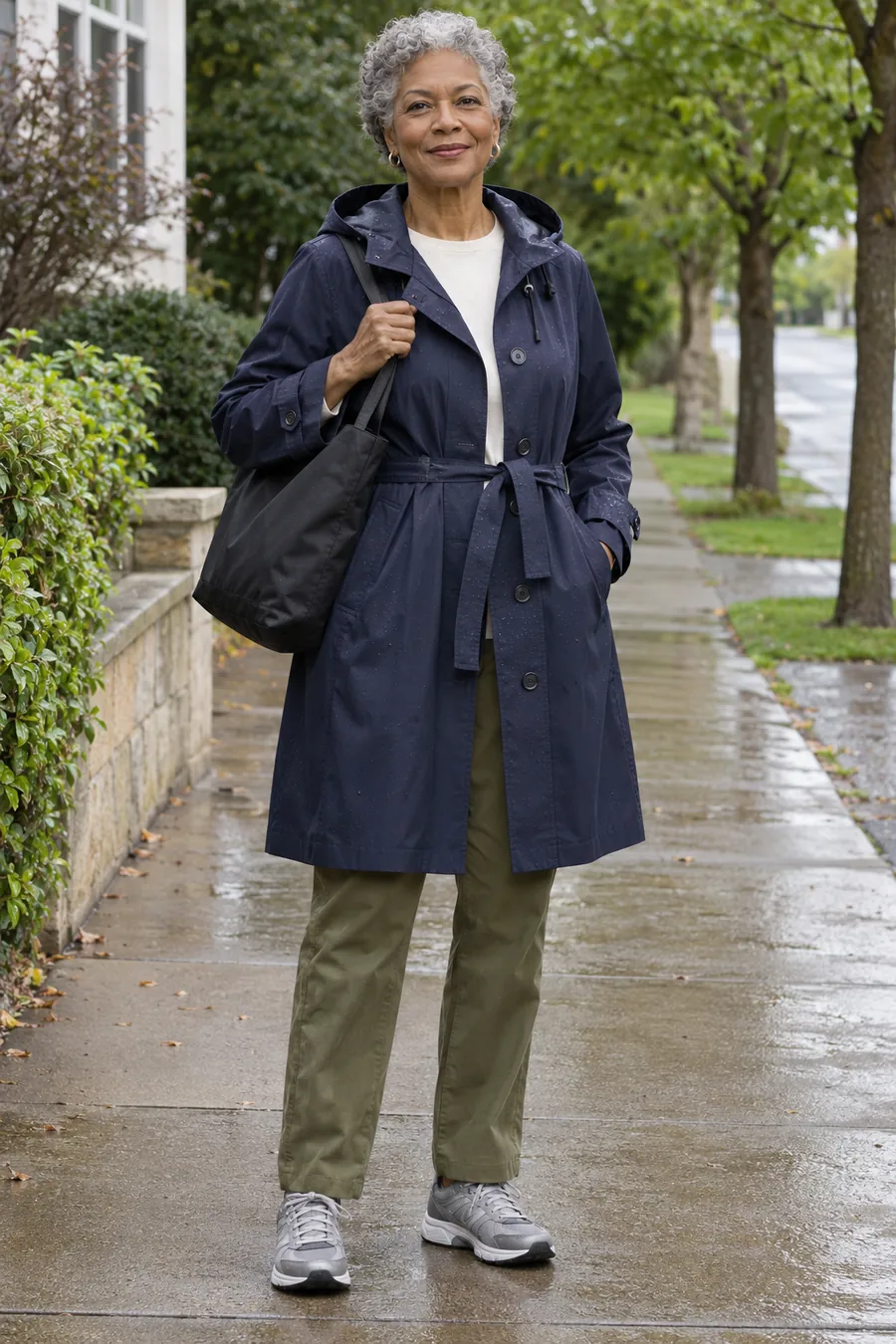
For short errands in light showers, check the trench’s own weather description before choosing it. A hood and a water-resistant finish can be useful, but look at the closure and coverage as well. Wear olive chinos with hems that stay away from damp pavement and shoes you already trust on that route. The navy and olive palette leaves the cream tee as a lighter base if you take the coat off inside. A nylon tote is easy to carry, but check its own weather protection before putting papers or electronics in it. A small sealed pouch can keep those essentials together. If you expect steady rain, choose outerwear specifically rated for those conditions and the length of time you’ll be outdoors. The look can stay simple while the practical choice changes with the forecast.
Shop this outfit
Read the weather claims on the specific trench listing and choose coverage for the time you’ll spend outdoors. If rain protection is your main need, compare hood, closure, seams and care instructions. Choose the footwear for your route and use a bag you can keep dry.
12. A short trench with a navy midi skirt
Wear it for a dry afternoon lunch in a leafy courtyard.
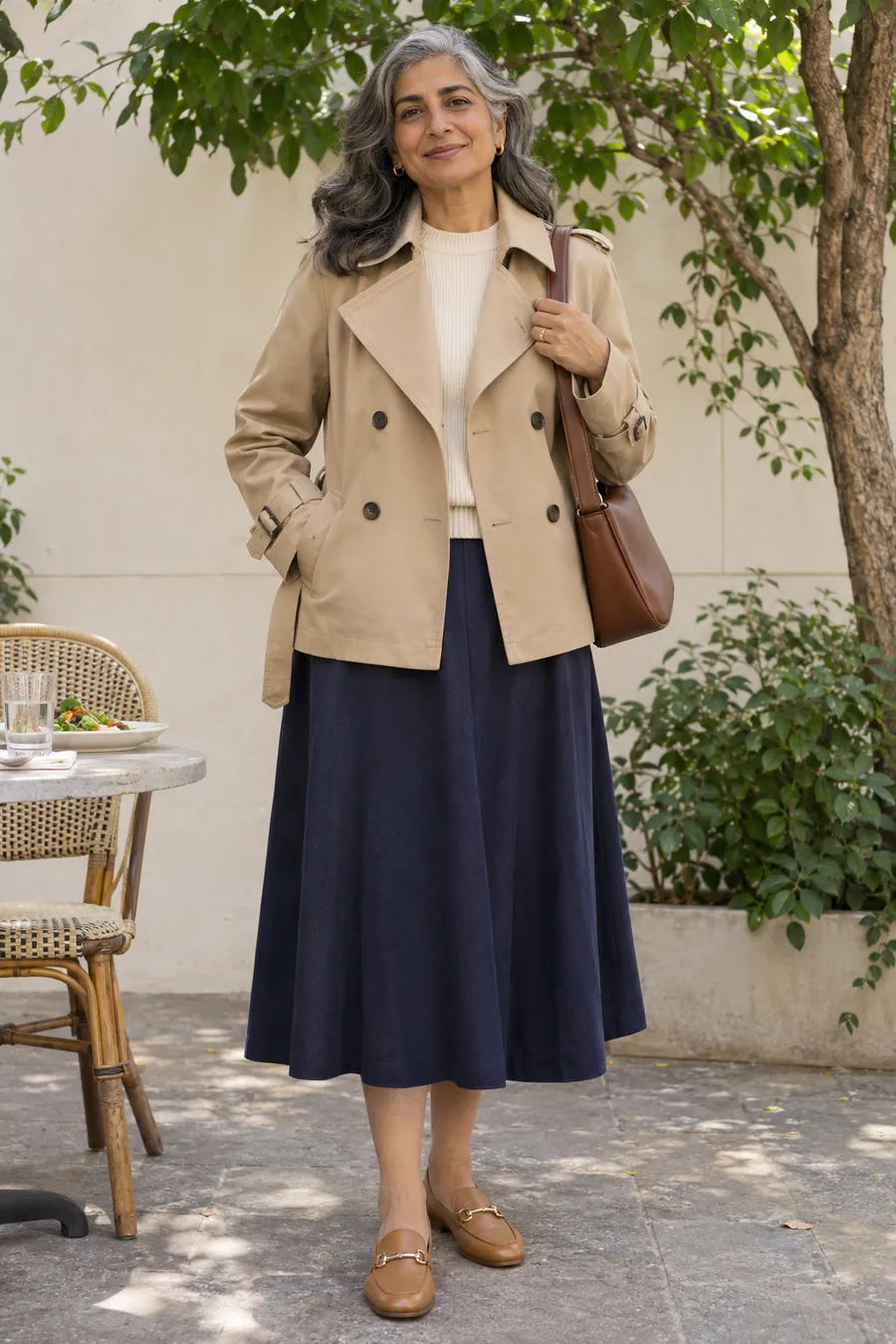
A short trench leaves the navy skirt’s movement visible. Try the cream sweater worn loose, then tuck a small section only if you prefer the line and it doesn’t make the waistband feel crowded. The coat’s hem should sit comfortably over the sweater without riding up as you reach. Tan loafers connect with the beige layer and keep the outfit useful for a lunch close to home. Check how the skirt and shoes behave on a step, especially if the skirt has a narrow opening. A brown shoulder bag can repeat the shoe tone without matching it exactly. If you like a more defined waist, compare the coat belted and unbelted over the full outfit. Leave enough room to sit through the meal comfortably.
Shop this outfit
A shorter trench can be a useful choice when you want a skirt to remain visible. Compare coat length with the skirt waistband and sweater hem. Tan loafers and a brown bag can work across several cream-and-navy outfits once the proportions suit you.
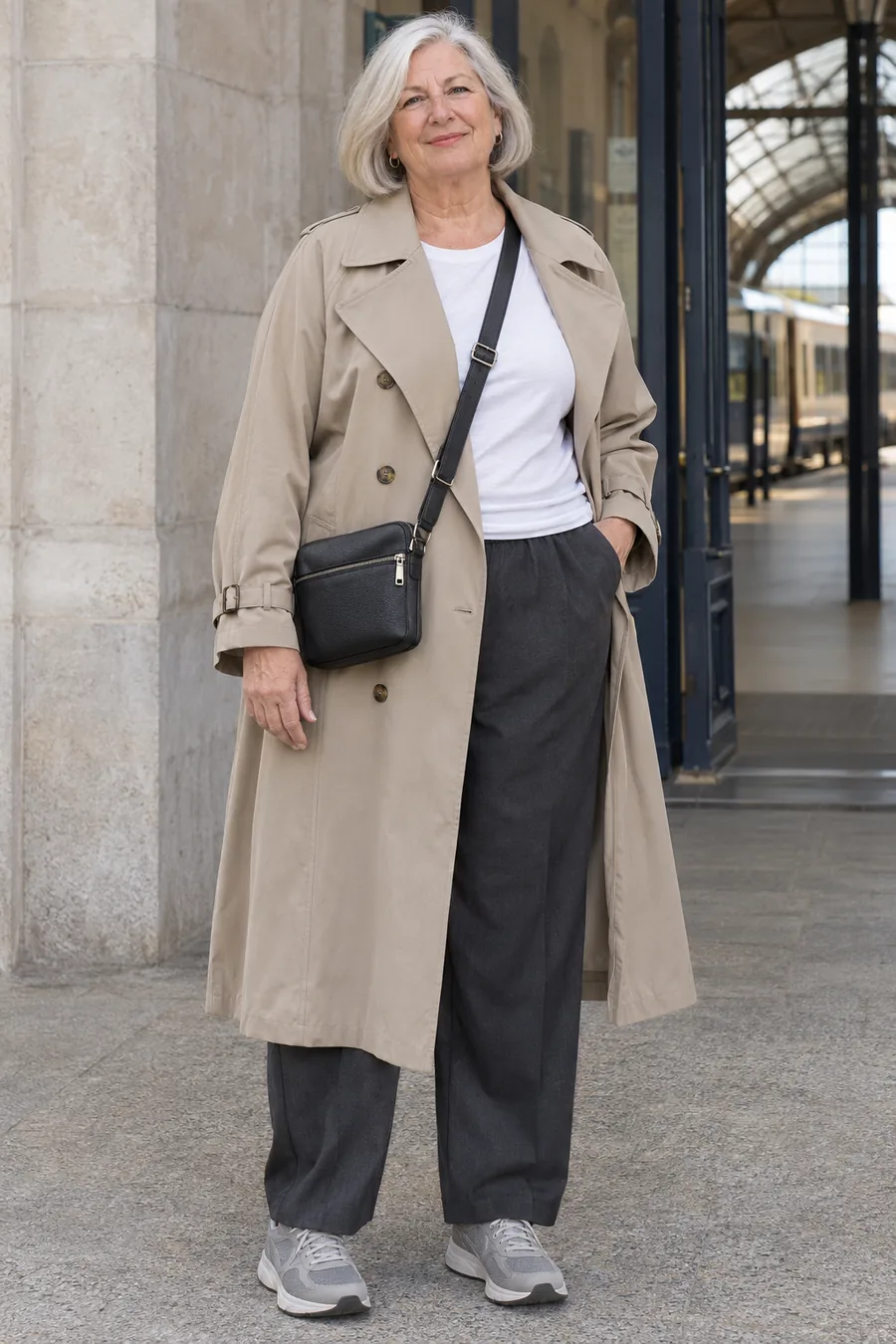
13. A softer trench for a train journey
Wear it for a daytime train journey.
A softer trench can be useful for a day when you’ll carry it between trains or take it off in a warm carriage. Check the care instructions and lining before choosing a travel coat. Wear pull-on trousers you can sit in, then add the tee and familiar walking shoes. Try reaching forward in the coat as if collecting a bag from beside your chair. If it pulls sharply across the back, test a different cut with the same base layer. Keep the crossbody zipped and easy to access with the coat on. If the belt is long, secure it before moving through a busy station. When you reach your destination, hang the coat if you can and follow the label for any pressing it needs.
Shop this outfit
For travel, compare coat weight, packing space and care as well as the silhouette. Read the size chart over the layers you actually wear. Keep your familiar walking shoes and pull-on trousers if they’re already comfortable for the journey.
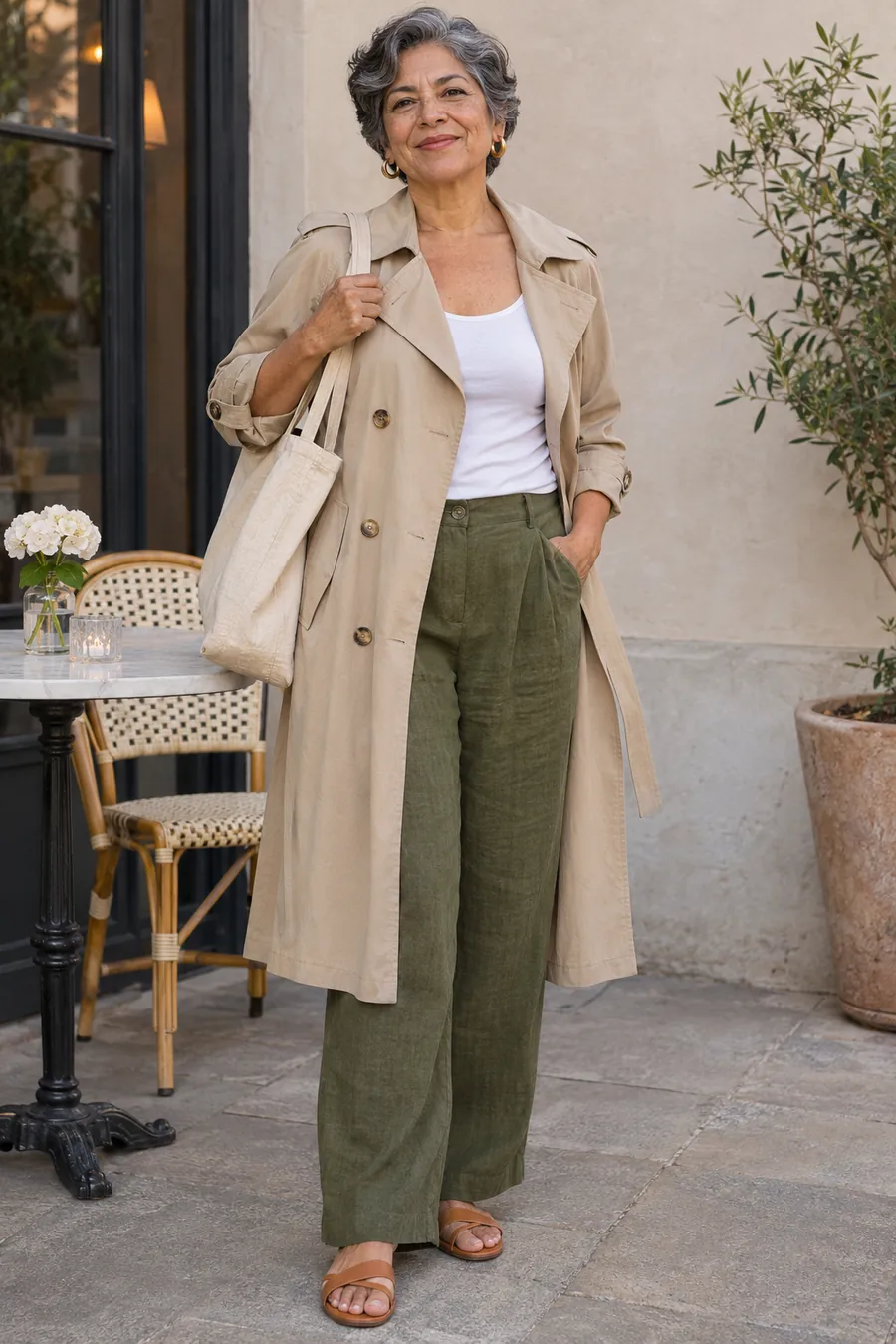
14. A lightweight trench for a warm-weather evening
Wear it for a mild evening on a café terrace.
A light beige trench over olive linen trousers works when the evening is mild and you mainly want a little coverage on the journey. Check whether the coat is actually unlined and how the fabric feels over your tank. The light layer should allow you to take your normal stride without the front twisting around your legs. Choose sandals you’ve worn for the route, then check the trouser hem so it clears the ground. A canvas tote can hold the trench once you sit down, provided the coat folds comfortably. If the fabric creases, decide whether you like that relaxed texture or prefer a different material. A belt tied loosely at the back keeps the front open and gives the olive-and-white base more room to show.
Shop this outfit
For mild evenings, check both shell and lining descriptions. An unlined option may suit your preferred feel, but its care still needs checking. A simple tank and linen trousers can also work without the coat, giving you a complete indoor outfit.
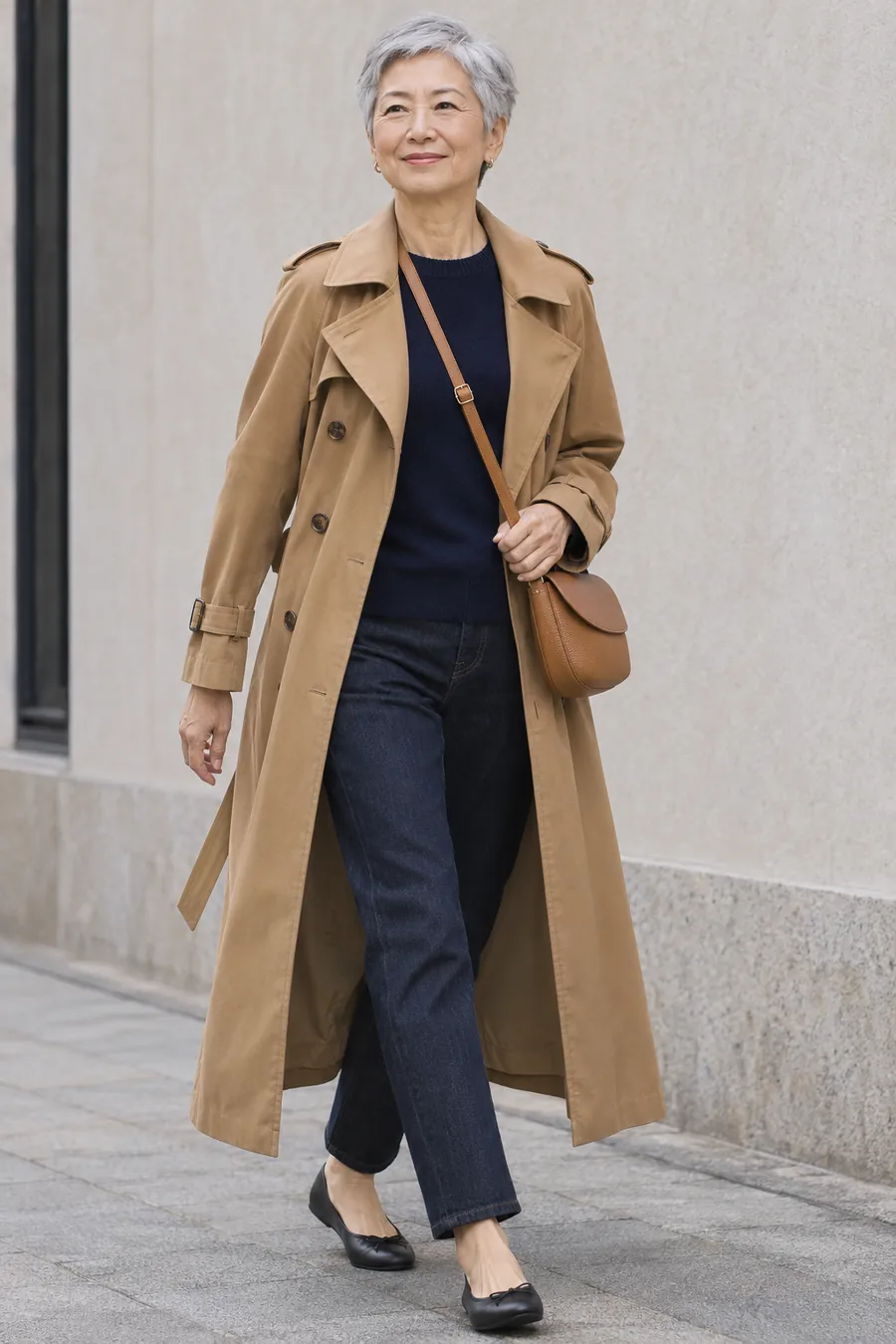
15. A long trench with straight ankle jeans
Wear it for a dry afternoon walk and coffee.
A long camel trench can work with straight ankle jeans when you choose the coat length around how you move. Put on your flats and walk, turn and take a step up. Watch the coat hem and belt ends from the side. If either catches near the shoe, compare a shorter size or length before deciding about the rest of the outfit. A navy knit gives the camel a darker edge at the collar. Keep the bag strap adjusted so it doesn’t drag one shoulder down. Wear the coat open for a visible strip of the jeans, or knot the belt lightly when you want it closed. For a petite or tall fit, compare the body and sleeve proportions as well as the total length. The outfit should feel easy away from the mirror.
Shop this outfit
Measure the longest coat against a coat you own and compare where it lands with your flats. The hem and belt ends should clear the route comfortably. A navy knit and ankle jeans let you use the same camel layer with a familiar darker base.
Give one trench a place in three outfits
Put the coat beside your most-worn jeans, a trouser outfit and a dress or skirt. Add the actual shoes and bag for each. Take a photo from the side as well as the front so you can see how the coat’s length relates to the lower half. Walk in every combination before keeping it in your rotation.
If one coat fits comfortably with all three bases, you have several ways to use it. If it works only with a thin top, decide whether that fits your weather and routine. A second coat is easier to choose when you can name the missing use, such as more room for a knit or protection for a wetter walk.
Care for the coat you actually own
Burberry’s trench aftercare guidance describes hanging garments between wears and treating water-repellent gabardine with appropriate specialist care when needed. Apply the maker’s instructions to your own coat. A treatment intended for one finish may be unsuitable for another.
Keep the belt with the coat, use a hanger that supports the shoulders and follow the label after the garment gets wet. Check any buckle or trim before pressing nearby fabric. If you need help with a stain, tell the cleaner about the finish and show them the care label. When weather performance changes, ask the maker about the appropriate service or treatment.
A final check before ordering
- Compare the measured coat length with a coat you already own.
- Check shoulder, upper-arm and bust room over your usual layers.
- Look at where the belt loops sit against your own waist.
- Read the shell, lining, care and weather details for the selected color.
- Try the coat with your actual shoes, bag and at least two outfits.
- Check the retailer’s current returns and sizing information before placing an order.
Frequently asked questions
What length trench coat is easiest to wear after 50?
Start with the length that clears your shoes and lets you sit and walk comfortably in your usual outfits. A knee-length coat is a useful comparison point, and a short or long cut can work when its proportions suit you. Measure against a coat you own.
Can petite women wear a long trench?
Yes. Compare a petite cut as well as the total length. Sleeve length, belt placement and the amount of fabric through the body can matter together. Try the coat in flats if those are your everyday shoes and test a full stride.
Should a trench coat be loose or fitted?
Choose enough room for the layers you plan to use, then judge the outline. A roomier body can still have a tight upper arm. Fasten the coat, reach forward and sit before deciding whether the cut works.
How do I wear a trench without using the belt?
Wear it open and secure the belt with a loose back knot or through its loops, depending on the design. Check that the ends stay clear of your hands and shoes. Some coats also work with the removable belt set aside.
Can I wear a trench with sneakers?
Yes. Pair it with jeans, ankle trousers or a dress that lets you walk comfortably. Choose the sneakers for your actual route, then check the lower hems from the side and back.
Are trench coats waterproof?
Read the specific product description. Many fashion trenches are described as water-resistant or water-repellent. For longer or heavier rain exposure, compare waterproof construction and sealed seams as well as coverage and breathability.
What should I wear underneath on a cold day?
Try a fine knit or cardigan with a comfortable base top, then check the coat through the shoulders and sleeves. For colder conditions, choose the outerwear and insulation that suit the temperature and time outdoors.
Which color should I choose first?
Compare the colors you already repeat. Beige or taupe often works with denim and warm browns. Navy can suit cream and gray, while olive can connect ecru, blue and brown. Try the coat near your face in daylight.
Can I wear a trench over a midi dress or skirt?
Yes. Look at the two hems together with your actual shoes and test sitting and a long step. Choose a coat that gives the skirt enough room to settle freely.
How many trench coats do I need for these outfits?
You can start with one coat that works over two or three outfits you already own. Change the base or shoes as the weather allows. Add another length or weight only when it solves a different need.
Keep reading
15 blazer outfits with a fit guide · 20 jeans outfits for women over 50 · How to shop for clothes over 50 · A winter capsule wardrobe





Leave a Reply