
This post may contain affiliate links. If you buy through them, we may earn a small commission at no extra cost to you. Read our disclosure.
Getting dressed gets easier when you know which pieces work together, which hems go with your shoes, and what you can wear comfortably through a whole afternoon. Start with a reliable outfit formula and make one adjustment at a time. A different cuff, shoe or layer can make an outfit you already own work for a different part of your day.
These 25 fashion tips for women over 50 include 15 pictured outfits and 10 ways to make your wardrobe easier to use. Begin with whichever problem you run into most, whether it’s trousers that feel fine until lunch or a blazer you never reach for.
Affiliate disclosure. As an Amazon Associate I earn from qualifying purchases. The AI-generated outfit illustrations are inspired by product descriptions. Paid links open Amazon listings or searches for similar pieces. Check the selected size and shade before ordering.
In this post8 sections
Find the fix that fits your morning
| When this happens | Try this first | Check it in real life |
|---|---|---|
| You don’t know where to start | Collared shirt, dark straight jeans, flats | Can you dress it up with a bag you own? |
| The outfit feels shapeless | Show your wrist or shorten a loose top | Can you sit without the tuck bunching? |
| A new bag looks out of place | Repeat a color in one other small detail | Does it look connected from a few steps back? |
| You need to stay comfortable all day | Test the waistband and shoe indoors | Can you sit, walk and carry your usual bag? |
| A new garment works once | Try it in two outfits before removing the tags | Do both outfits suit your actual calendar? |
Start with fit, proportions and color
1. Pick an outfit formula you can repeat
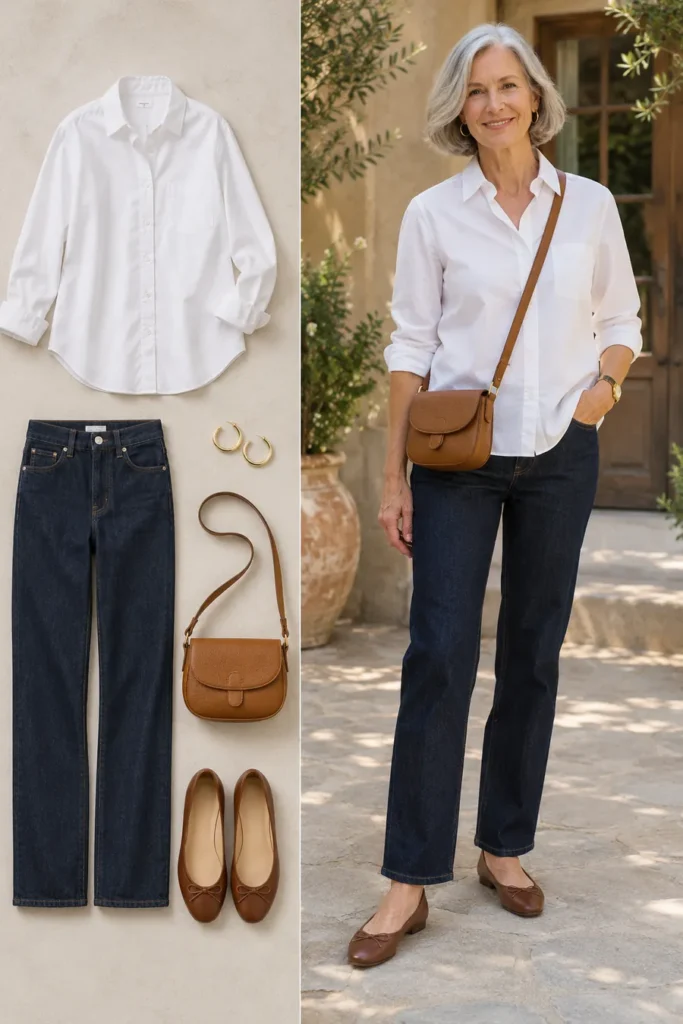
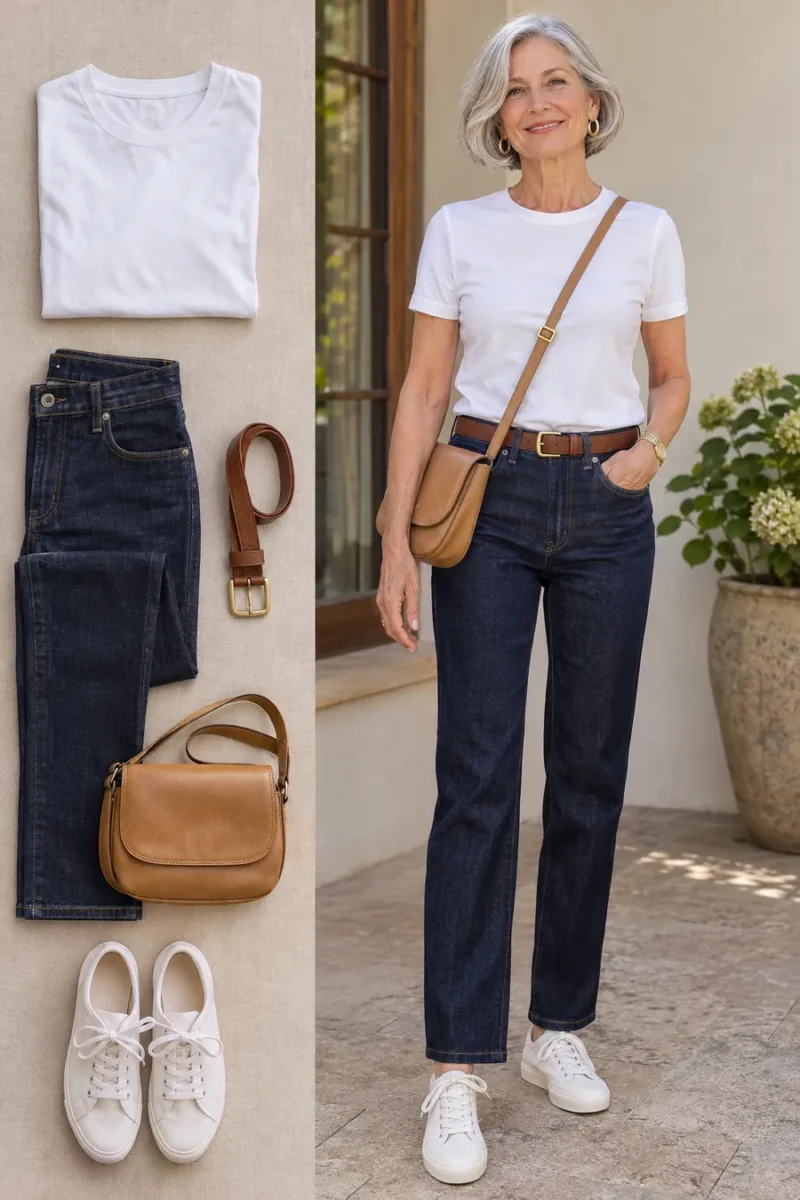
Start with a collared shirt, straight jeans and flats. For a lunch that calls for a little more polish, tuck just the front of the shirt and switch to a structured bag. For errands, leave it loose and keep your hands free.
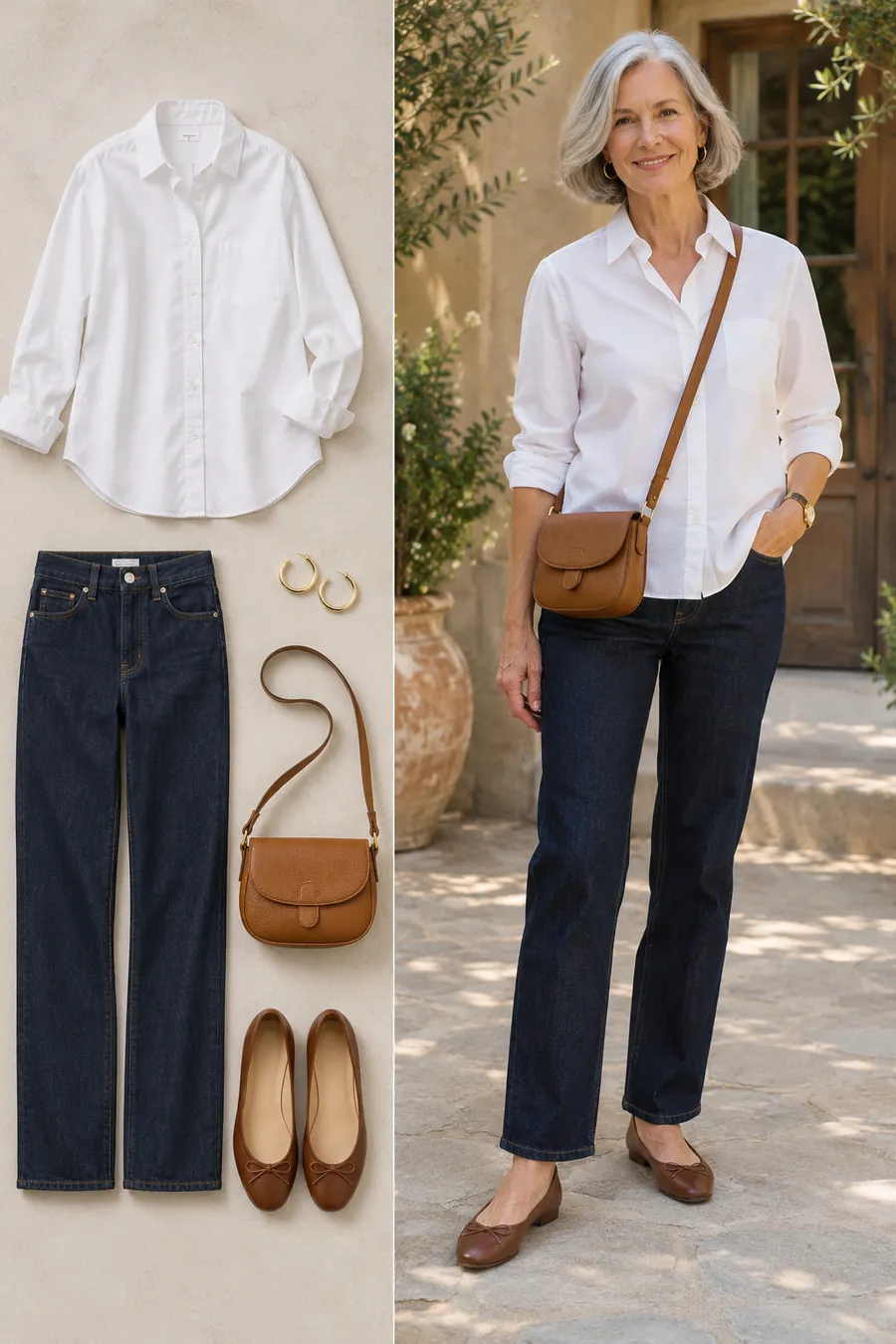
Try this first: Change one thing for your next outing, such as the shoe or the shirt color. The rest of the formula stays available when you have five minutes to get dressed.
2. Balance one loose piece with one defined edge
Try a roomy sweater with a trouser that hangs straight from the hip. Reveal the wrist by adjusting the cuff, or use a gentle front tuck. A visible edge can keep a relaxed outfit from feeling like one uninterrupted block.
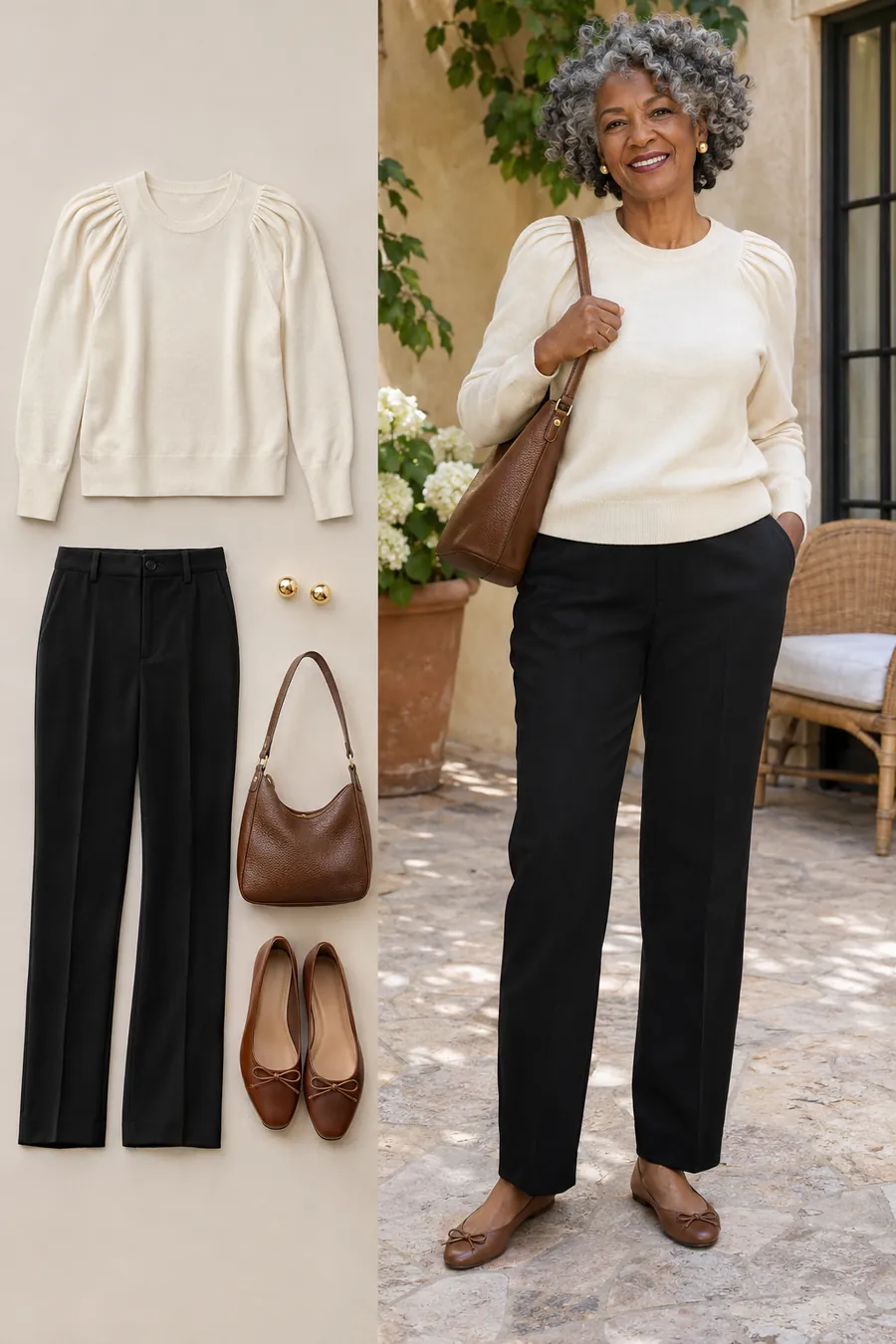
Try this first: If the tuck makes a lump at the waistband, leave the sweater loose and use a slightly shorter hem instead.
3. Check hems with the shoes you wear
Stand in the boots you wear most, then walk and sit. See whether the denim catches on the boot shaft. If you swap to flats and the hem drags, it may be useful to have one inseam for flats and another for boots.
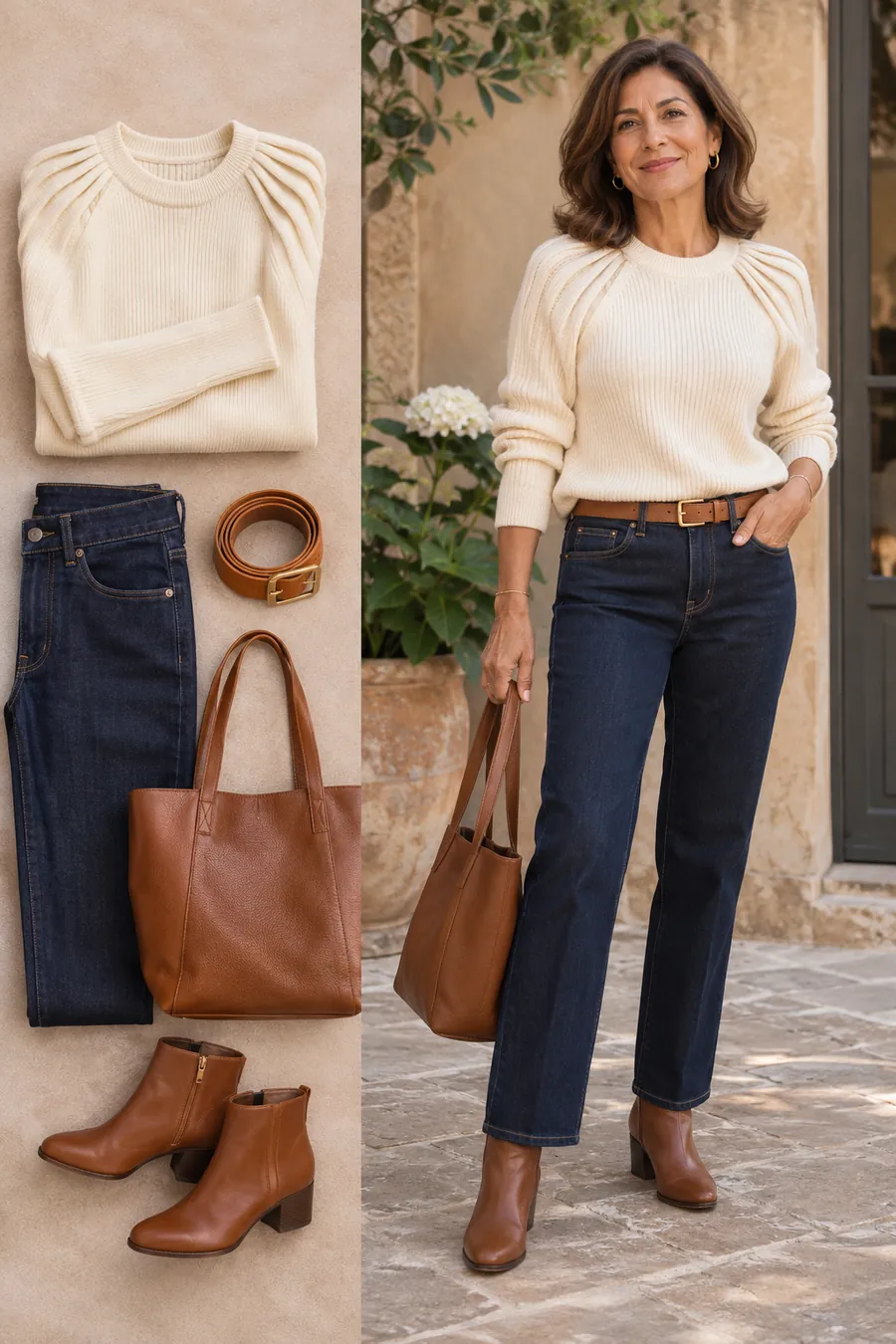
Try this first: Before hemming, follow the care label through a normal wash and dry cycle so your tailor works with the length you are likely to keep.
4. Choose two neutrals and an accent
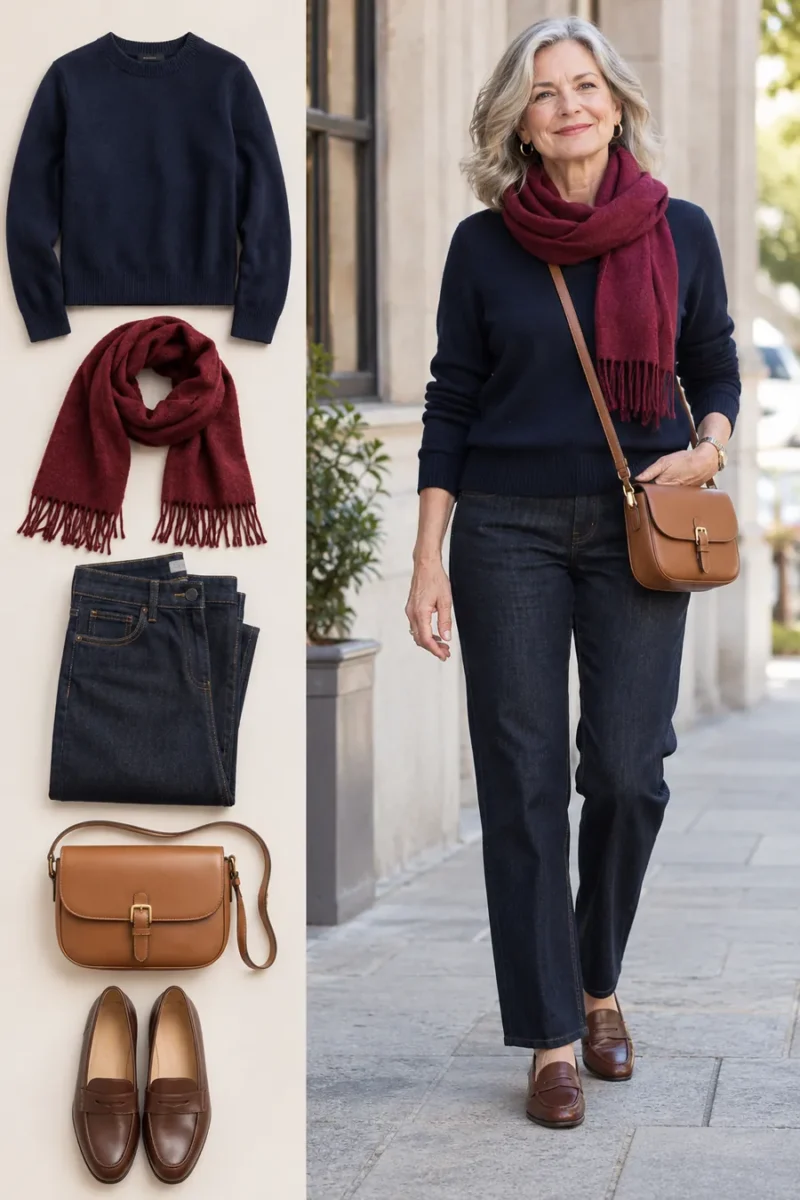
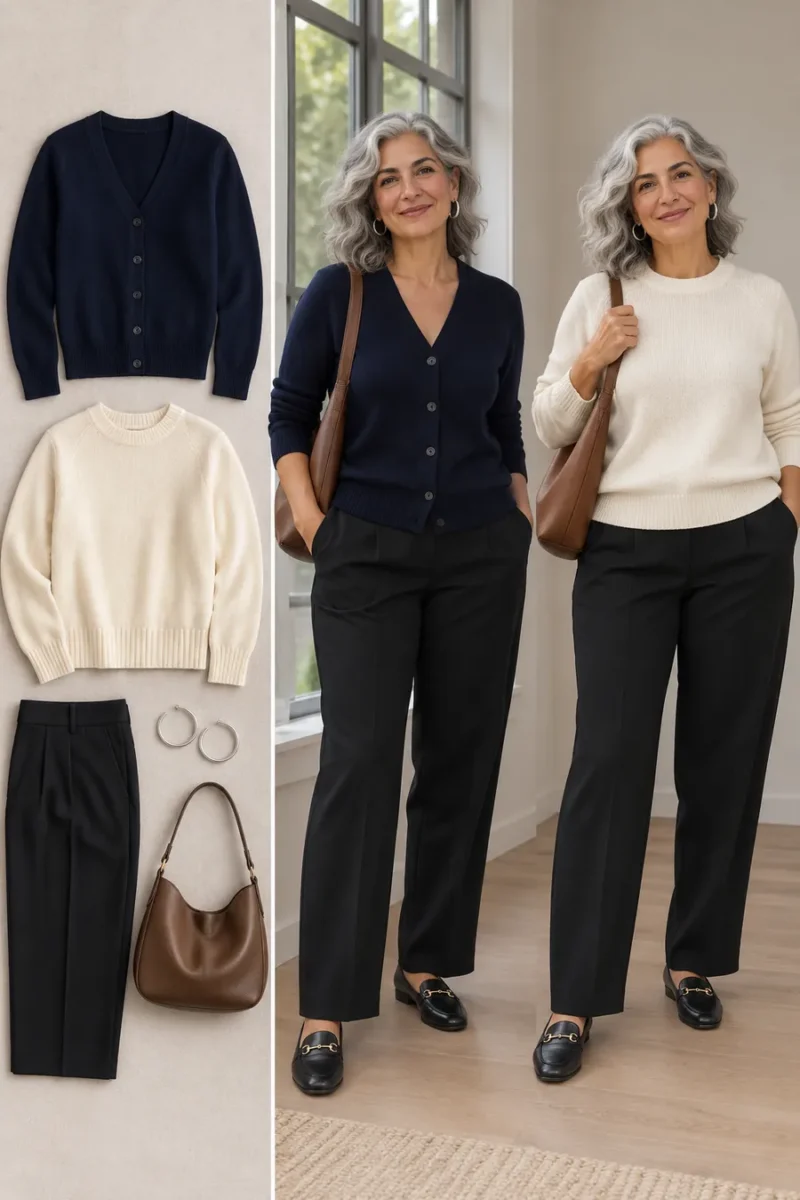
A white shirt and black trousers set the base. Burgundy adds a little color while chestnut flats keep the outfit warm. If you reach for navy more often than black, use a navy trouser and keep the same accessory experiment.
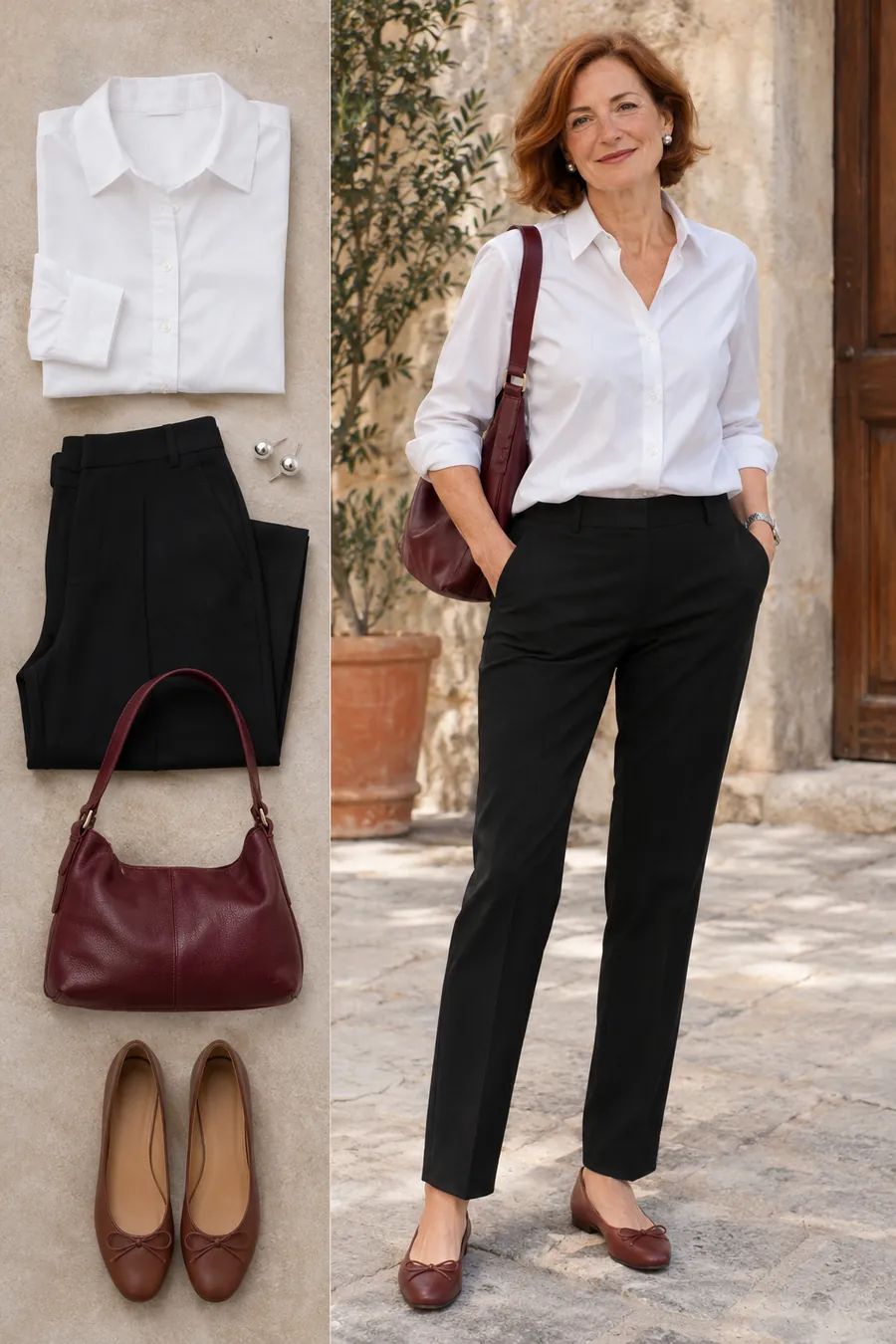
Try this first: An accent works best when you already like wearing it. Try it as a bag first if you are unsure about seeing it close to your face.
5. Try white and ivory in daylight
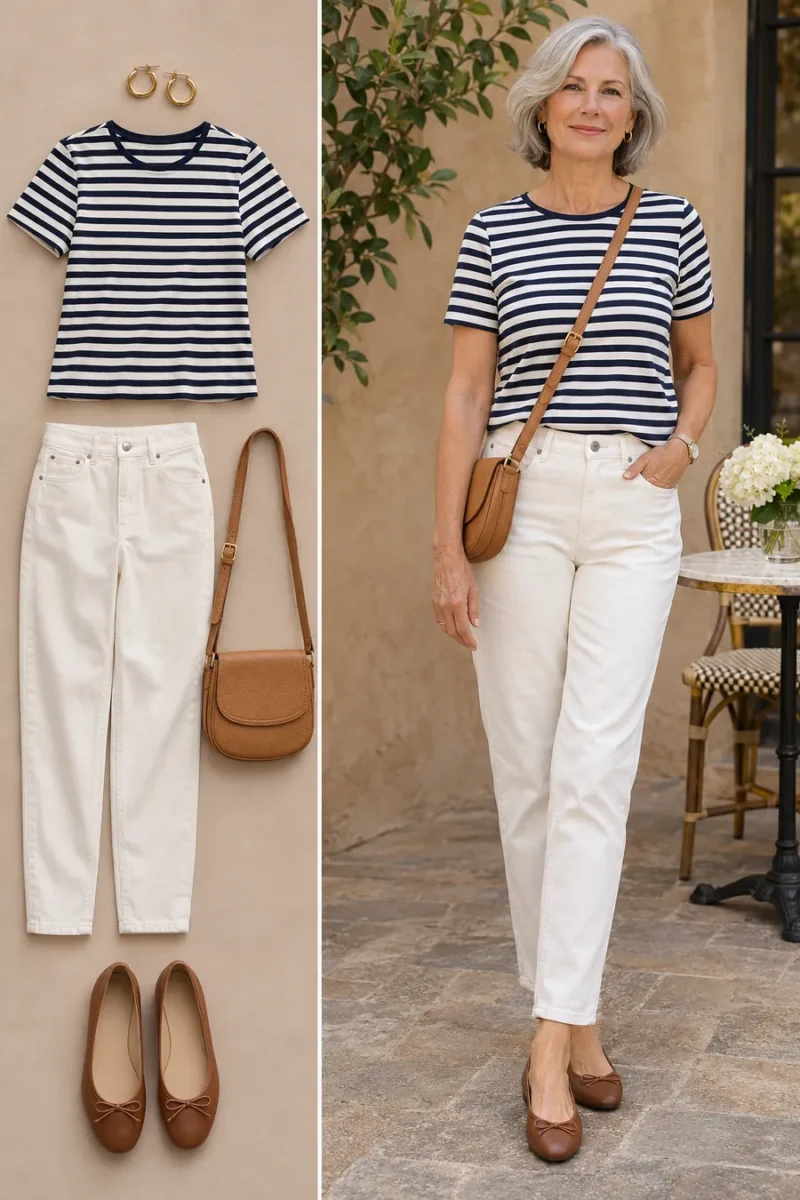
Hold the whites beside each other in daylight. A warmer knit and brighter linen trousers can work together when the textures differ. Put the shade you prefer next to your face.
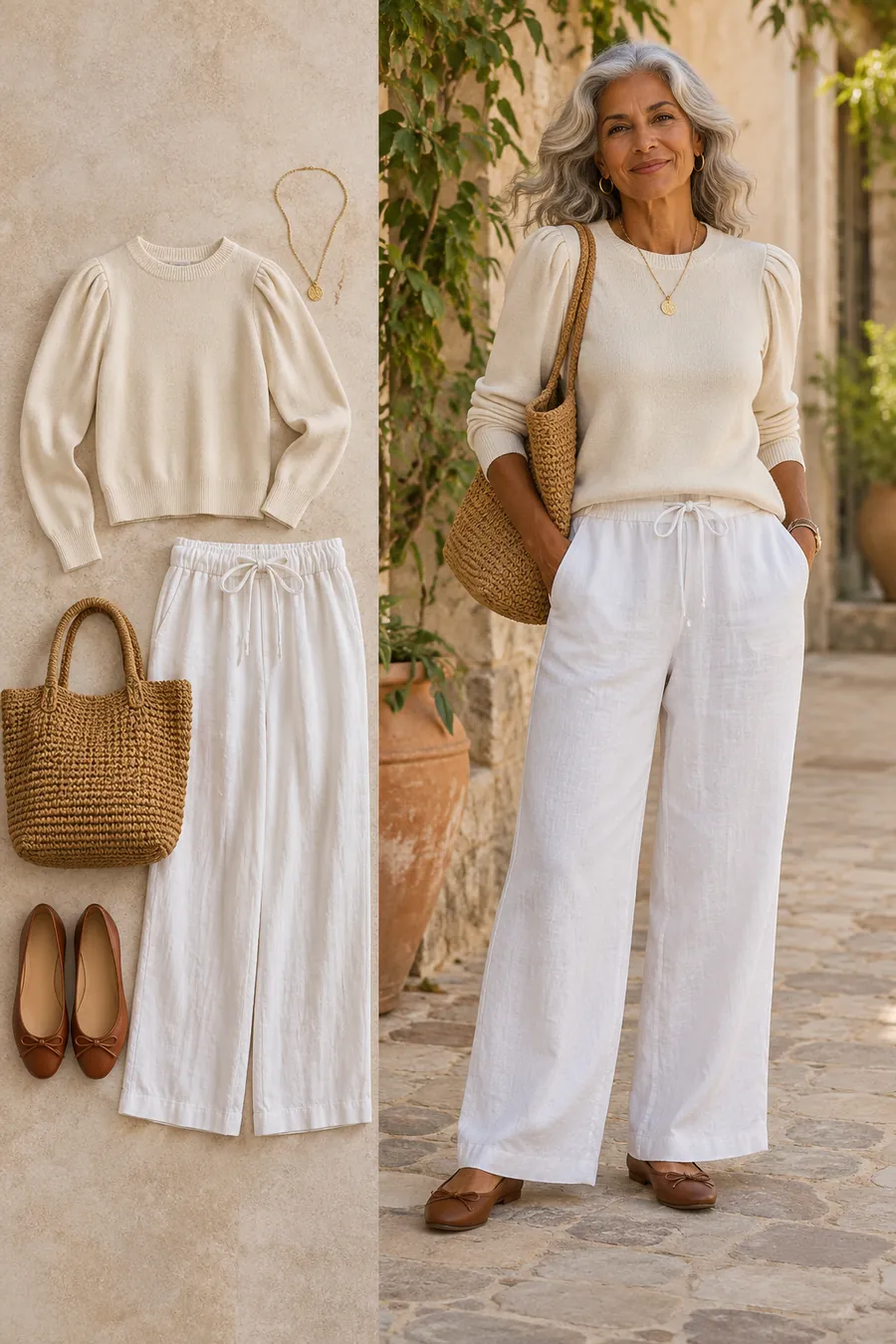
Try this first: Check the pants’ pocket outlines and seat in daylight. If they show more than you want, try a lined weave or a thicker white denim.
Make everyday outfits work harder
6. Repeat a color somewhere small
White sneakers pick up the white tee under a navy blazer. The light color appears twice without making the bag and shoes match. Repeat an accent this way when one bright accessory feels disconnected.
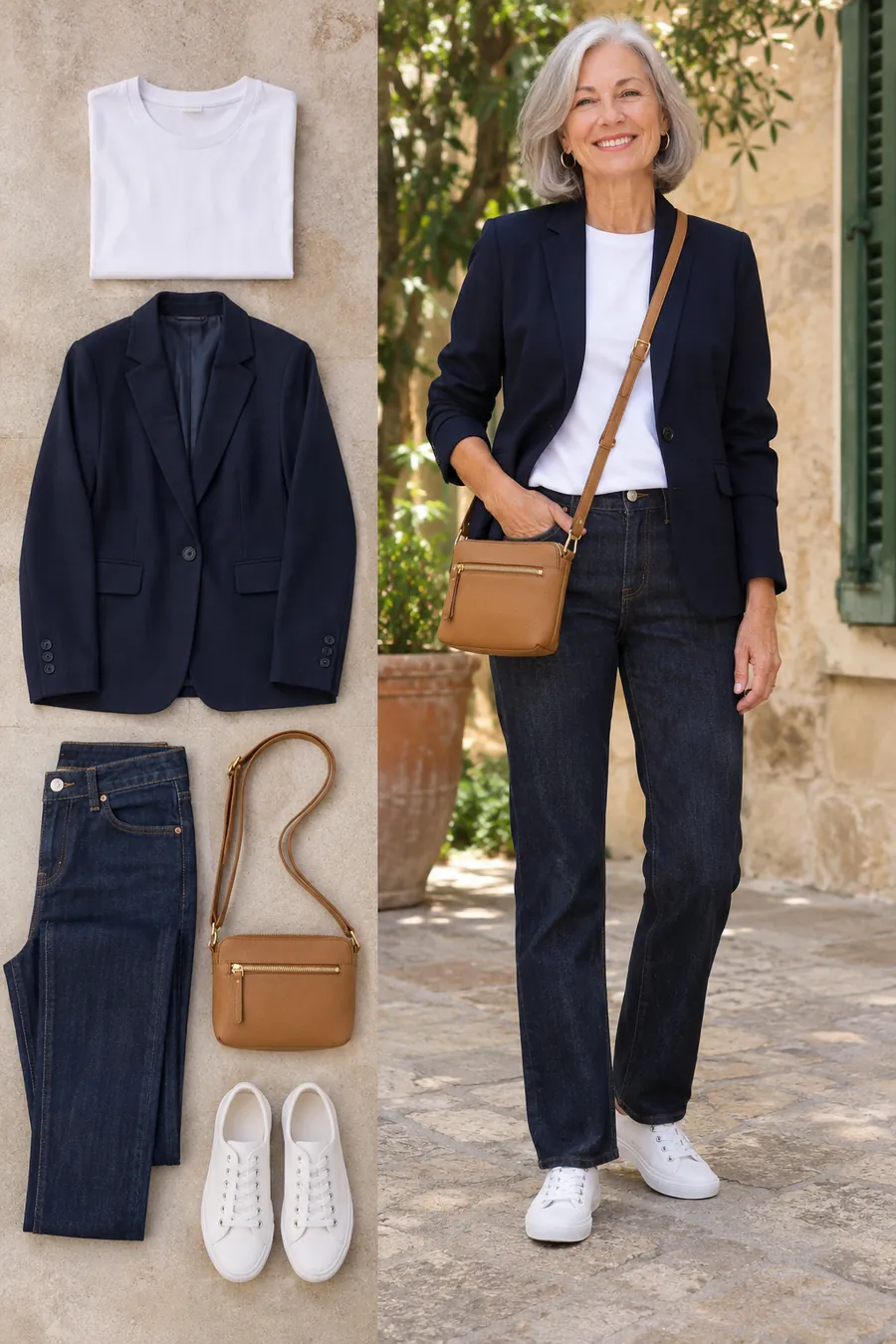
Try this first: You can use an earring, a striped cuff or a print instead of a second large piece. Step back from the mirror to see whether the connection is visible.
7. Use a light layer to frame a column of color
An open white shirt over a navy tank and navy trousers makes a simple column from shoulder to hem. Let the shirt hang naturally and roll the cuffs if they catch on the tote.
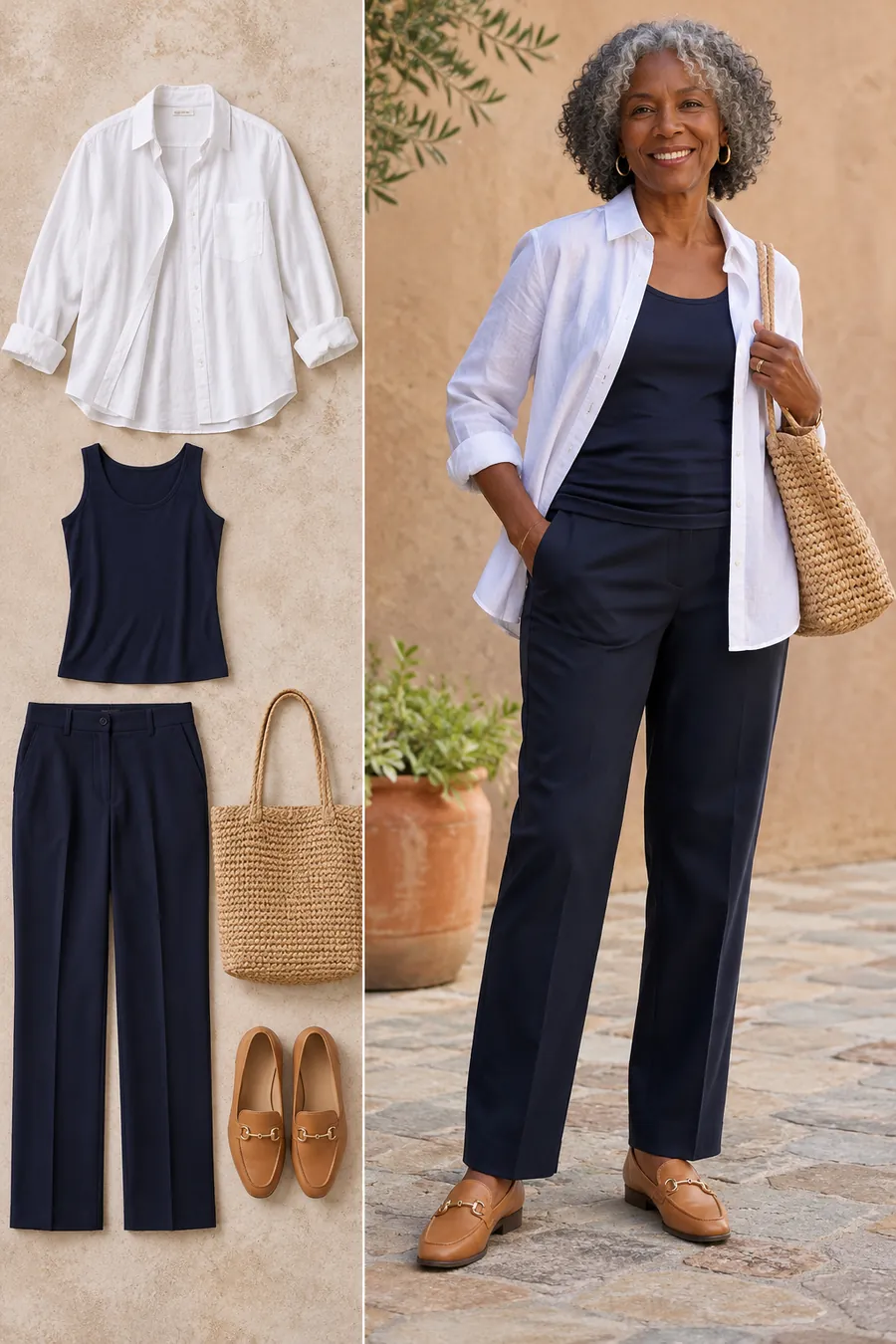
Try this first: Make sure the layer works where you actually need it. If the room is cold most of the day, swap the shirt for a cardigan that gives you the same open shape.
8. Dress for a full afternoon of sitting
Before an appointment or long lunch, sit in your trousers for several minutes. See whether the waistband presses, the pockets pull open or the knee feels tight. Try the outfit with the bag and coat you will carry.
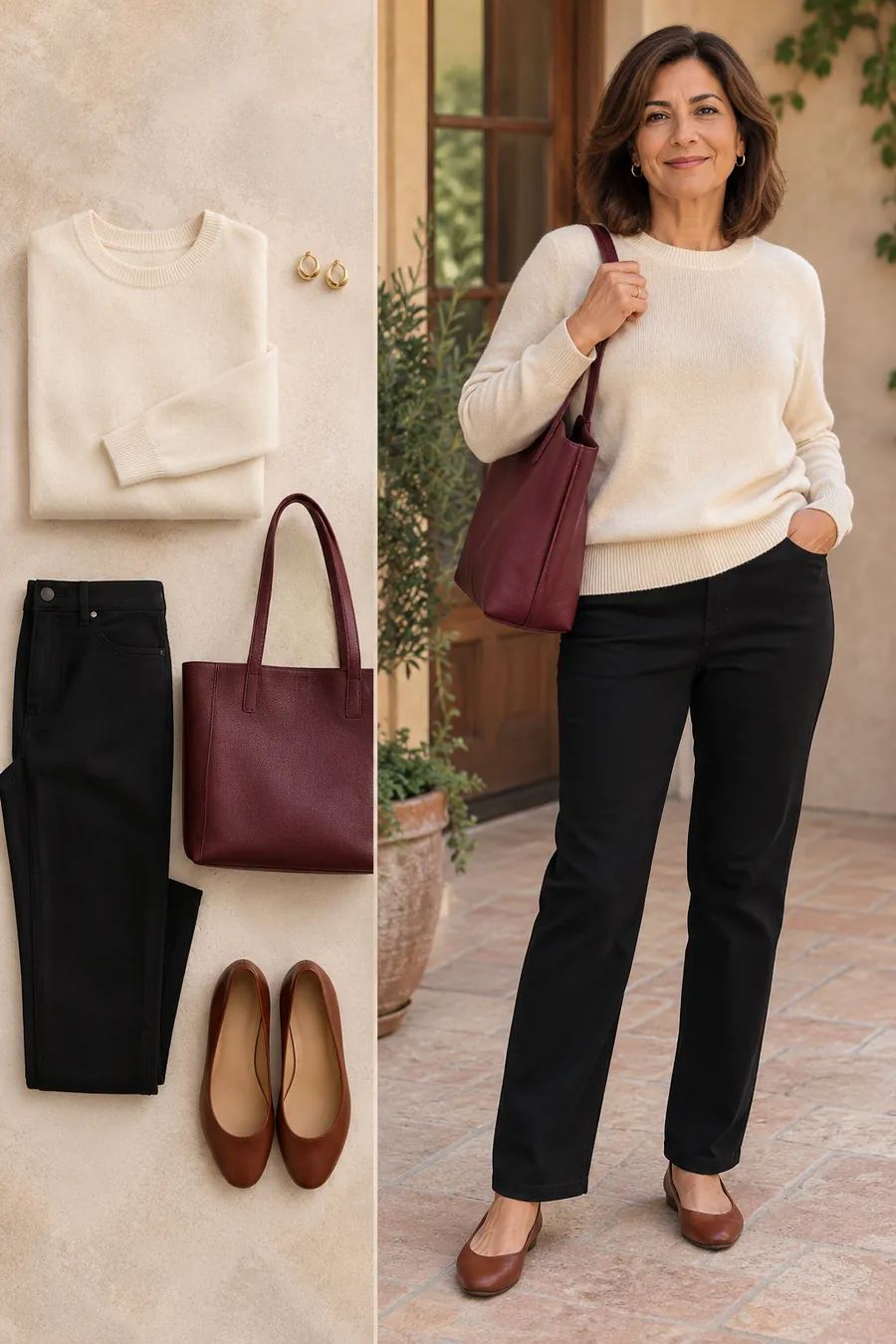
Try this first: A fuller leg opening is useful if you need room at the knee. Try a different rise if the waist digs in, even when the size looks right standing up.
9. Make sneakers work with a dress
A white canvas sneaker keeps a blue shirt dress casual enough for sightseeing. Try both together and check the hem in profile. A low-profile sole leaves room for the skirt to move visually.
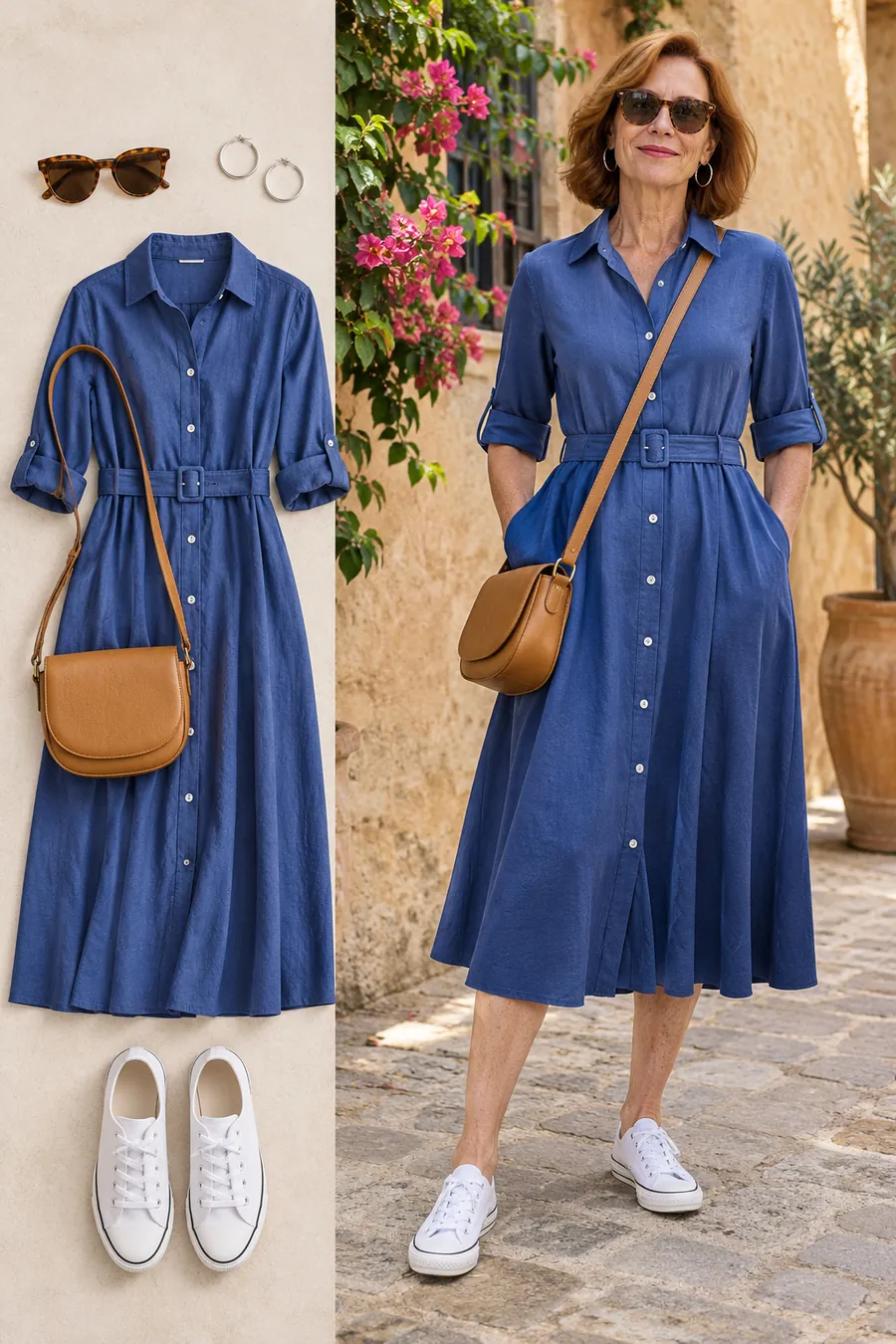
Try this first: For a long day, wear the shoes with your normal socks before packing them. If your heel slips indoors, take the walking shoes you already trust.
10. Set the dress code with a jacket
A black blazer can make dark jeans feel right for a lunch where denim is welcome. Keep the jeans free of distressing and check that the jacket closes without the collar lifting.
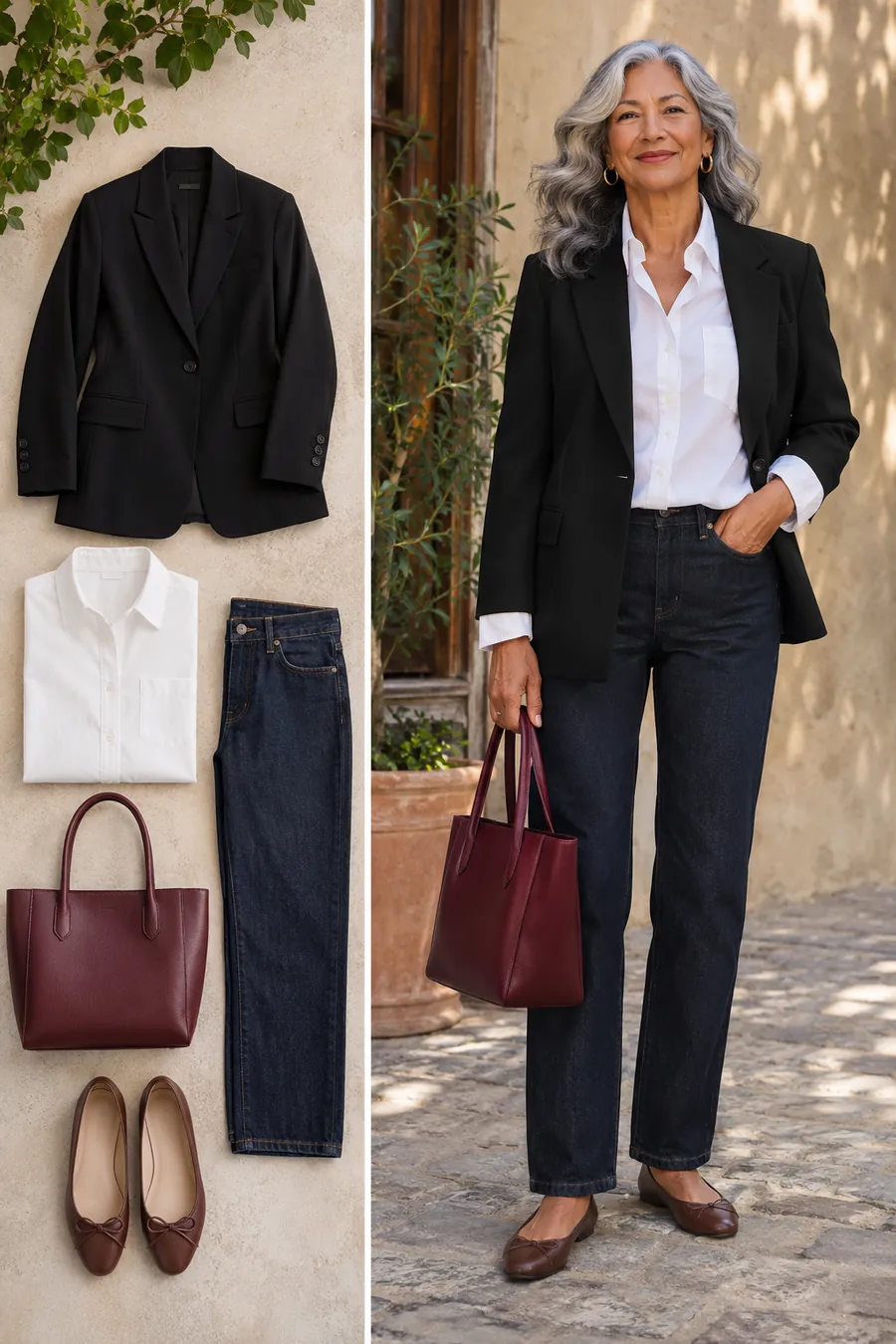
Try this first: If a venue calls for business dress, switch to tailored trousers. The shirt and flats can stay, so the outfit only needs one change.
Dress for travel, dinner and repeat wear
11. Swap texture when an outfit feels flat
Mix the sheen of satin with the matte finish of poplin. The two materials make a small palette feel intentional. If satin marks or clings in your usual activities, try a matte skirt with the same cut.
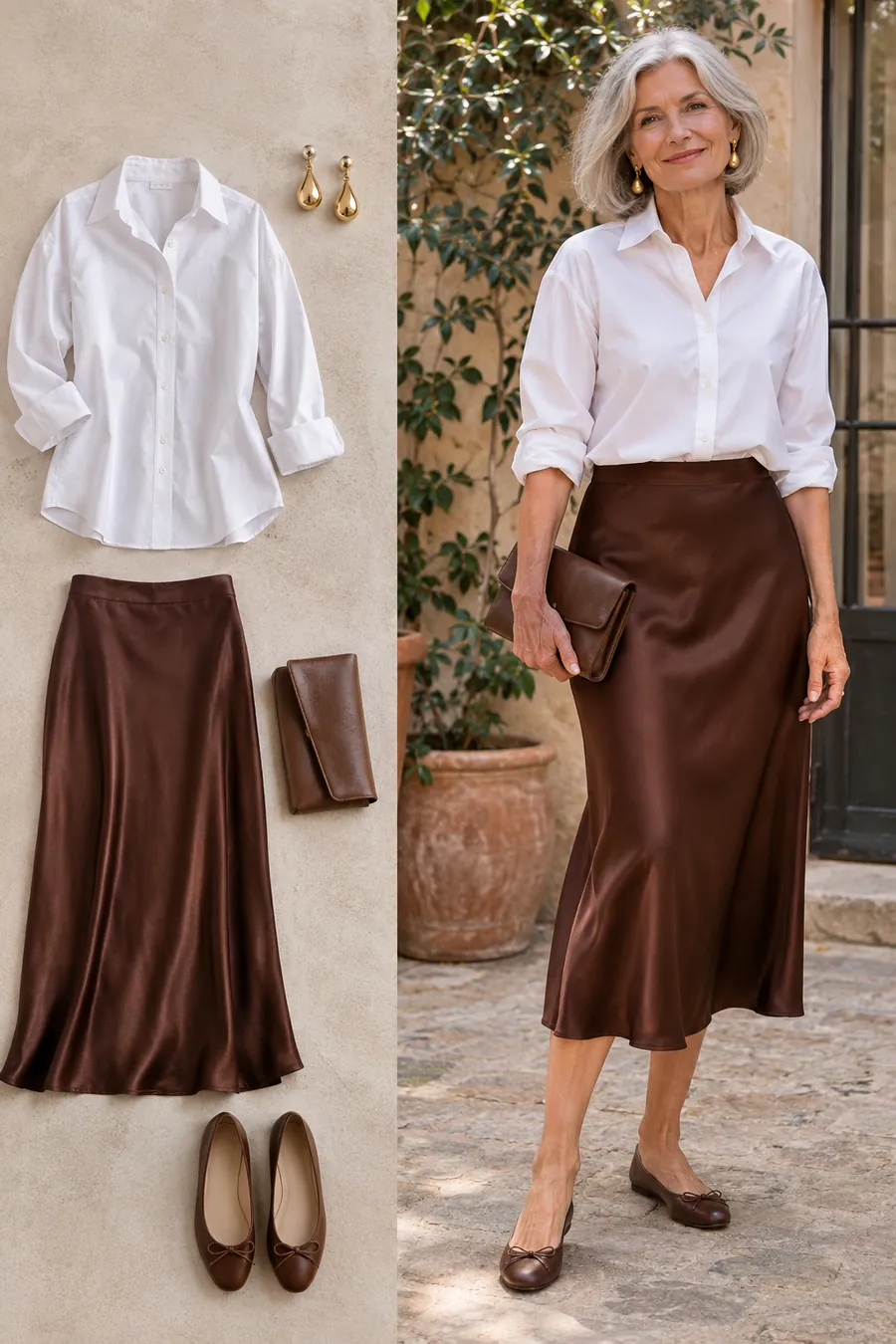
Try this first: Sit down before deciding on the shirt tuck. A side tuck can leave less fabric under a smooth waistband than a full tuck.
12. Pack one pair of shoes for two outfits
Try white sneakers with black stretch trousers and a cardigan on travel day. Then try the same pair with a dress you plan to pack. If both work and the shoes are comfortable, you may save yourself a second pair.
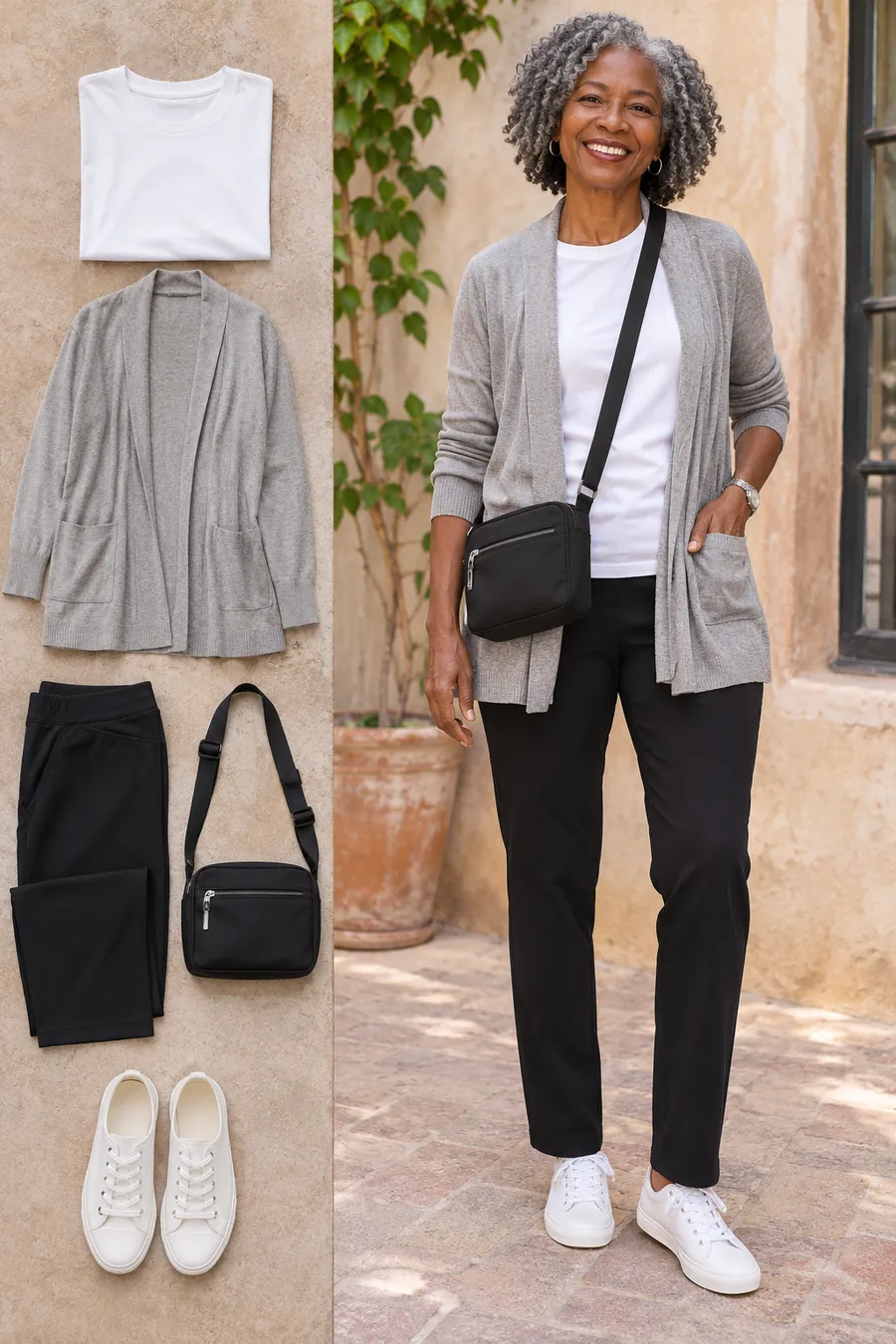
Try this first: Choose a bag you can reach while the cardigan is on. A zipper that stays accessible over the outer layer is more helpful than a bigger bag you have to remove every time.
13. Give a dress a second role
Use a black midi dress with flats and a small bag for daytime. A short cardigan adds a layer without covering the waist seam. For dinner, swap the bag for a clutch or change the earrings.
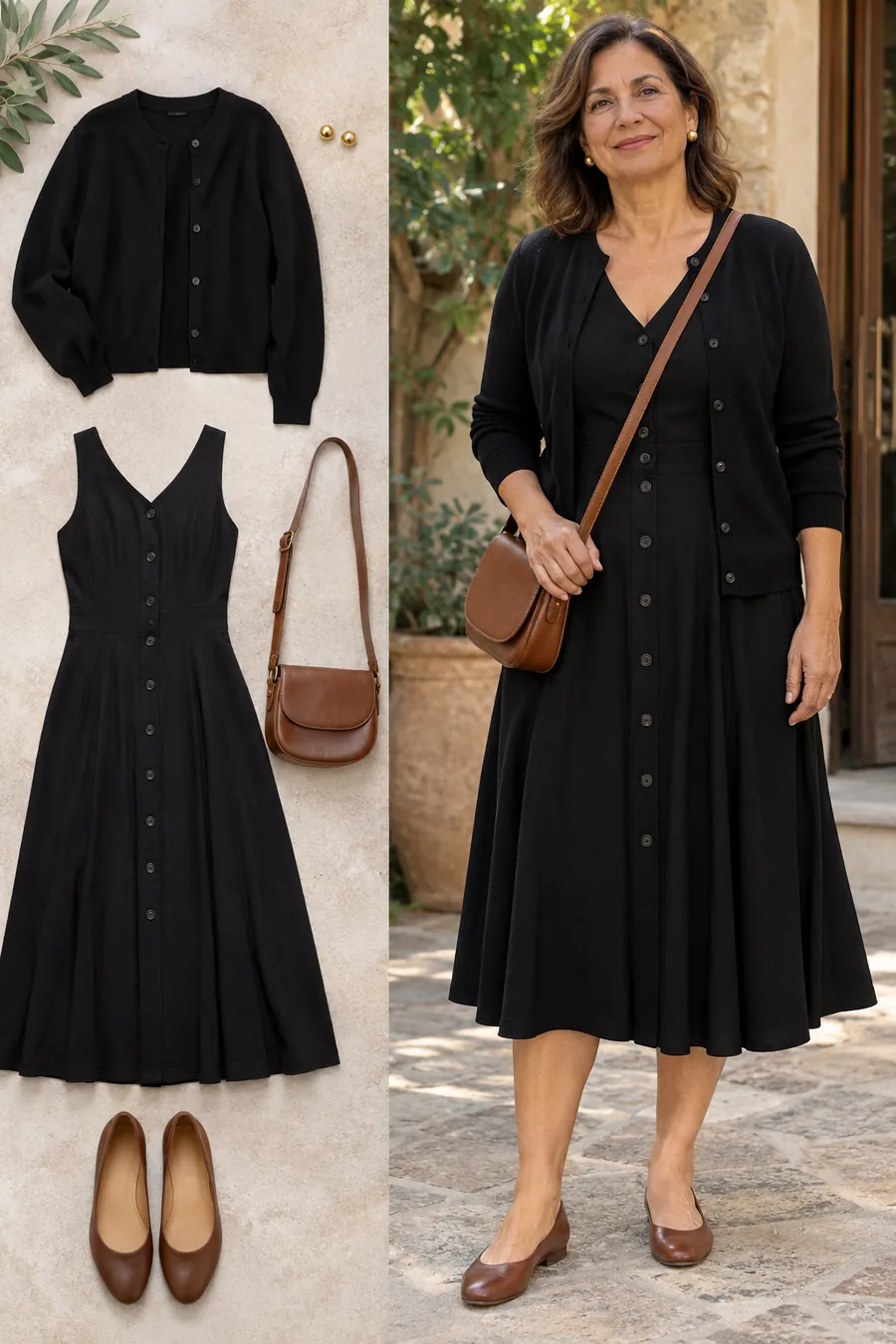
Try this first: If both layers button, leave one open. It reduces bulk where the plackets overlap and lets you reach without pulling across the chest.
14. Make new pieces earn their place
Try an open poplin shirt over olive and white linen for warm days. Then button the same shirt with dark jeans. If it works both ways, it solves more than one styling problem.
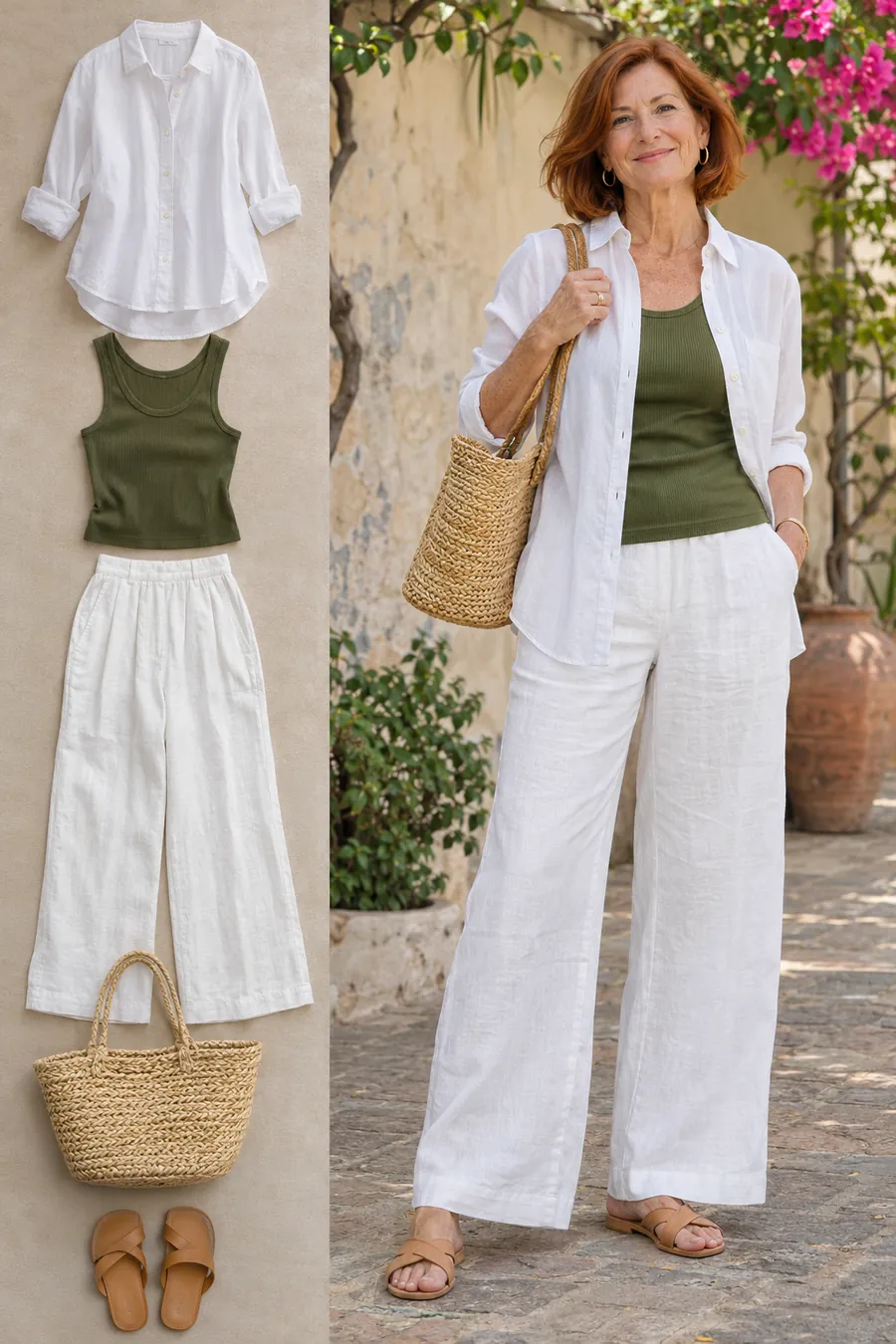
Try this first: If you only enjoy it worn open, compare a light overshirt before buying. Keep the piece that fits the role you need most.
15. Photograph three outfits you would actually wear
Take a daylight photo of an errands outfit, a lunch outfit and a slightly dressier one. Include the shoes. On a busy morning, pick the closest photo and adjust one item for the weather.
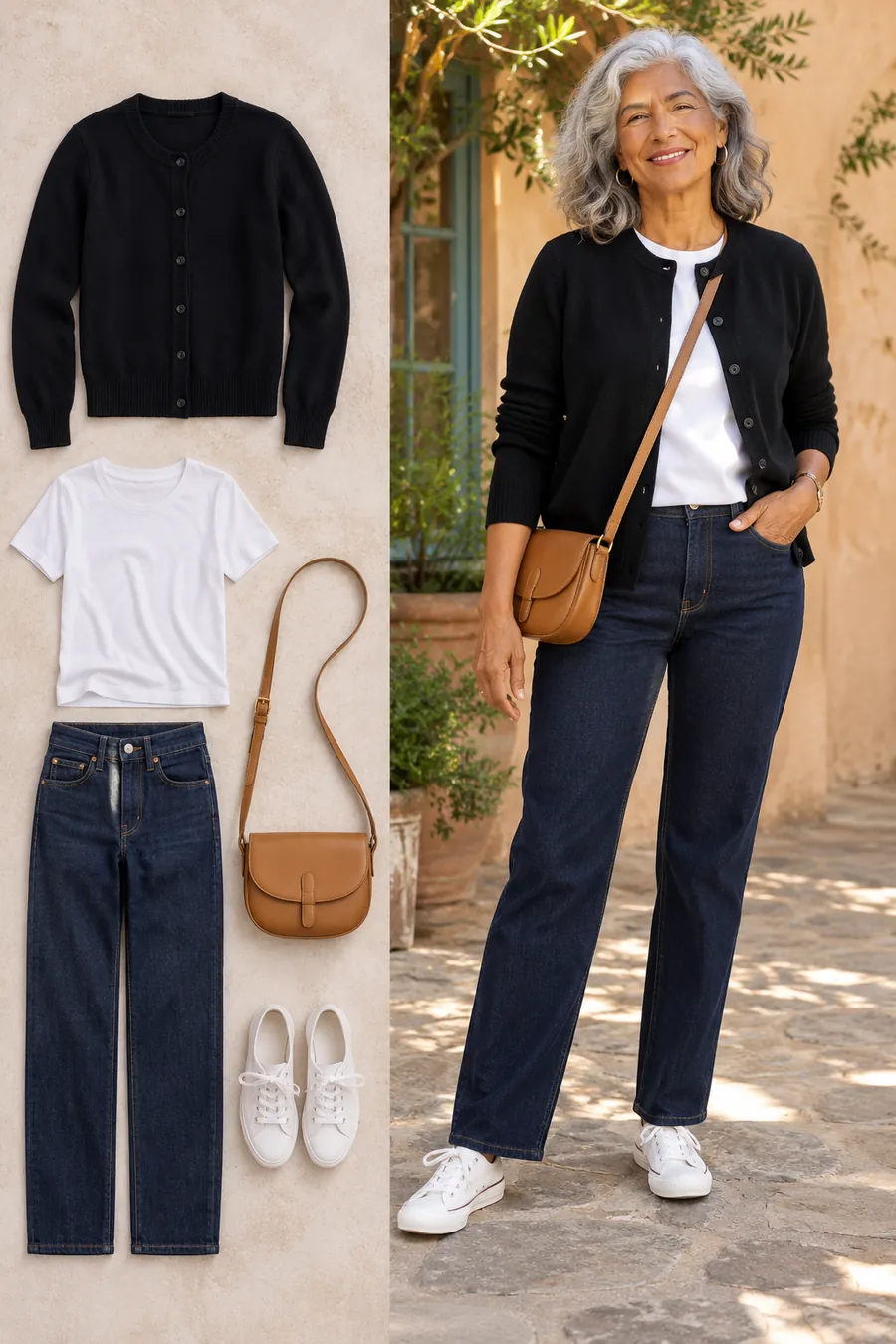
Try this first: If a piece never appears in the photos, ask whether it fills a real occasion. You may have enough clothes and simply need your dependable combinations where you can find them.
Ten small habits that make your closet easier to use
16. Keep your most useful bag by the door
Choose a bag that fits your phone, glasses and keys without packing them in layers. Try the strap over a coat before shortening it. A zip crossbody that feels light empty can get heavy after you add a water bottle, so test it with what you carry on a real errand.
17. Use a neckline you can layer
Try a crewneck under a blazer and a collared shirt under an open cardigan. Look for a neckline that stays in place when you lean forward. If a shirt collar keeps slipping under a lapel, wear the shirt alone or try a smoother crewneck.
18. Try the jacket sitting down
Sit with your arms forward as if driving. If the back pulls, the sleeves creep up or the armhole pinches, try a roomier cut before sizing up everywhere. Check jacket fit over the thicker layer you actually intend to wear.
19. Pick accessories around what you do
If you move between a car, office and café, a bag with an easy closure and shoes you can walk in matter more than a full stack of jewelry. Try one small accessory at a time and keep the pieces that stay comfortable with your glasses, coat and scarf.
20. Keep a weather version of your favorite outfit
Write down a warm and a cool version of the outfit you reach for most. For example, keep navy trousers and a white shirt in both, then switch loafers for ankle boots and add a coat on colder days. Test the longer hem with both shoes.
21. Check whether dress pockets interrupt the fit
Put your hand in the pockets and see whether the skirt still hangs evenly. Pocket openings that gape can point to a tight fit through the hip. If you carry a phone, check whether its weight pulls the dress sideways before making it your only storage.
22. Make a default choice for shoe color
Pick a shoe you already wear and try it with your three most common bottoms. Chestnut often works with navy and cream, while black is easy with dark trousers. Keep the pair that feels good and works with both the hem and your usual socks.
23. Shop the missing category first
If several outfits stop at the same point, solve that gap. For instance, if three skirts wait for a comfortable shoe, shop shoes before another skirt. Take a photo of the three hems so you can compare them with the shoes in a store.
24. Give alterations a small budget
Measure the inseam you want and ask about a basic hem before buying a pair that is too long. If the style also needs a new rise, narrower shoulders and sleeve adjustments, the total may exceed the cost of a piece with a better starting fit.
25. Save a fallback for rushed mornings
Keep a complete outfit together on a hanger or in one photo. Include shoes and bag in your plan. A go-to outfit is especially helpful for a morning appointment or a trip when the weather changes and you have to swap the outer layer quickly.
A ten-minute reset for tomorrow
Choose an outfit for tomorrow’s main activity. Put the pieces together, including shoes and a bag. Sit down and walk across the room. If anything tugs or drags, swap one piece while you still have time. Take a photo once it works so you can repeat it on another day.
If a fix calls for shopping, write down the missing garment, the two outfits it will improve and the fit detail to check. For instance: “Dark trousers that work with my ivory sweater and white shirt. The waist needs to work while seated, and the hem needs to clear my flats.”
Frequently asked questions
Can I wear jeans after 50?
Yes. Start with the rise you can sit in comfortably and a hem that works with your shoes. An even dark wash suits places that allow denim, while a softer wash may fit a more casual week.
How can I make a simple outfit feel finished?
Check the fit and the hem first. Then add one detail that connects to something you already wear, such as a burgundy bag beside a burgundy stripe or a brown belt with chestnut flats.
Do I need new clothes to use these tips?
Try them with your closet first. Rolling the cuffs, switching shoes or trying a favorite top with a different bottom can give you a combination you’ll repeat. Buy when you can point to a gap that keeps coming up.
Keep reading
Read our 12 rules for shopping for clothes after 50, wardrobe essentials guide and 15 ways to wear white.
Leave a Reply