

This post may contain affiliate links. If you buy through them, we may earn a small commission at no extra cost to you. Read our disclosure.
Resilience can be as ordinary as making a second plan after a ride falls through, asking a friend for a specific favor or returning to a hobby in a smaller way. It depends on what’s available to you and how difficult the situation is.
The seven habits below are ways to make the next step easier to take. The eight examples that follow show how to apply them to familiar situations. Choose the one that most closely matches what you’re dealing with right now.
Affiliate disclosure. As an Amazon Associate I earn from qualifying purchases. AI-generated photos illustrate the ideas. The paid links lead to relevant Amazon product listings or searches for similar items. Check the color, fit and size on the listing.
In this post7 sections
What we know about resilience in later life
A systematic review of community-living older adults looked at factors associated with resilience, including social support. The studies considered associations, so the habits below are practical ways to approach common difficulties, with room for different circumstances. The CDC’s guide for older adults discusses staying connected with friends, family and community.
Find a place to start
| Situation | What to try | What to check |
|---|---|---|
| A plan falls through | Find a shorter or simpler version | Preserve the reason the plan mattered |
| Several tasks compete for attention | Do the first part you can finish | Leave a note for the next action |
| You could use another person’s help | Ask for a task and a time | Give them room to suggest an alternative |
Seven daily habits that can support resilience
1. Tell a specific person what would help
Name a task and a time when you reach out. “Could you check with me on Thursday about booking the ride?” is easier to respond to than an open-ended request. Give the other person room to suggest a different time or a smaller task. If you feel awkward, write the wording before calling. In everyday terms, resilience may look like knowing whom you can ask and what you need from them on this particular day.

2. Make the first step smaller
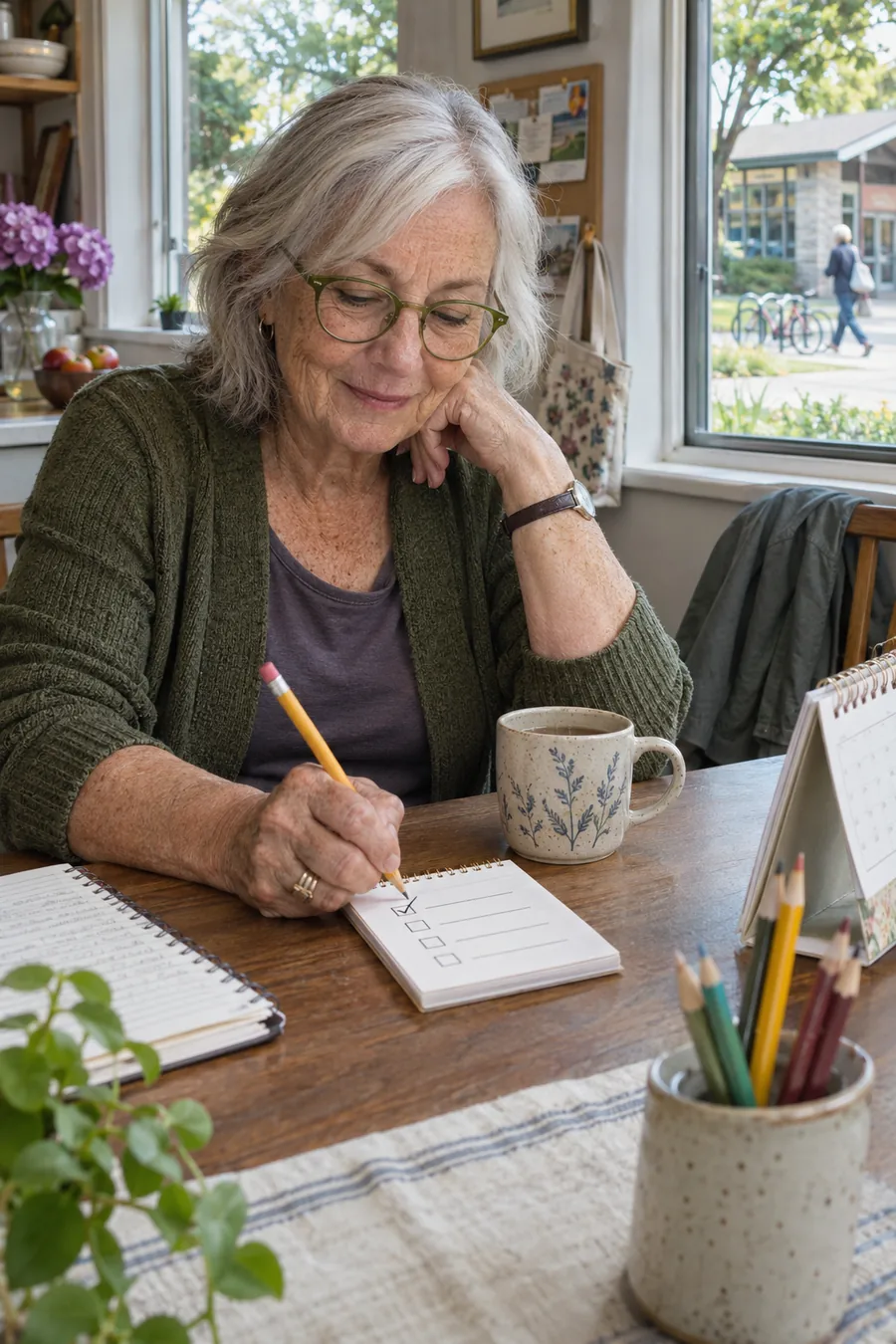
If a task has several parts, circle the one that makes a second step possible. You might locate the phone number today and place the call tomorrow morning. On a page or checklist, leave a space to note what got in the way. If the obstacle is a bus schedule, a missing document or a noisy room, name it plainly. That gives you a concrete starting point for the next attempt.
3. Build a second way to do it
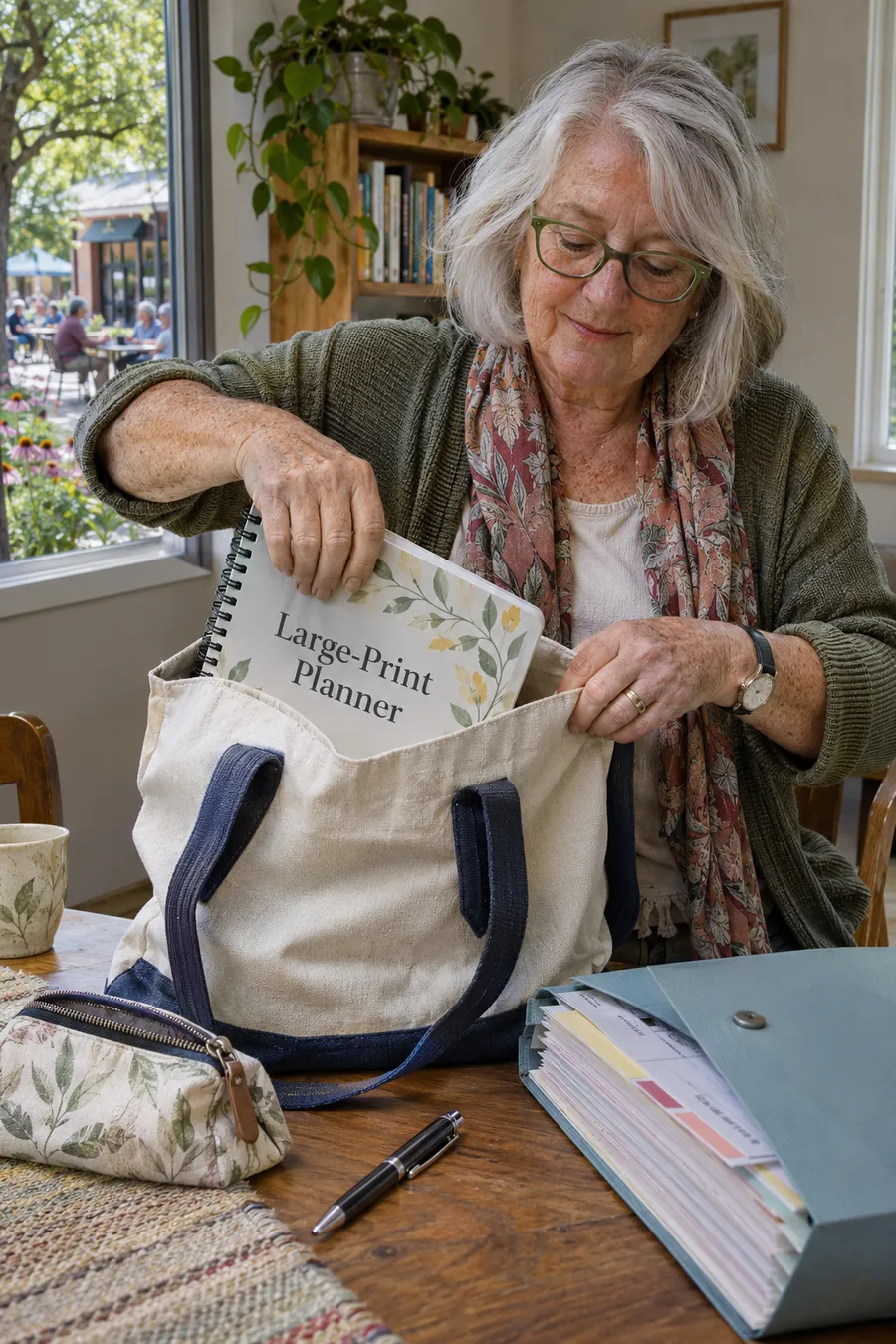
Pick one frequent sticking point and give yourself a backup. If a planned ride falls through, keep another number with the appointment details or follow the office’s instructions for rescheduling. If a friend who usually goes with you is away, agree how you’d ask someone else. Start with the most important detail, such as a return trip. A backup is easier to use when the instructions are written down and shared in advance.
4. Keep one dependable connection
Choose a person, group or regular place where you can reconnect when life feels unsettled. You could try a short Tuesday call at a time both people like. If conversation is hard over the phone, a letter, video call or shared walk may be more comfortable. Be specific about the frequency and let it settle into something sustainable. A dependable connection can be small enough to fit two real schedules.

5. Practice a task you can finish
Find a task with a finishing point you can see. Painting a single corner of a card or sorting one photo envelope gives you a task you can complete without carrying a large project into tomorrow. Put away supplies at the same time each day if that makes it easier to start again. Use the activity because you enjoy it or value the result. Adjust the setup as your attention or energy changes.

6. Keep the routines that support you
During a difficult week, identify one thing from your usual day that’s both feasible and familiar. A short walk on a level route, a phone call or making lunch at the same time may give you somewhere to begin. Keep the required setup minimal. If the weather, timing or your health calls for a change, choose your usable alternative. Get advice for new physical activity when you are uncertain what fits your abilities or condition.

7. Notice what helped after a rough day
Try two short notes at the end of a difficult day. Write down the moment that felt hard, then what made the next hour a little more manageable. You might notice that talking to a friend helped after an upsetting letter, or that it was easier to finish a task after taking a break. When a similar day comes round, you’ll have something specific you can try.

Eight examples for changes in everyday life
When a walking plan changes
You intended to go out, but the rain is heavy and your route gets slippery. Think about what you wanted from the outing. For company, you can call your walking partner and arrange another nearby day. For movement, you can choose a familiar place where conditions are better or stay with a safe indoor activity you already do. Set one time to reconsider the original walk.

When a friend moves away
If a friend who lived nearby moves, agree on a small continuing ritual you both want. For example, make a call after your usual Thursday lunch for a few weeks, or trade one postcard a month. At the same time, find one local place where you still enjoy spending time. This can give the next week shape while you adjust. Let the routines change if either person’s schedule makes the original idea difficult.

When appointments pile up
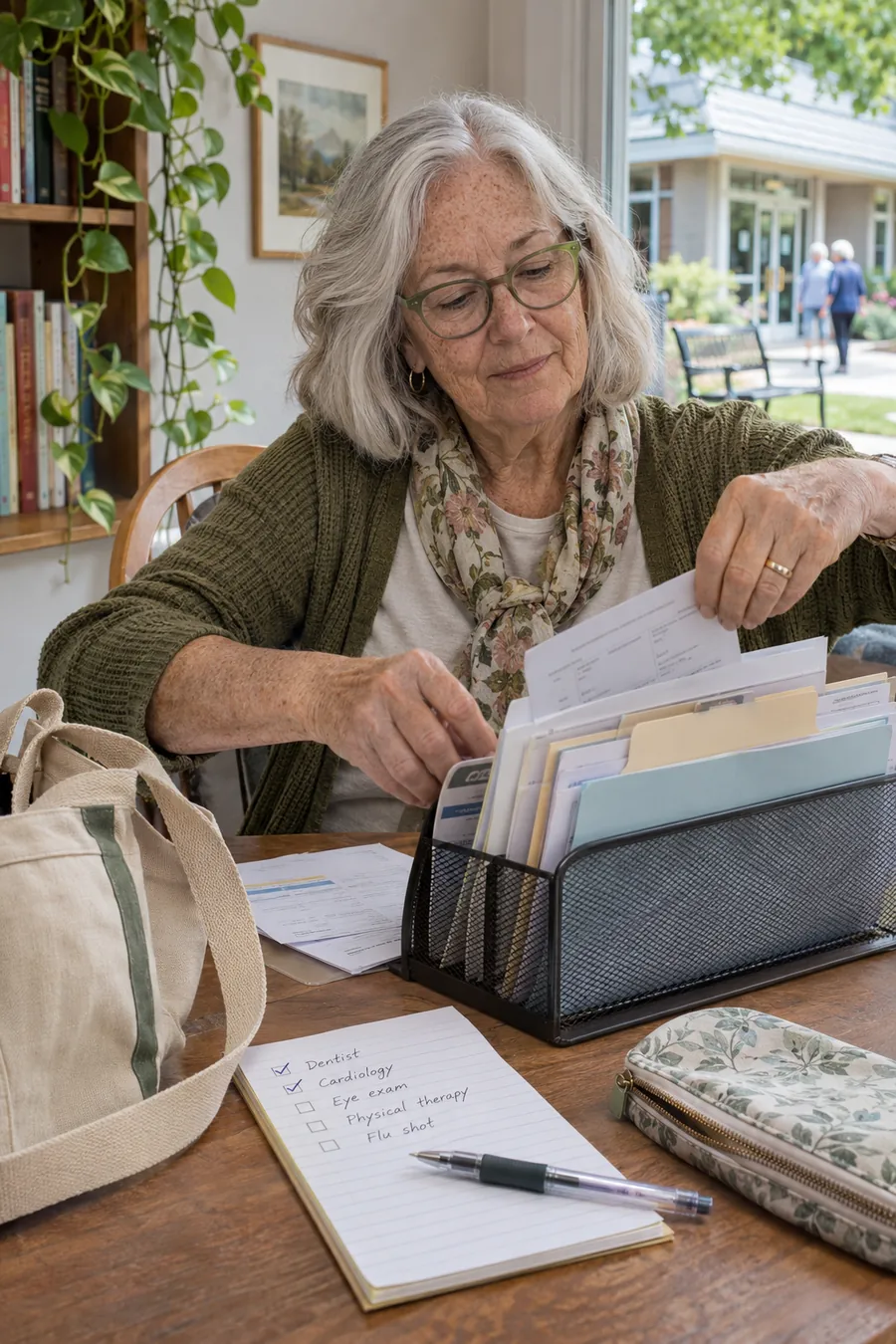
Place the essential details for each appointment together, then add a one-page schedule and a brief list of what you need to ask. Choose whether the easiest system for you is a folder, an accessible phone note or a printed calendar. Ask the clinic about what to bring if you’re unsure. A trusted person can help sort the papers, take notes or write down the follow-up if you invite them.
When a hobby feels too demanding
When your usual painting project feels like too much, lay out the brush and two colors instead of the full set. Choose a subject that can fit in a small area of paper. If your hand tires, try a wider brush, shorten the session or change the setup. Save one part for next time if you want to continue. Finishing a tiny picture is one way to stay connected with the hobby.

When you return to a group
Choose a meeting you can attend for a short time and ask the organizer about the room, seats, access or a quiet corner beforehand. Bring a friend if you would welcome company. Decide what you’d enjoy doing during the time you’re there, such as saying hello to two familiar people. Write down which parts went smoothly and what you would want to change for the next visit.

When you need transport help
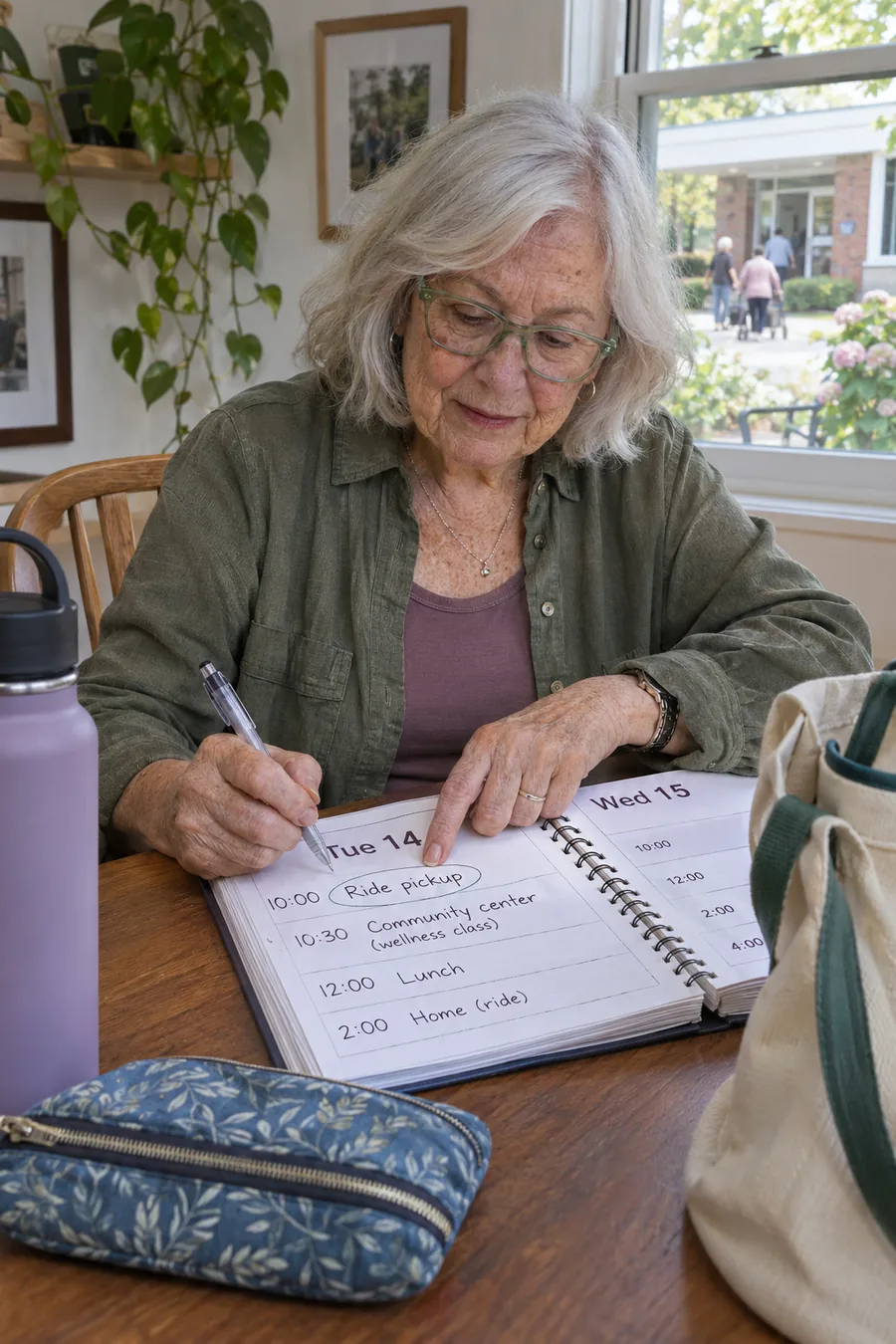
Put the address, expected return time and pickup point on the same page. If you rely on a friend for a ride, send those three details when you make the request and ask what they prefer to do if the appointment runs long. Local services can have advance-booking requirements, so check directly before making plans around a ride. Write down the best number to use on the day.
When your evening feels unsettled
After an unsettled evening, choose a familiar activity that’s easy to finish in one sitting. Reading a few pages, making tea or folding tomorrow’s clothes may fit. If several worries need attention, put the next practical action on the page and give yourself a time to look at it in daylight. When ongoing distress regularly disrupts sleep or daily life, reaching out to a clinician or a trusted support person can be part of the plan.

A Sunday reset for next week
Open the calendar and choose one thing you’re looking forward to, one responsibility and one thing you can make easier. Write them in the order you want to handle them. Ask early about any transport, time or supplies you need from someone else. A plan you can revise when life changes will often serve you longer than a long checklist you made on a particularly good afternoon.

Make a backup plan you can use on a hard day
Write down one foreseeable difficulty and an alternative you can actually arrange. A useful backup includes a person or place, a time and an action. For example, keep one second transport option beside an appointment date and check whether it requires a booking in advance.
If the situation lasts longer than expected, rewrite the plan for the week you have now. You may need to share an errand, change an appointment or give a project less time for a while. Set a date to look at the plan again.
Frequently asked questions
What if I don’t have anyone nearby to ask?
Identify one accessible service, community center, library or interest group you could contact. Ask a specific question about transport, access or how to join, depending on what you need.
How do I know if a habit is helping?
Track a concrete change. You might make a phone call you had been putting off, take a shorter route once or keep one appointment with less confusion. See whether the next attempt becomes easier.
Can a resilient person still have hard days?
Yes. A hard day can require time, support or professional care. The habits here give you small ways to handle ordinary changes and help you identify when extra support would help.
Keep reading
Nine habits that make getting older easier · Small daily rituals after 60 · Staying connected in later life








Leave a Reply