
This post may contain affiliate links. If you buy through them, we may earn a small commission at no extra cost to you. Read our disclosure.
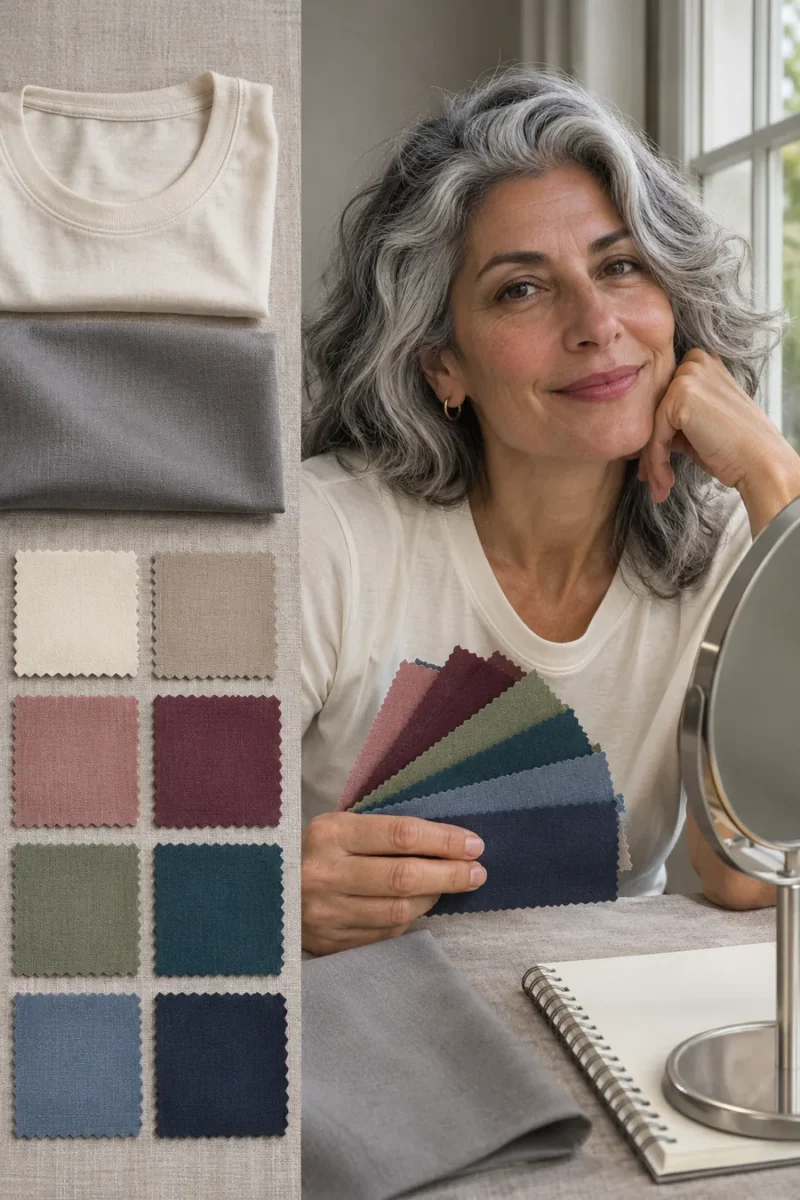
Navy, ivory, teal and berry are useful colors to try with gray hair. Start with a shade you already own and compare it with one close alternative near a window. Silver, white and salt-and-pepper hair can give the same top different contrast, so use the mirror to choose the effect you prefer.
Affiliate disclosure. As an Amazon Associate I earn from qualifying purchases. These AI-generated images are illustrations. Paid links open individual listings or related Amazon search results. Check the selected shade, fit and fabric before ordering.
In this post7 sections
Choose where to start
| Your starting point | Try this | What to look for |
|---|---|---|
| Very light or white hair | Charcoal versus pale gray | See whether you prefer a defined edge or a soft transition |
| Salt-and-pepper hair | Cobalt versus soft blue | Compare how much brightness feels comfortable |
| Warm-looking gray | Camel versus cool gray | Check the light and dark versions separately |
Neutrals and bright colors to try first
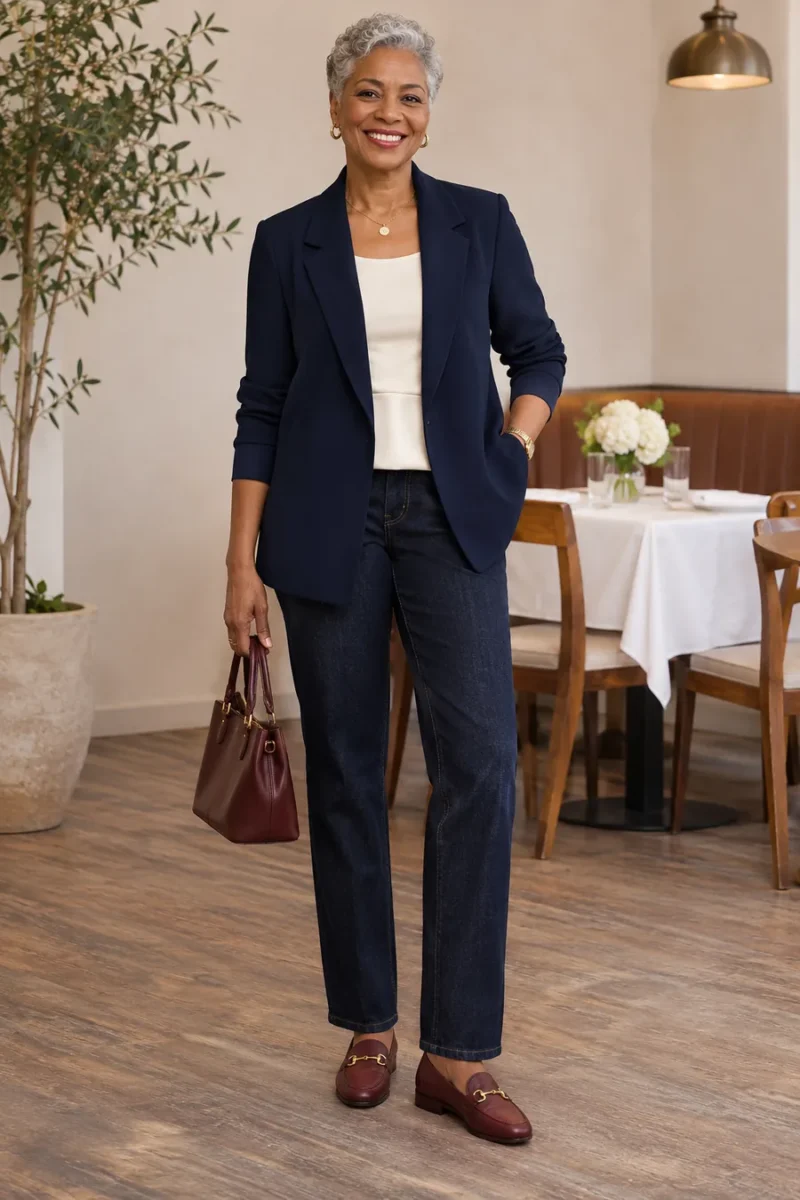
1. Soft navy
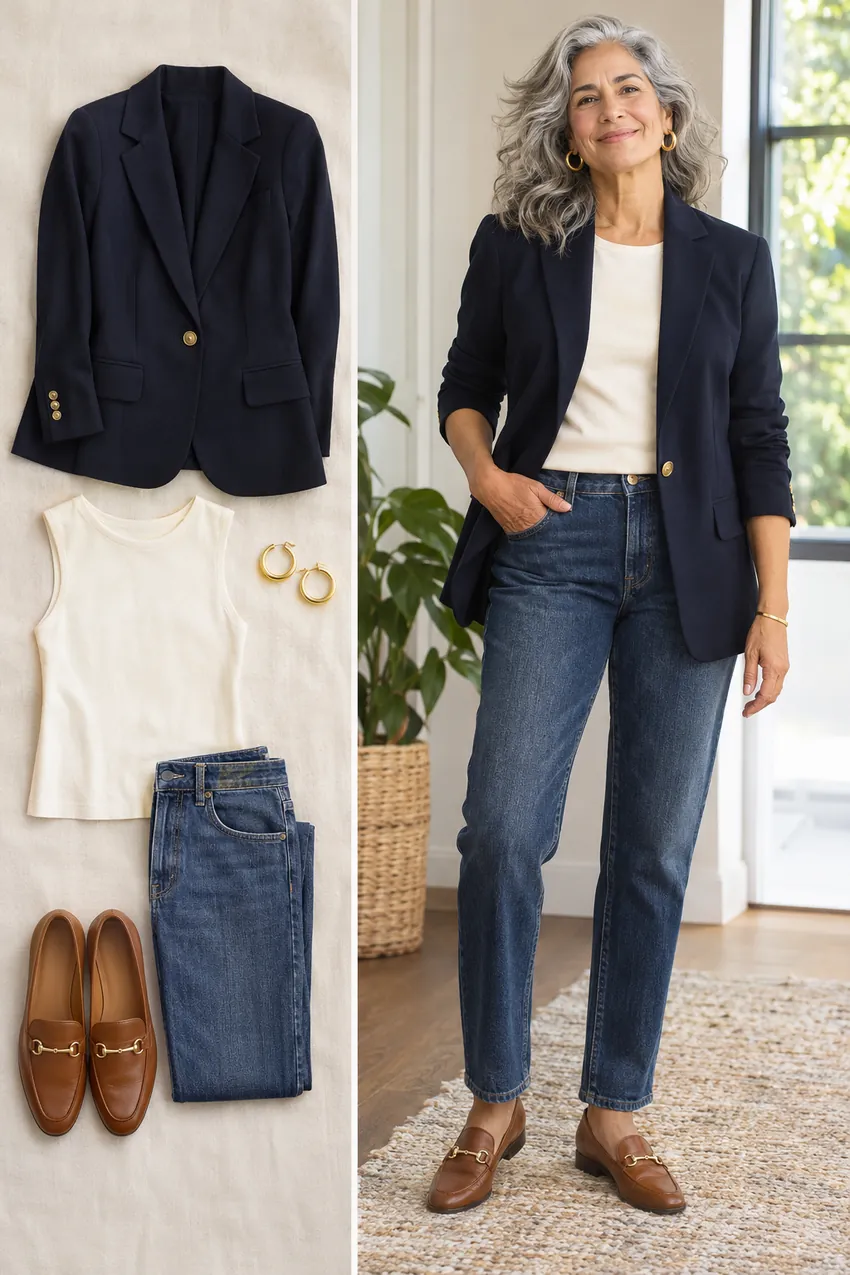
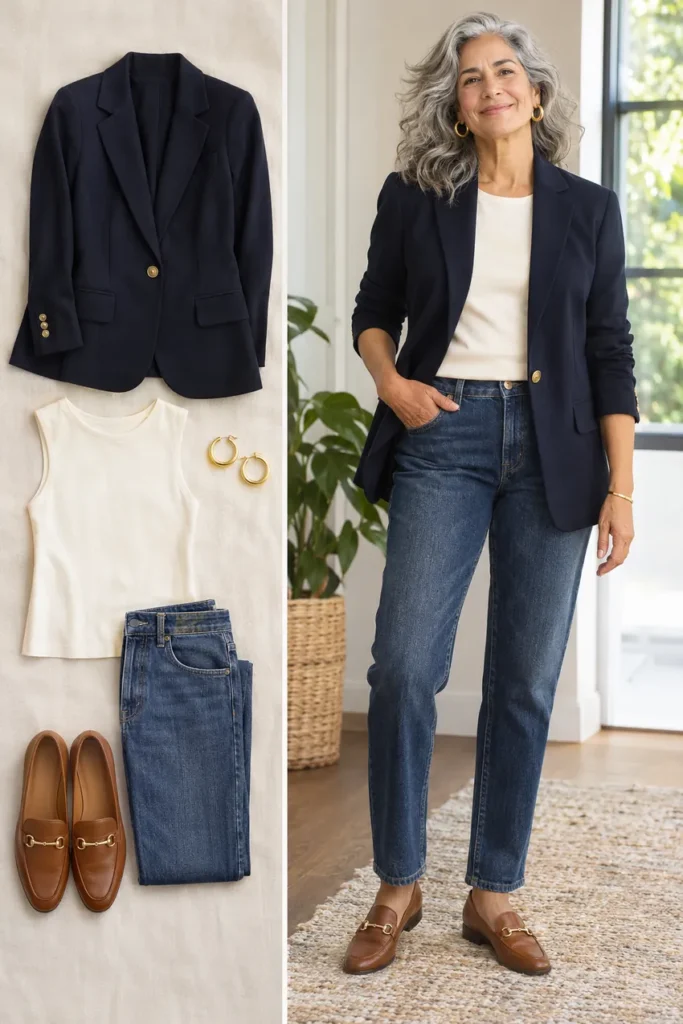
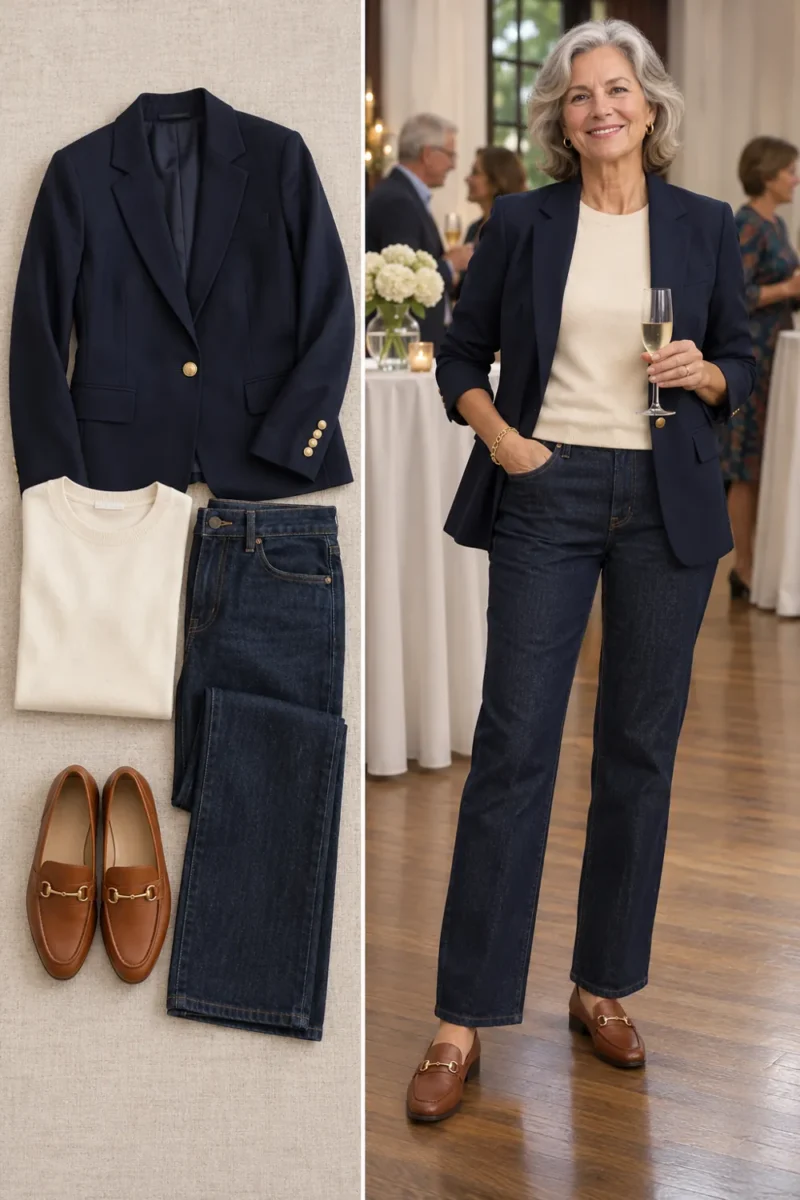
Choose a navy that reads blue beside black. Pair a navy blazer with an ivory shell and straight jeans. Cognac loafers warm the outfit up and work well if you own a brown bag.
Open the blazer and compare the look with the shell removed or swapped for a gray tee. If the ivory makes the biggest difference, use it as the piece closest to your face and keep the navy you already own.
2. Ivory
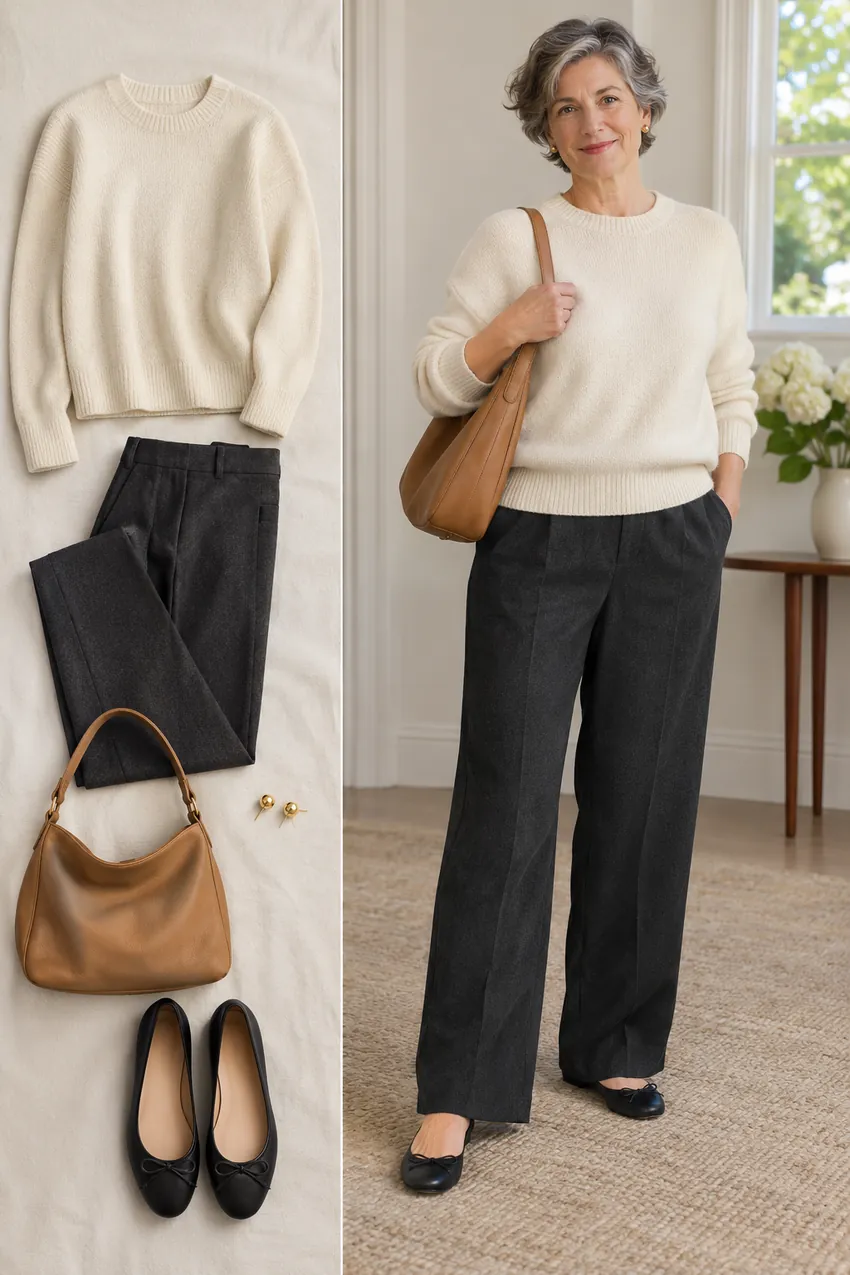
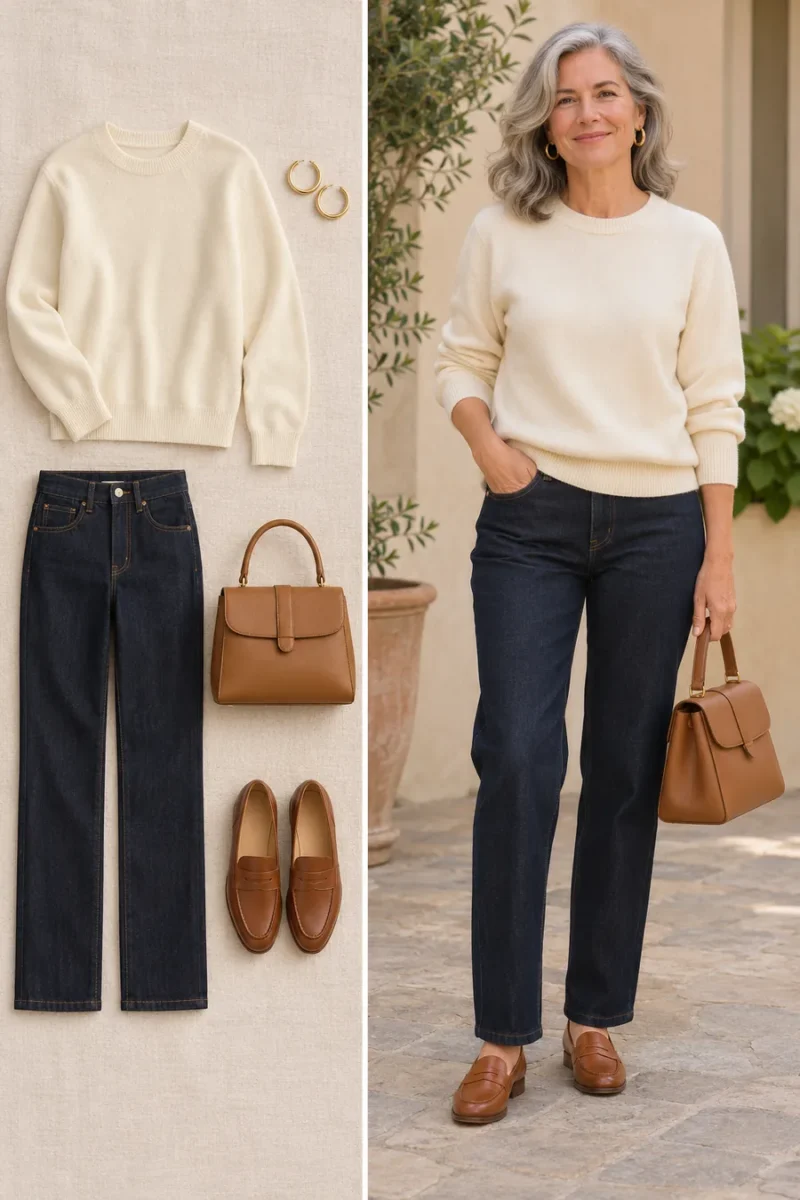
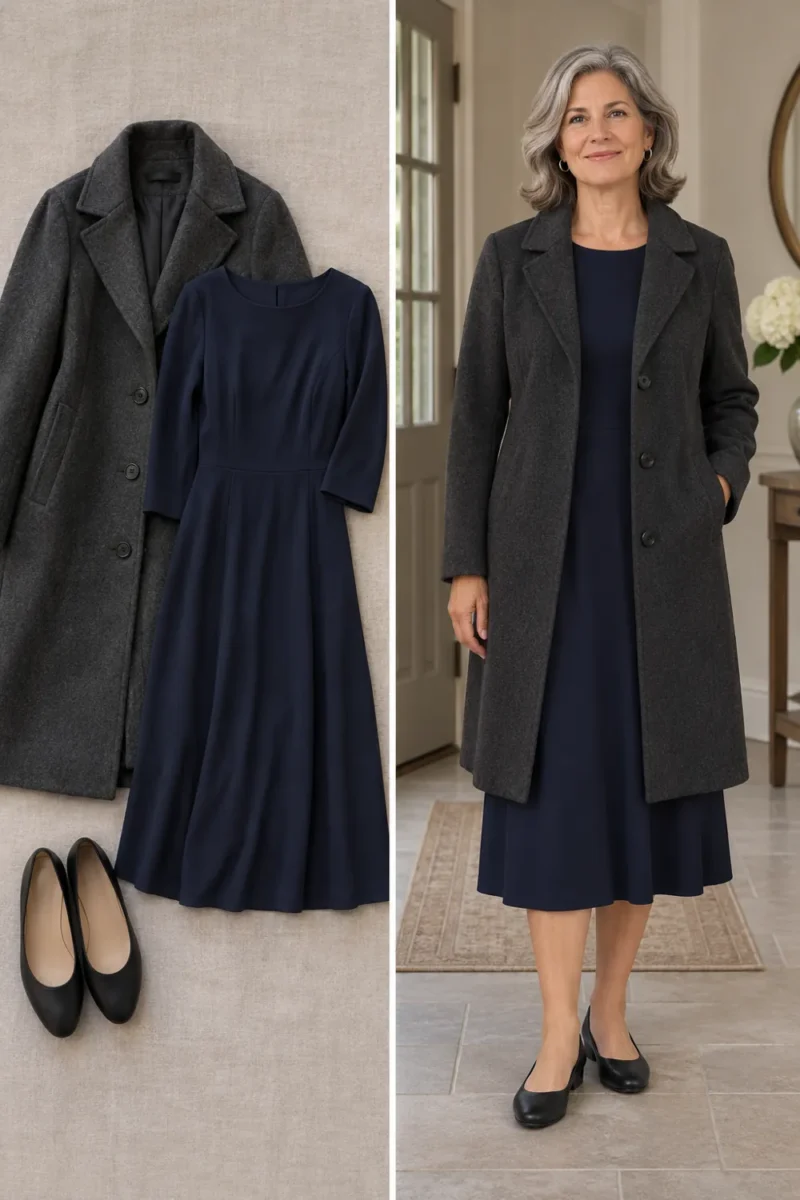
Ivory gives bright silver hair a softer frame than a very crisp white may give it. Try a matte ivory sweater with charcoal trousers and black flats, then add a tan bag if you want another warm accent.
Ivory ranges from nearly white to yellow cream. Compare two versions in window light. If the more yellow one looks heavy beside your hair, keep the paler ivory. A visible dark collar can also add contrast.
3. Cobalt
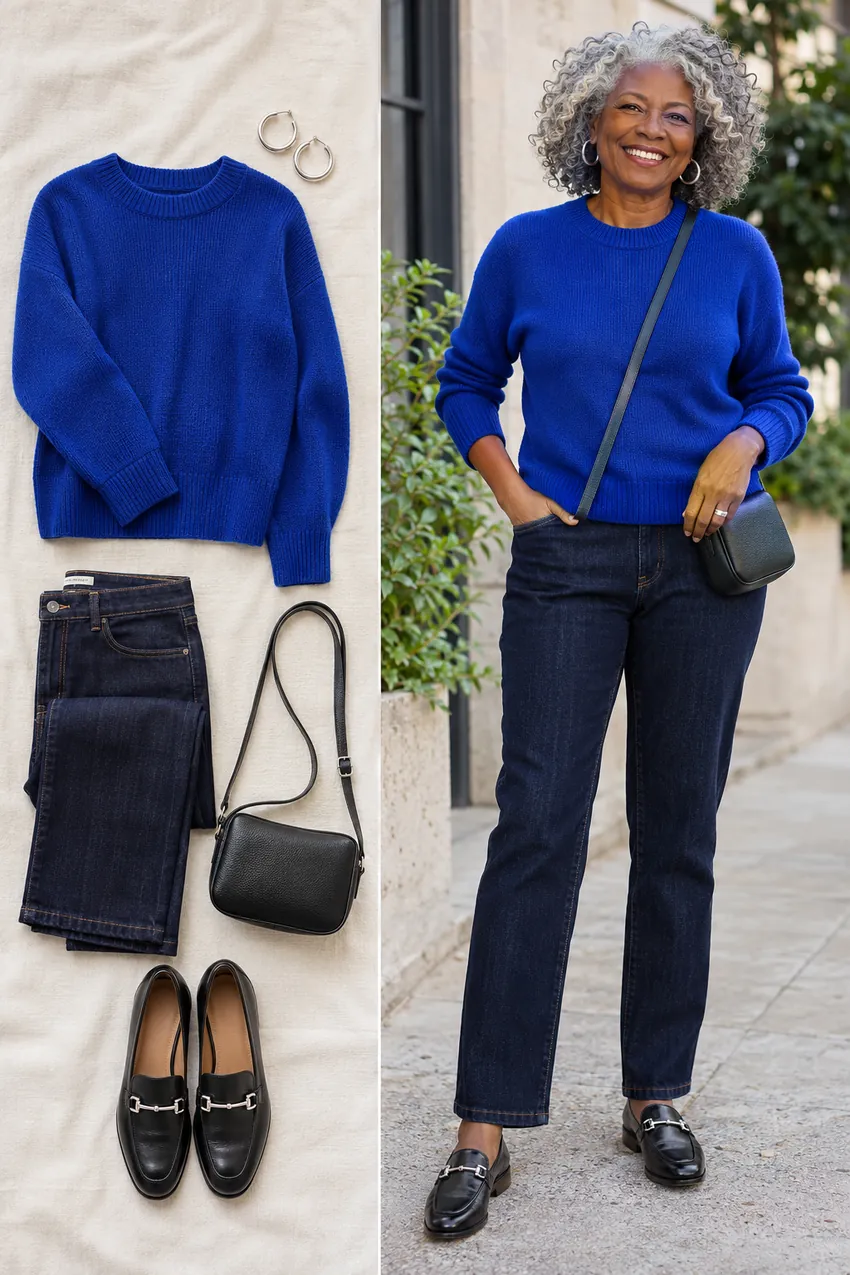
A clear cobalt knit is an easy accent for a daytime outfit. Wear it with dark jeans, black loafers and small silver hoops. Keep your other pieces plain so you can see whether you like the blue at the neckline.
If cobalt feels too bright as a high crewneck, try a V-neck or move the color to a scarf. Compare it with a softer medium blue at the same depth. The difference you notice may be brightness more than warmth.
4. Teal
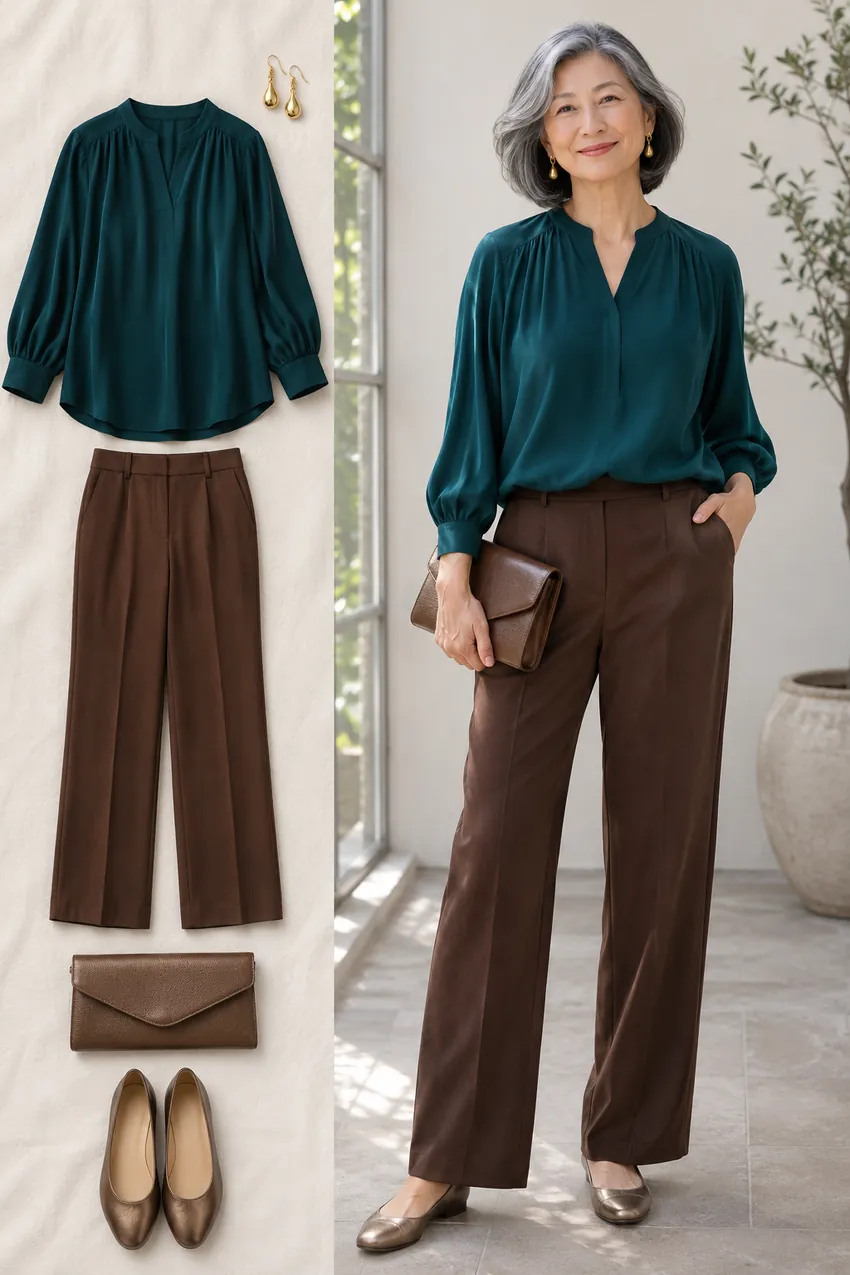
Deep teal works well when you want a color between blue and green. A draped teal blouse with chocolate trousers makes a dressier outfit without needing a matched suit. Bronze flats or simple brown shoes keep the attention near the neckline.
Teal can lean greener or bluer. Test both next to your hair. Check the drape seated and standing, then try the blouse under your actual coat to make sure the sleeves and neckline sit comfortably.
5. Raspberry
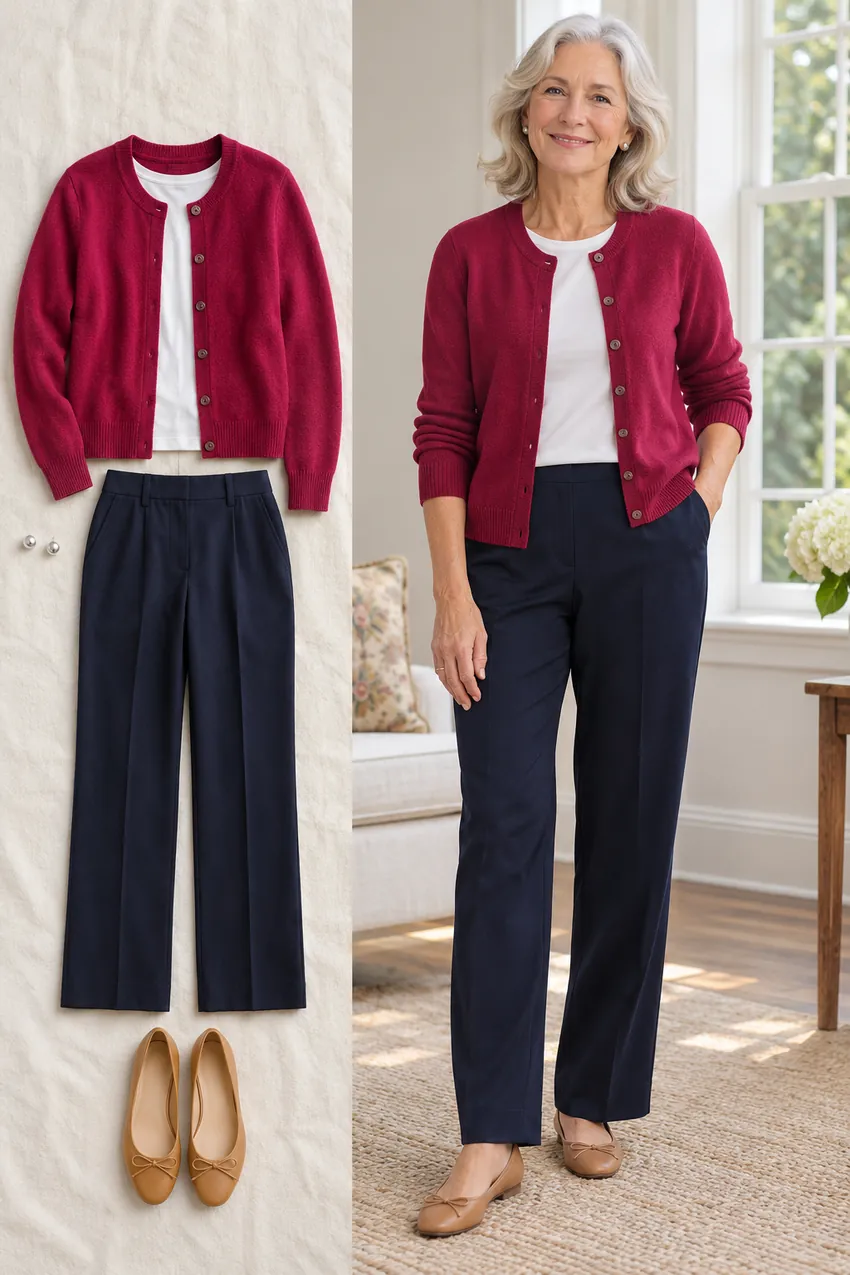
A raspberry cardigan over a white tee gives salt-and-pepper hair a clear pop of color. Navy trousers keep the outfit grounded and tan flats make it practical for errands or lunch. Choose a solid white tee so the cardigan stands on its own.
Start with the cardigan open. If the color still feels strong, fold it over your shoulders or try a smaller patch of raspberry as a scarf. If you want more color, button the cardigan and repeat the shade in a small accessory.
Deeper colors and softer accents
6. Plum
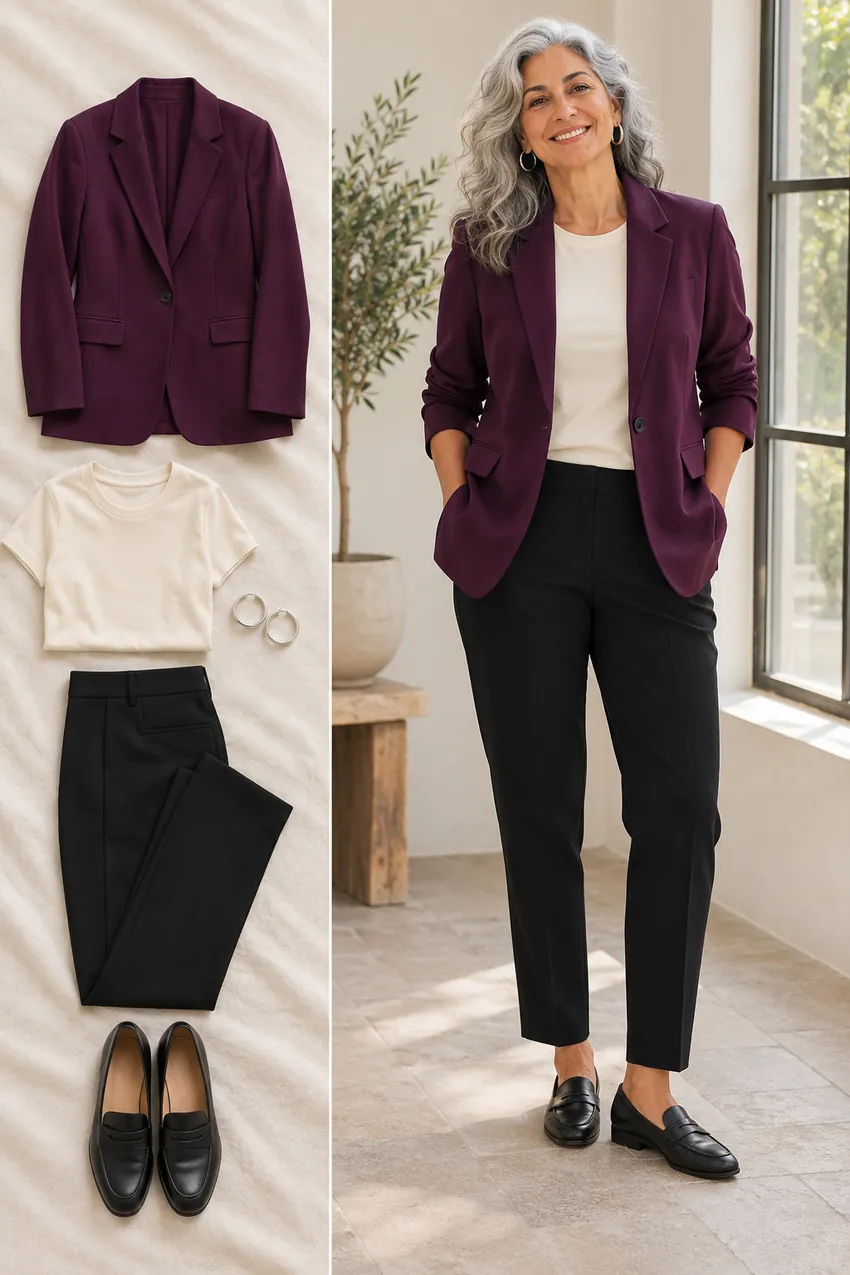
Plum is a useful deeper purple when bright lavender feels too pale or vivid violet feels too sharp. A plum blazer over cream and black ankle trousers works for a restaurant or smart-casual meeting. Black loafers give you room to move.
Check how much the plum shifts under indoor lighting. Dark purple and black can look nearly alike in a dim room. The cream tee adds enough separation near your face and makes the blazer easier to see in photos.
7. Emerald
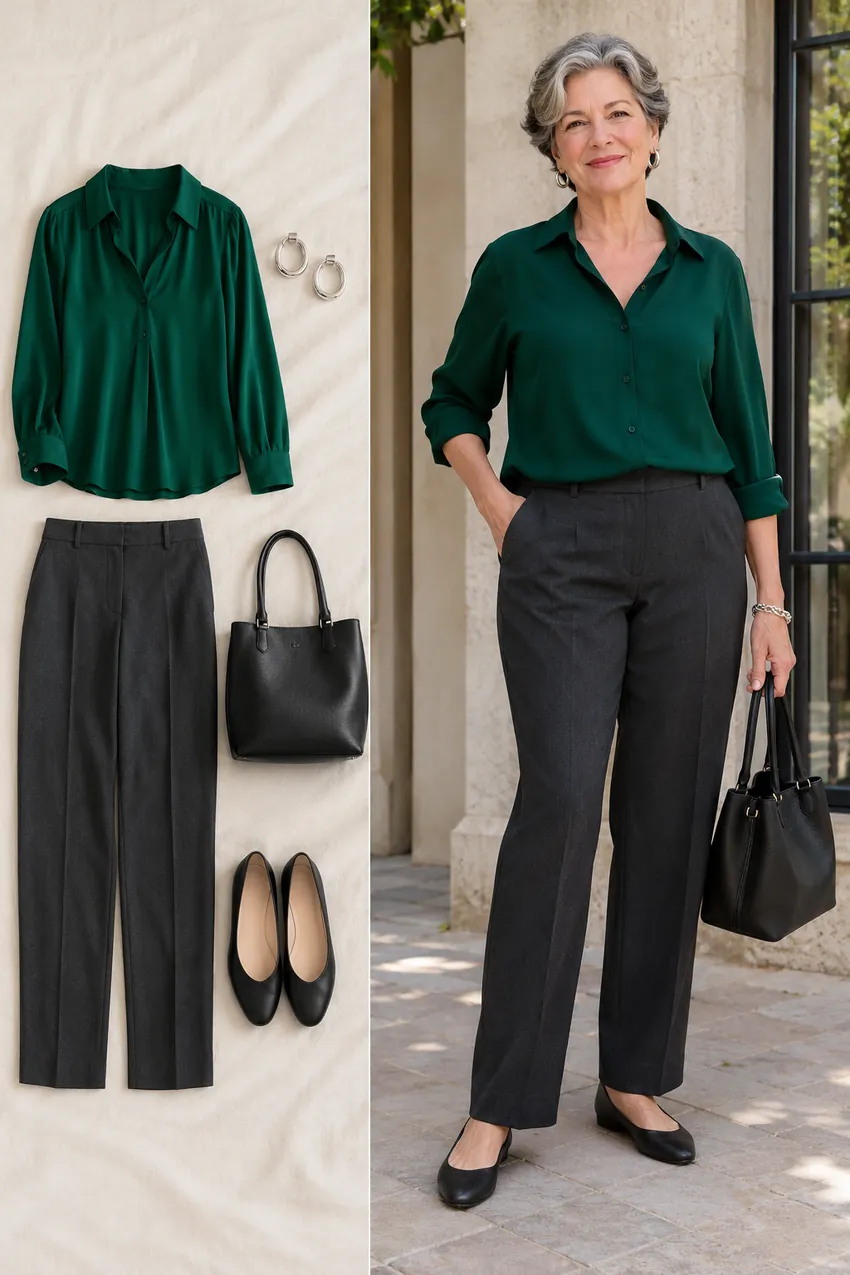
A true emerald blouse adds color against charcoal trousers. Try silver earrings if you want to echo your hair, or skip the jewelry if the blouse has a detailed collar. Use a structured black bag for a work or dinner version.
Emerald ranges from bright and clear to deep and blue-leaning. If the brightest green takes over, hold a deeper version next to it. You can also wear emerald under a gray jacket so a smaller area of green shows.
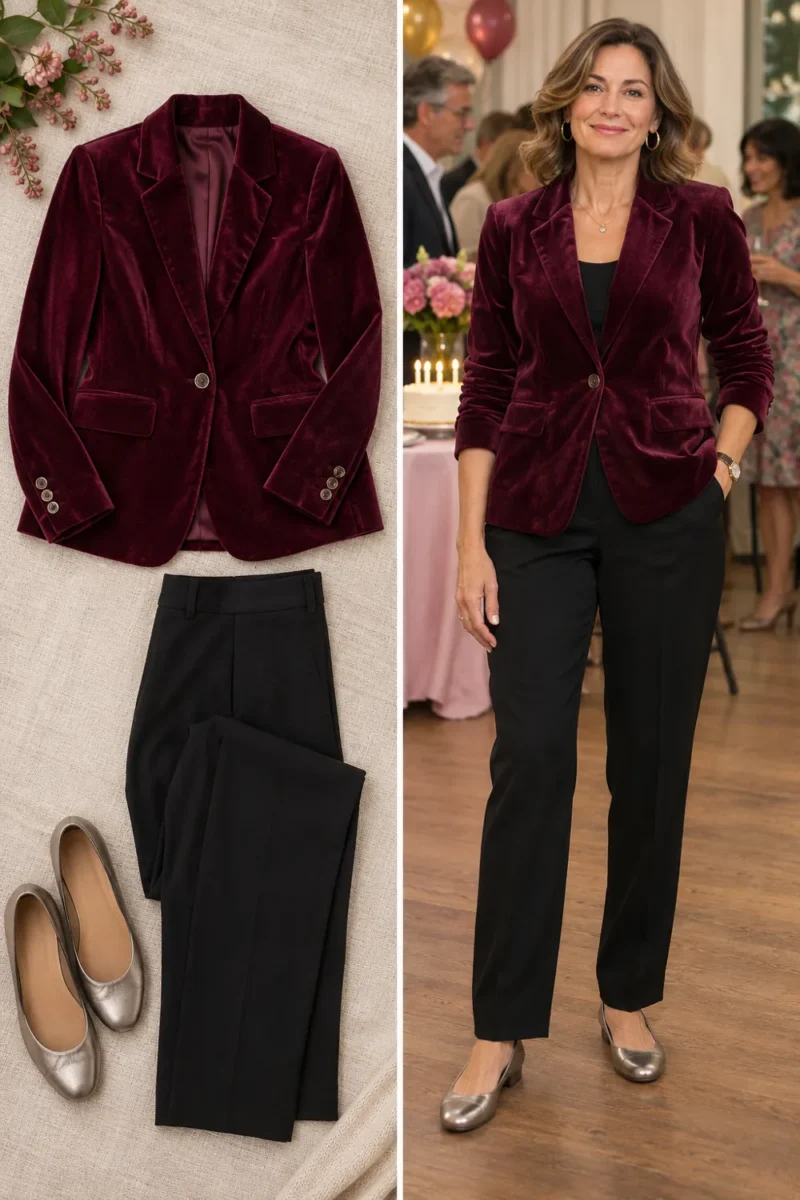
8. Burgundy
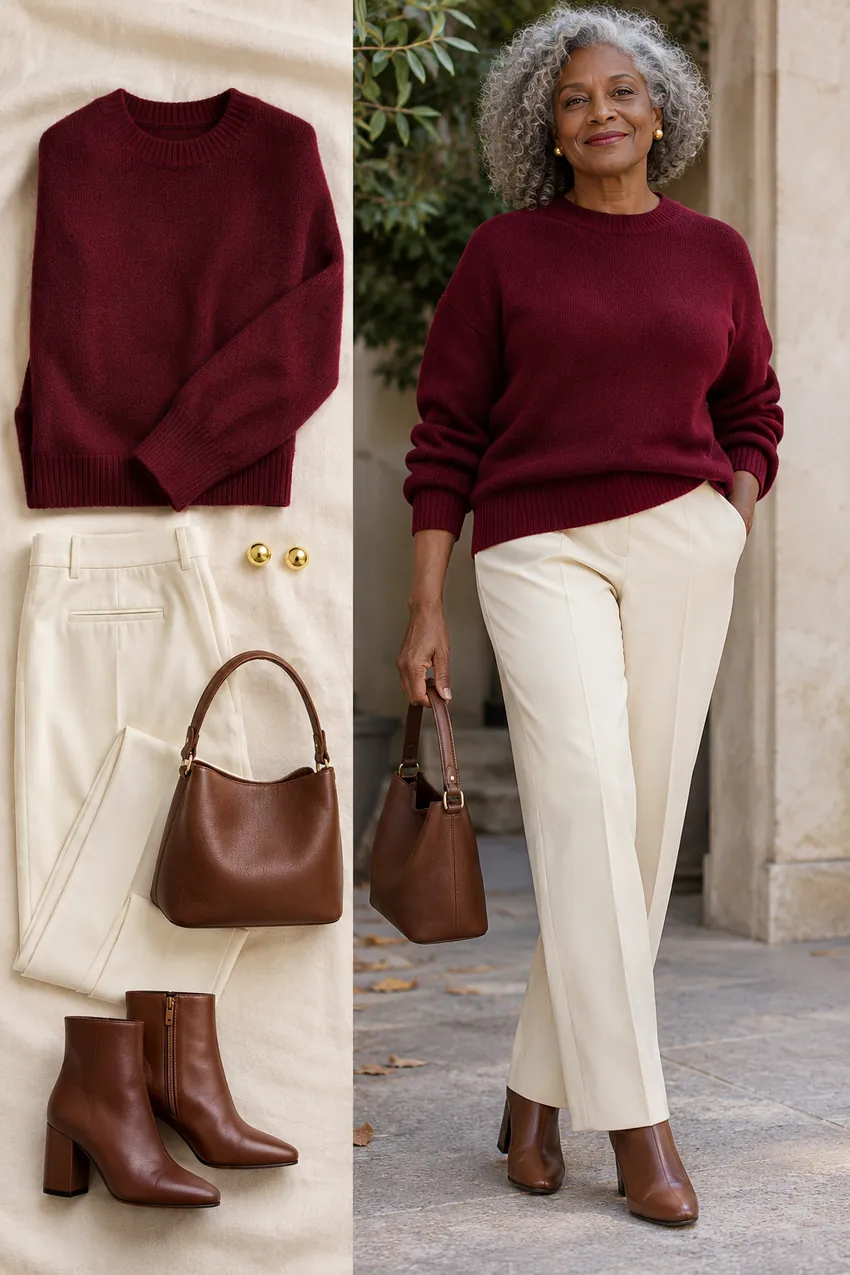
Burgundy gives you depth without the same outline as black. Try a burgundy knit with ivory trousers and brown ankle boots. If you wear this in cooler weather, add a camel or charcoal coat and let a little burgundy show at the neckline.
Compare a blue-red wine with a browner oxblood. Some gray hair has a cooler silver cast, while some salt-and-pepper hair reads warm alongside skin and brows. Test the two reds in the same knit or similarly matte fabric.
9. Dusty rose
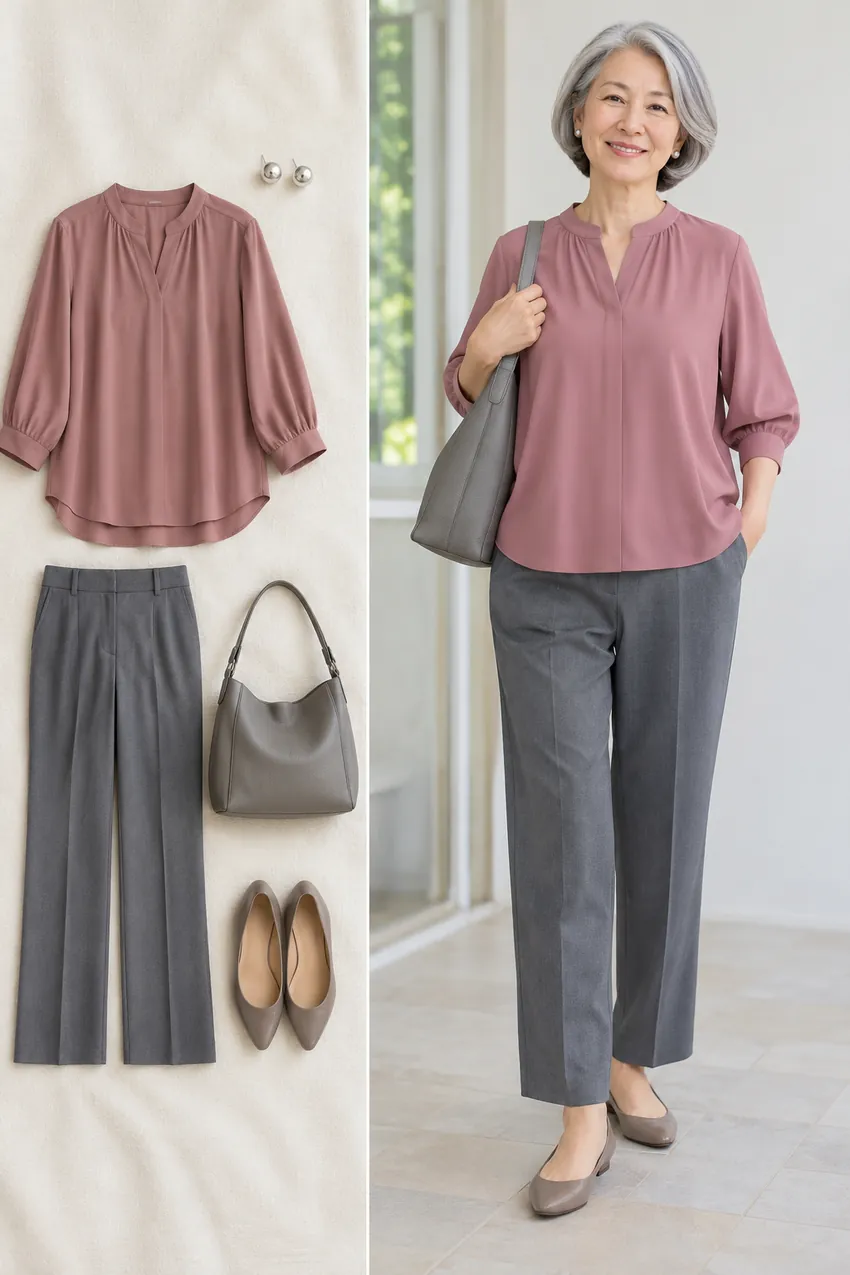
Dusty rose works well for a lower-contrast look. Pair the blouse with mid-gray trousers and taupe flats. Silver studs give it a small highlight. If the gray trousers and top both look soft together, use a darker bag to give the outfit an edge.
If dusty rose seems to disappear against your skin, try a clearer rose at about the same depth. If you want the soft color but need definition, keep the rose and add a navy or charcoal jacket you can wear open.
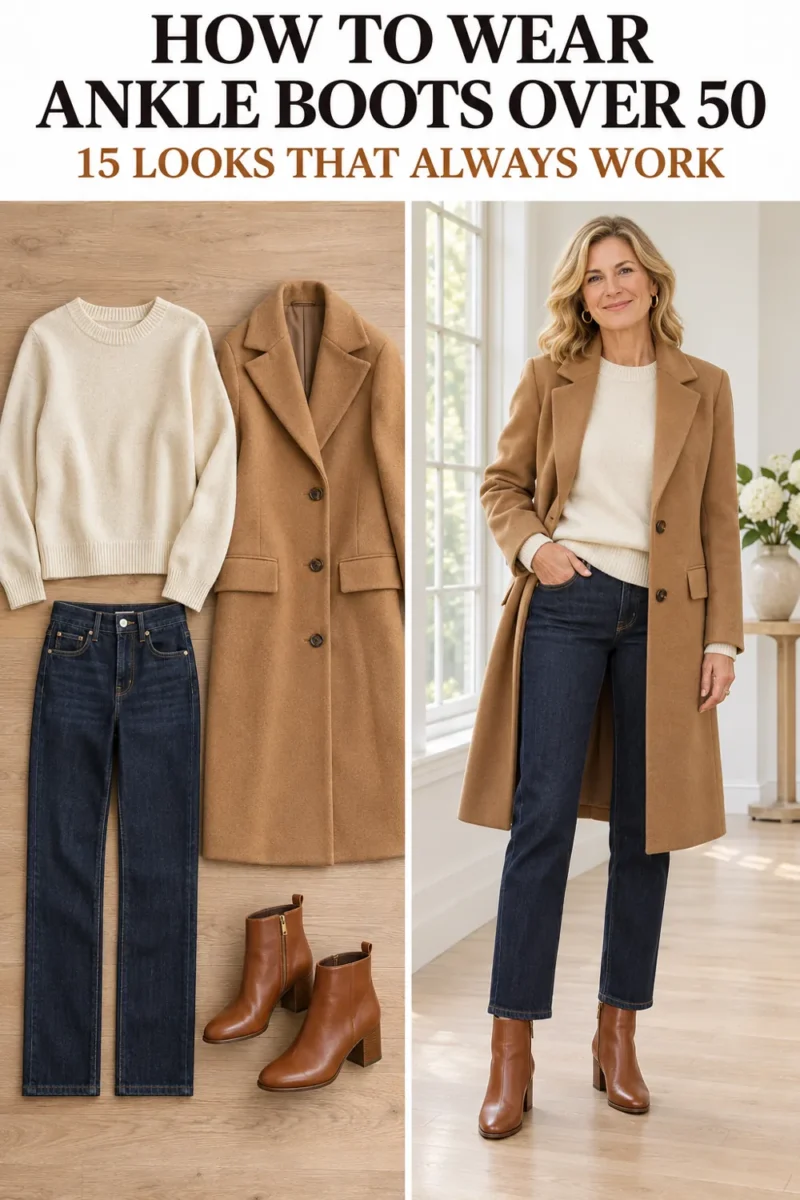
10. Camel
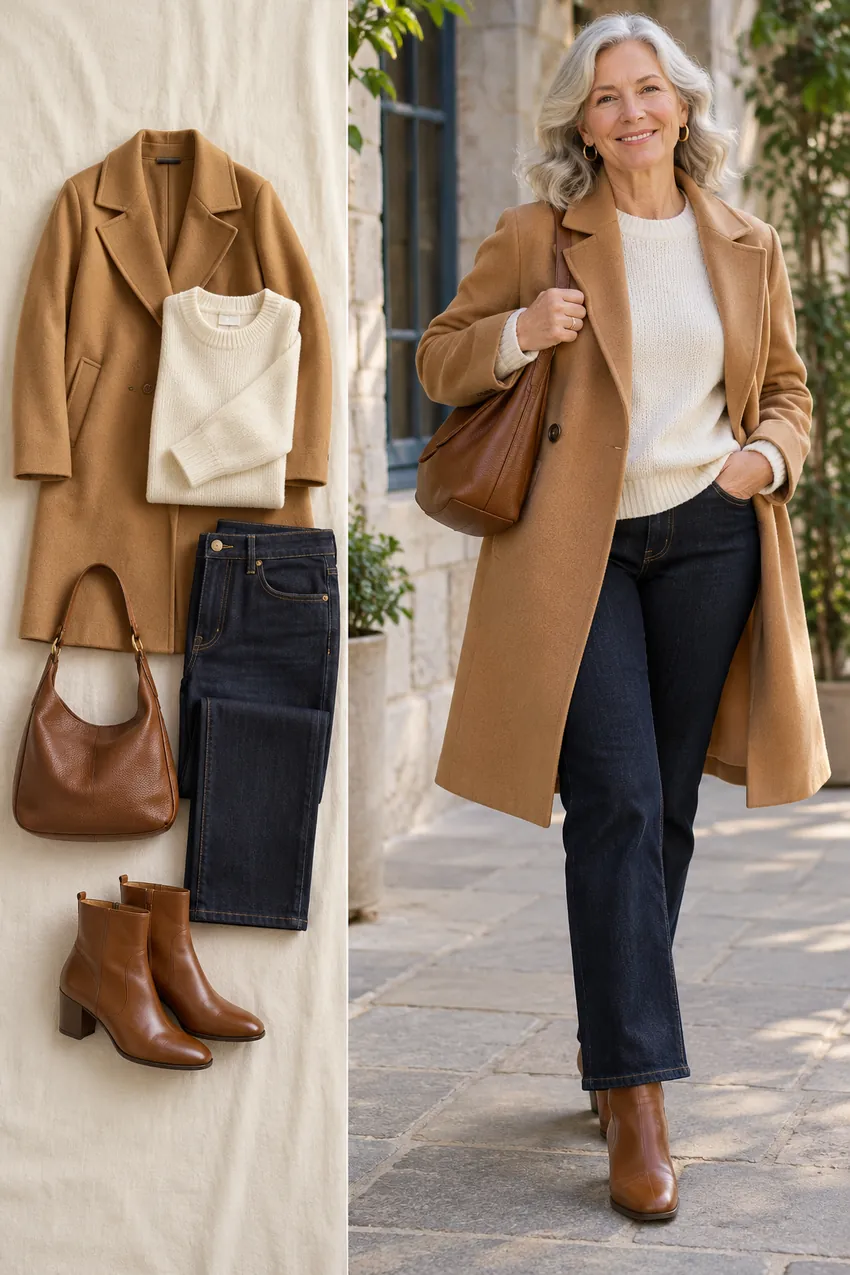
A camel coat and white knit give you both warmth and light around the face. Use dark jeans and cognac boots for a comfortable everyday look. If the coat is a long style, check the hem over the boots as you walk and climb a step.
Camel can be golden, orange or almost gray. Compare the coat with a familiar gray layer. If the camel is too strong right up against your hair, use the white knit or a light scarf as a buffer and keep the coat.
Everyday colors you can mix and repeat
11. Charcoal
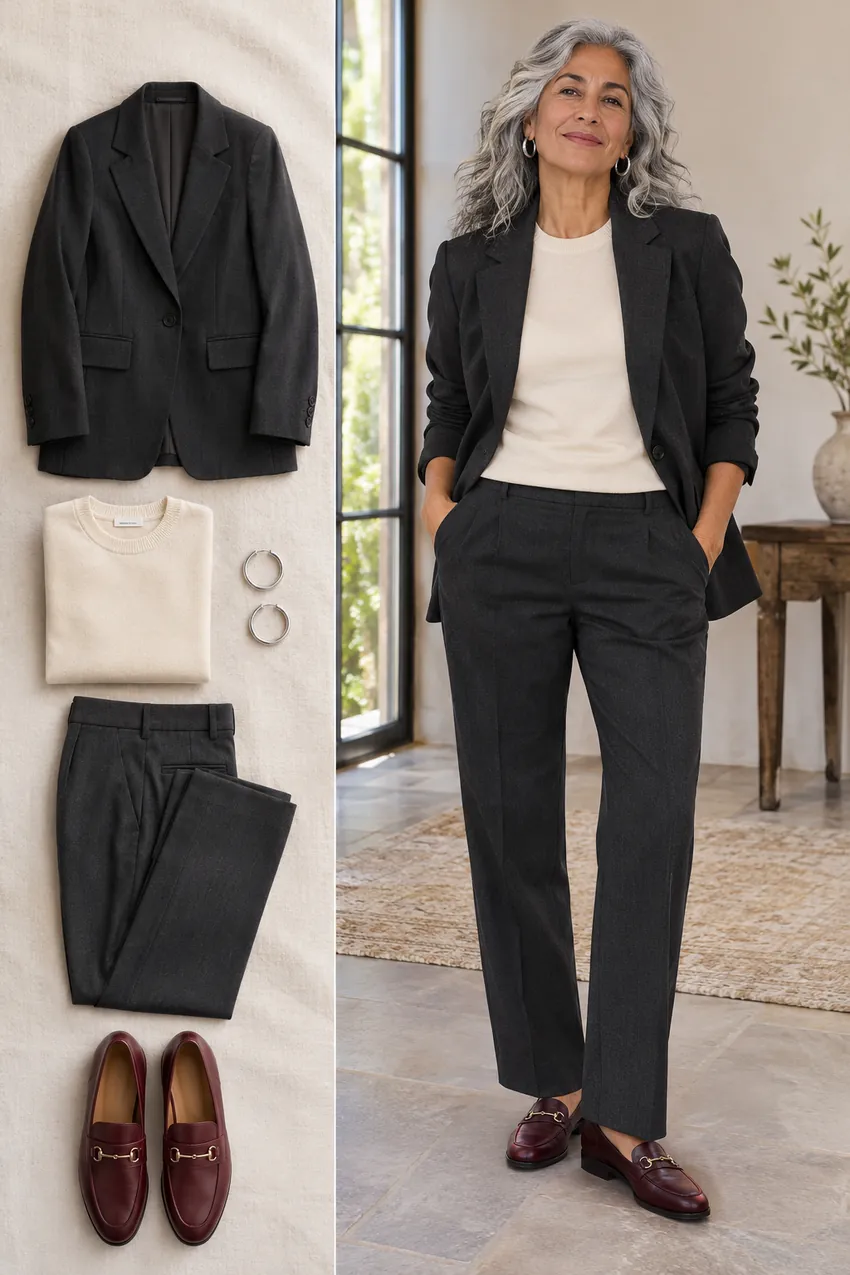
Charcoal makes a useful base when you want something softer than jet black. Pair a charcoal blazer and trousers with a cream crewneck and burgundy loafers. If the jacket and trousers are different charcoals, keep enough difference in texture to make it look intentional.
Check a photo against a simple backdrop. If the jacket and your hair blend together more than you like, add the cream near your face or swap the blazer for navy. If the soft gray frame feels right, keep the look tonal.
12. Lavender
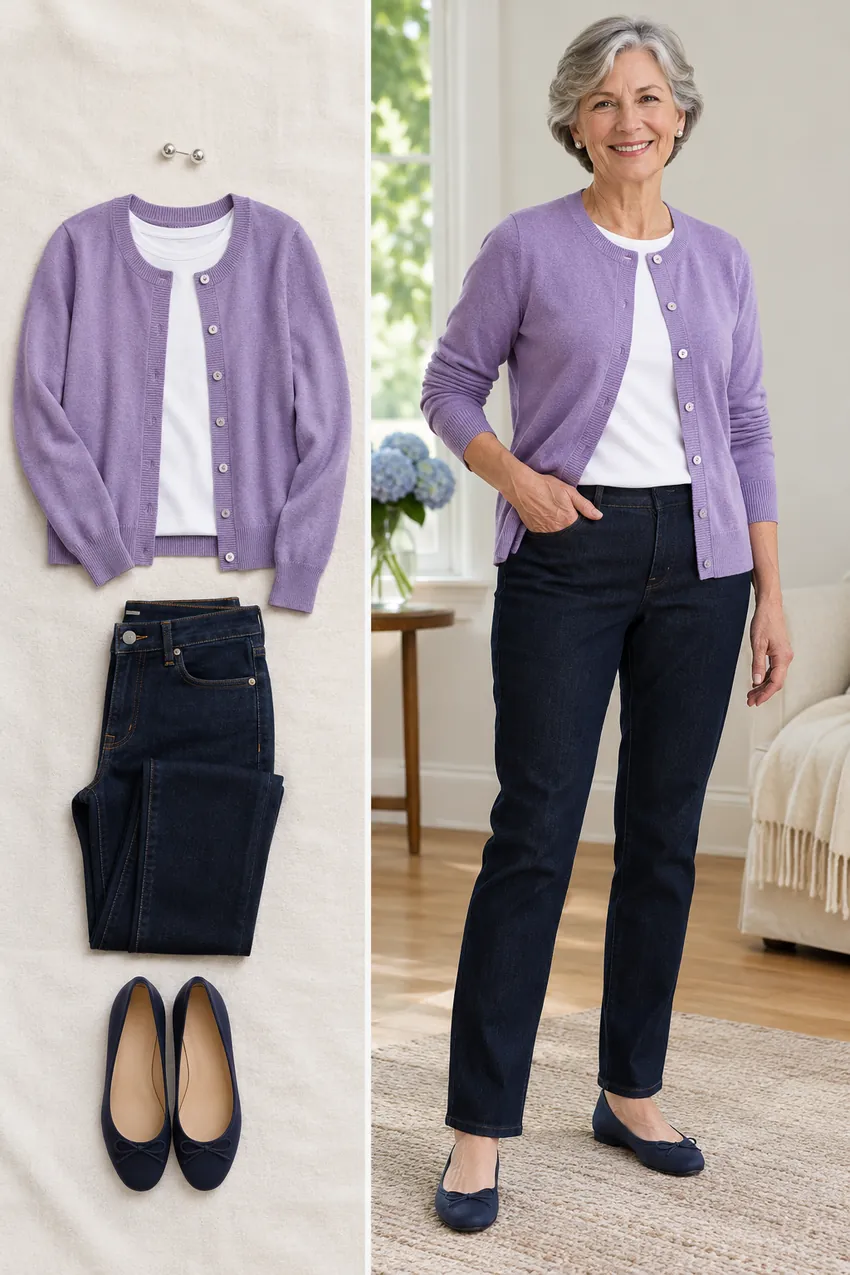
A lavender cardigan brings a lighter cool shade into an everyday outfit. Wear it with a white tee, dark jeans and navy flats. Pale lavender can read very soft around white hair, while medium lavender gives a clearer edge around a darker salt-and-pepper mix.
Try a slightly deeper lilac if the pale version disappears in photos. You can keep the light shade and create contrast with dark denim, a navy bag or a white collar. Change one piece at a time so you can see what helped.
13. Olive
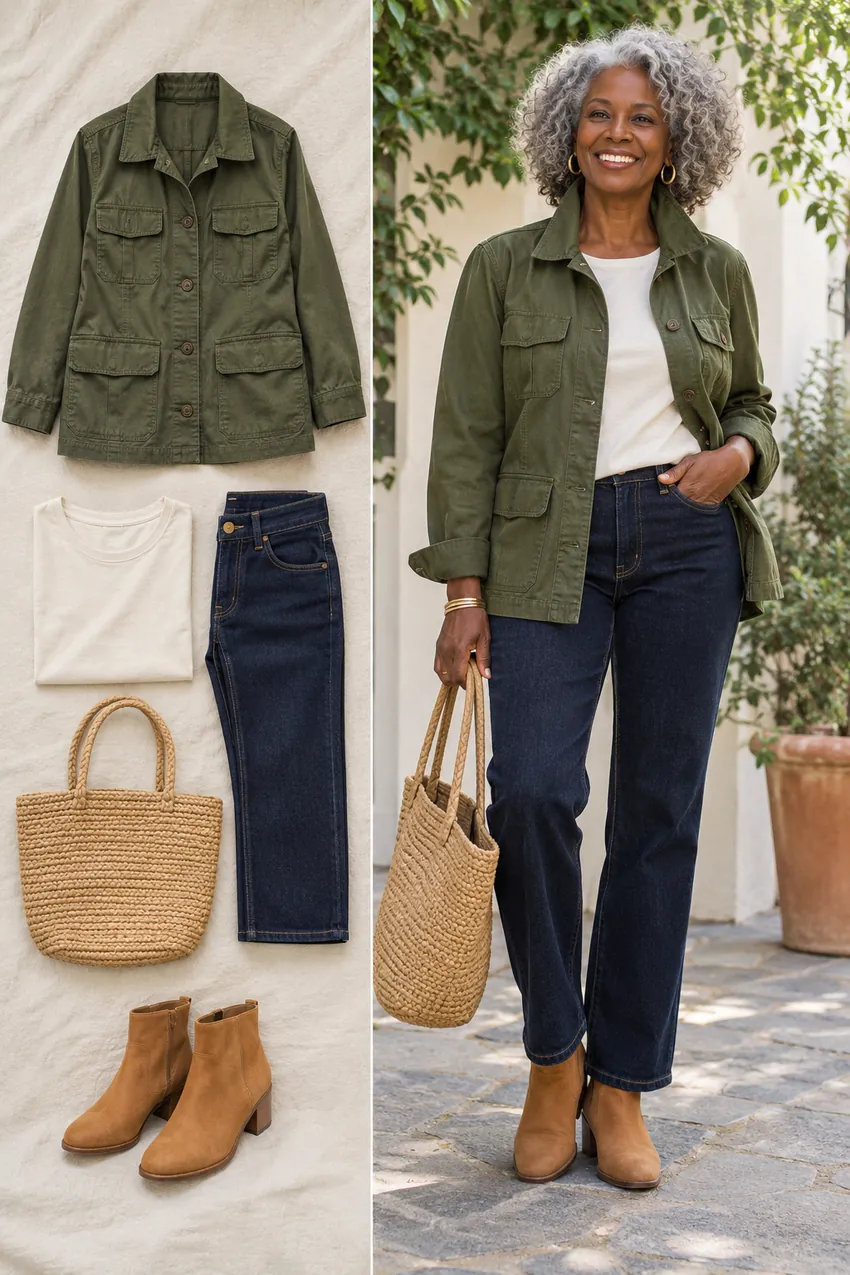
An olive jacket gives silver hair an earthy backdrop. Use an ivory tee, indigo jeans and tan boots. If you already own a utility jacket, this is a good place to start since the only deliberate change may be the color of the tee.
Hold olive and sage up in daylight. If the more muted green seems gray beside your hair, try an olive with more color or use it in trousers and keep a lighter top. If you like a quieter look, lean into the muted shades.
14. Chocolate
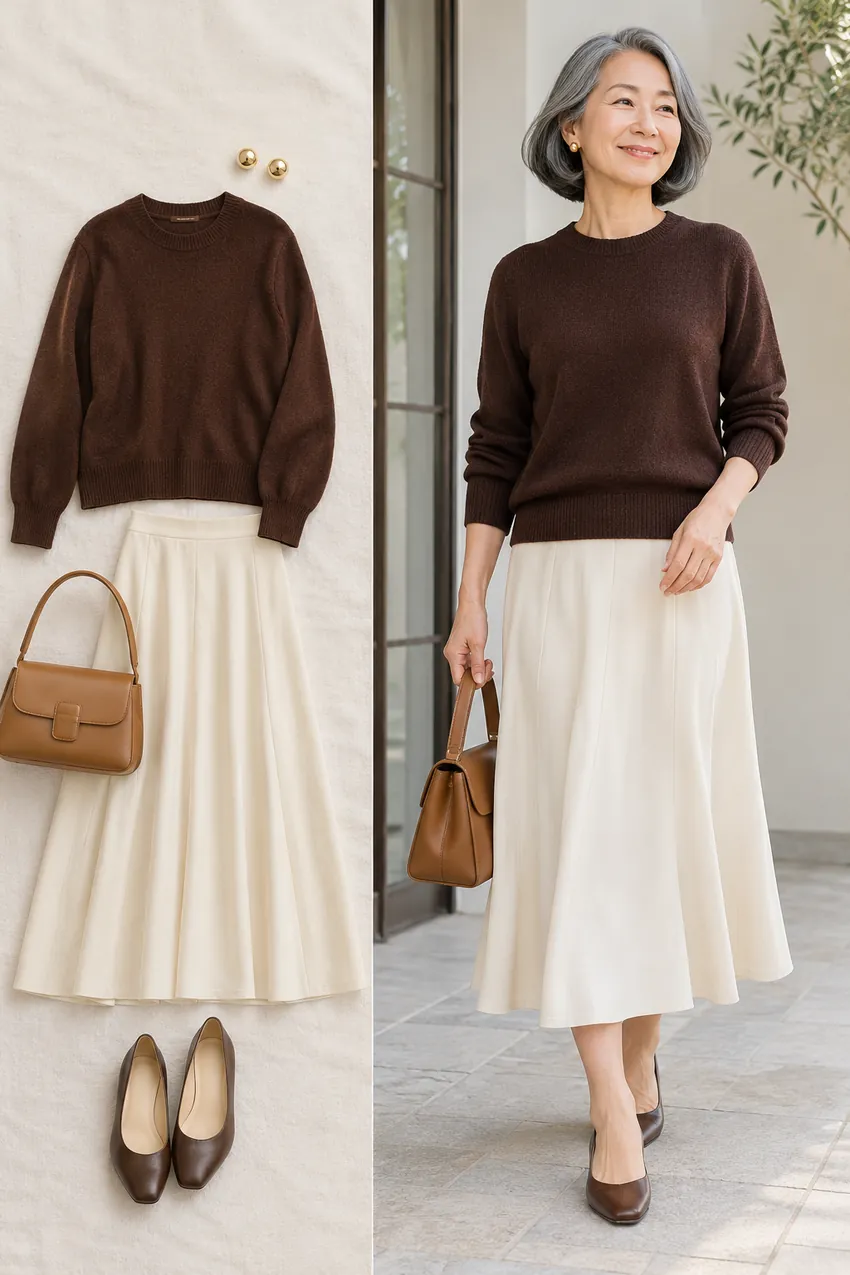
Chocolate brown can add warmth without requiring an orange or red accent. Try a chocolate knit with an ivory midi skirt and low brown heels. A tan bag connects the tones, and a gold stud is enough if you wear earrings.
Compare the brown knit with a black one in the same window light. If the brown needs more definition, add an ivory collar or brighter earring. If you prefer the more dramatic black, use chocolate as a skirt or bag instead.
15. Black
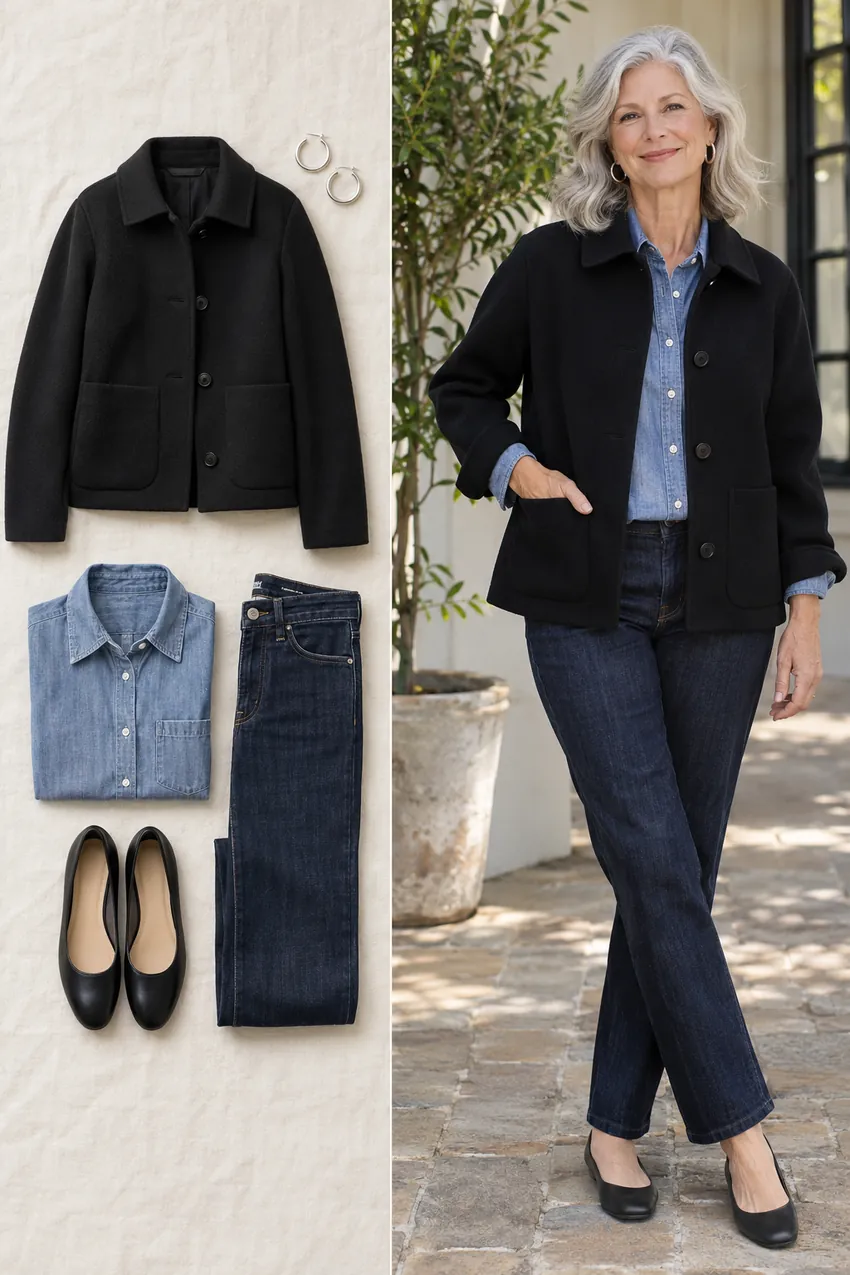
Black still works with gray hair. Try a black jacket open over a blue chambray shirt, dark jeans and black flats. Silver hoops echo the hair and give you a small highlight if the jacket has a high collar.
If a solid black neckline feels too stark, leave the jacket open and adjust the amount of blue that shows. For an evening outfit where you like strong contrast, try an all-black base and check it under the lighting you’ll actually have.
Try the colors with clothes you own
Keep the outfit constant. Use the same neckline, backdrop and lighting. A photo from arm’s length can help you see contrast, but check the mirror too. A phone can change exposure as you switch fabrics.
Build a first three-color wardrobe. Start with one light neutral, one dark neutral and one accent. Ivory, navy and teal are one option. Charcoal, soft white and berry are another. Compare them with two bottoms you already wear before buying another top.
Check your usual hairstyle. Pulling gray hair back shows more of your skin and changes the frame around your face. Try the same top with your hair up and down if you wear both. This can be especially useful before buying a high-neck sweater or scarf.
Frequently asked questions
Can I still wear black with gray hair?
Yes. Try it on its own or open a jacket over a blue or ivory top. Use the version that gives you the contrast you like.
Do I need silver jewelry?
Choose the finish you enjoy. Silver echoes cool gray hair, while gold can pick up brown shoes or a warmer neutral. Try both with the same neckline.
Leave a Reply