
This post may contain affiliate links. If you buy through them, we may earn a small commission at no extra cost to you. Read our disclosure.
A fresher outfit after 50 usually comes from editing what’s already there. Open a collar, lighten the shoe or swap a stiff layer for one that moves. These changes are small enough to try in front of a mirror before deciding whether anything needs replacing.
Start with the outfit you wore most last week. Use the table to pick one adjustment and take a daylight photo before and after. Keep the version you feel like wearing out the door.
Affiliate disclosure. As an Amazon Associate I earn from qualifying purchases. AI-generated images illustrate the ideas. Paid links lead to Amazon listings or searches for similar items. Check the size, color and seller before ordering.
In this post7 sections
Choose where to start
| When this comes up | Try this | What to check |
|---|---|---|
| Heavy at the neckline | Open the collar or use a white tee | See if the neckline stays in place when you lean forward. |
| Jeans bunch at the boot | Try a lower shoe or a different hem | Walk and then check the side view. |
| Dark separates feel flat | Add texture or repeat one accent | Try the look in daylight before adding more colors. |
Update the fit and proportions
1. Lighten the neckline
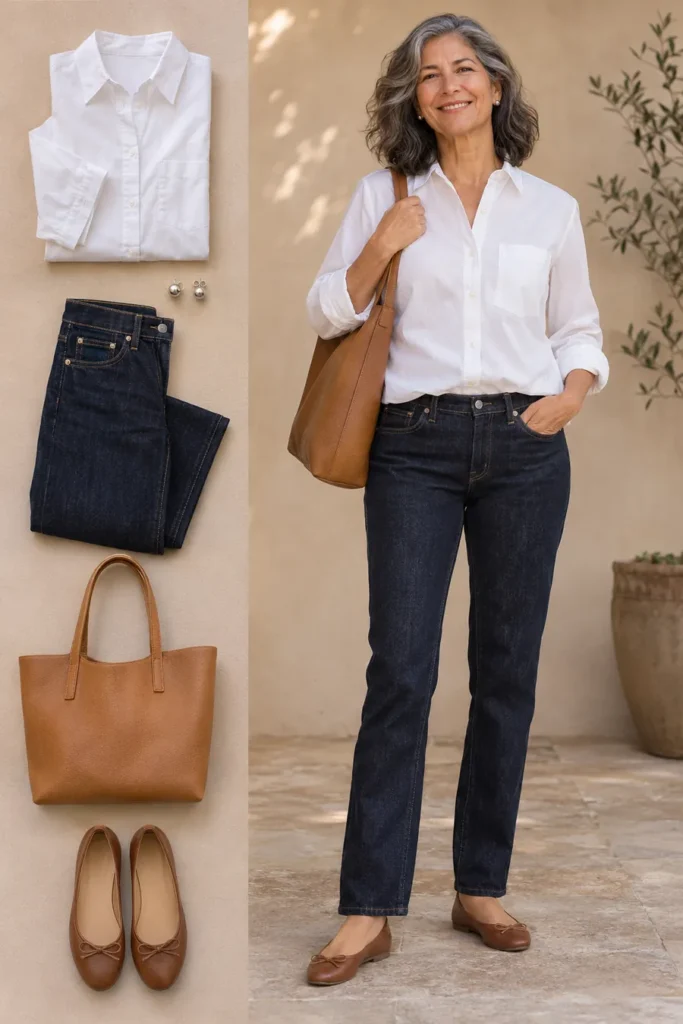
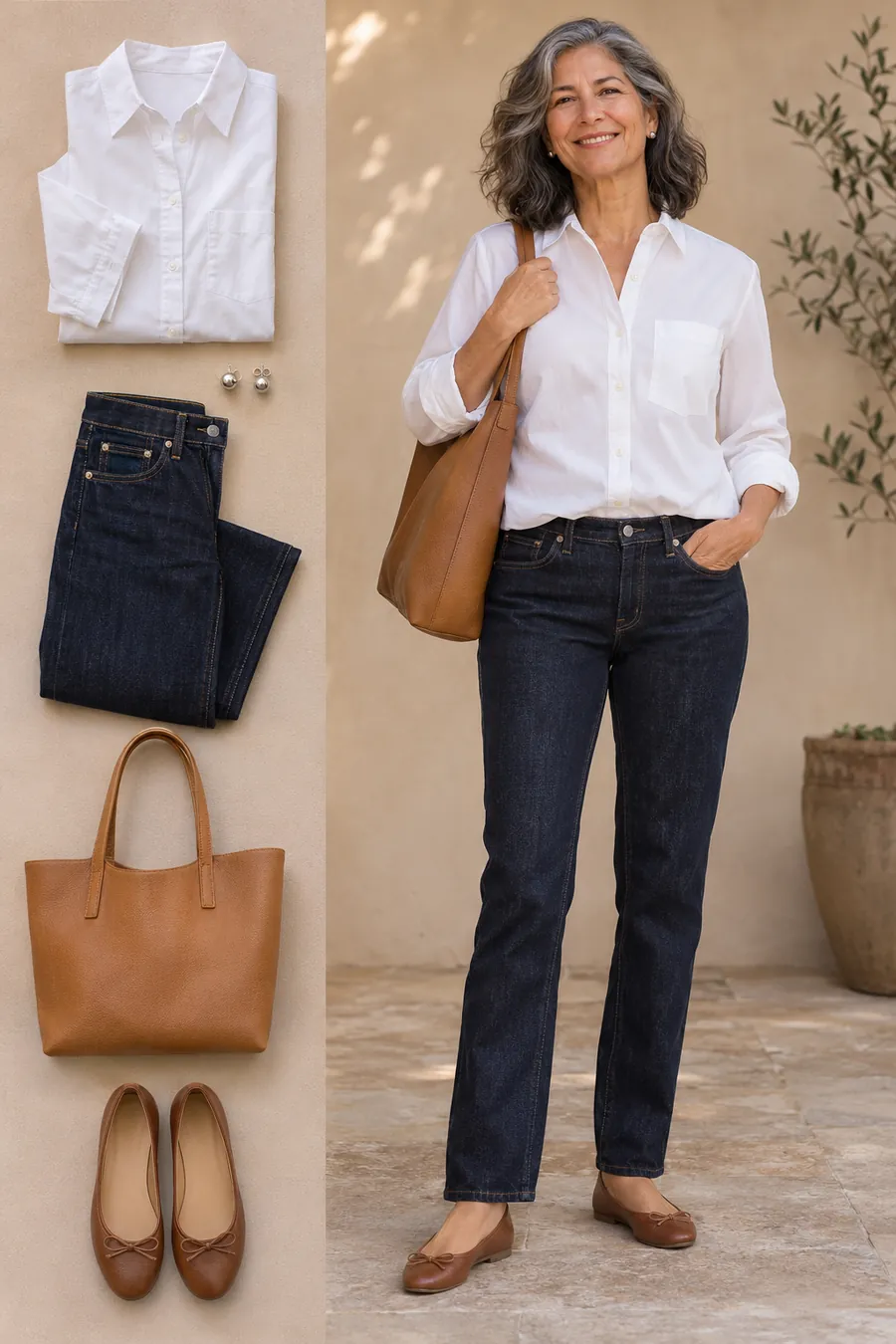
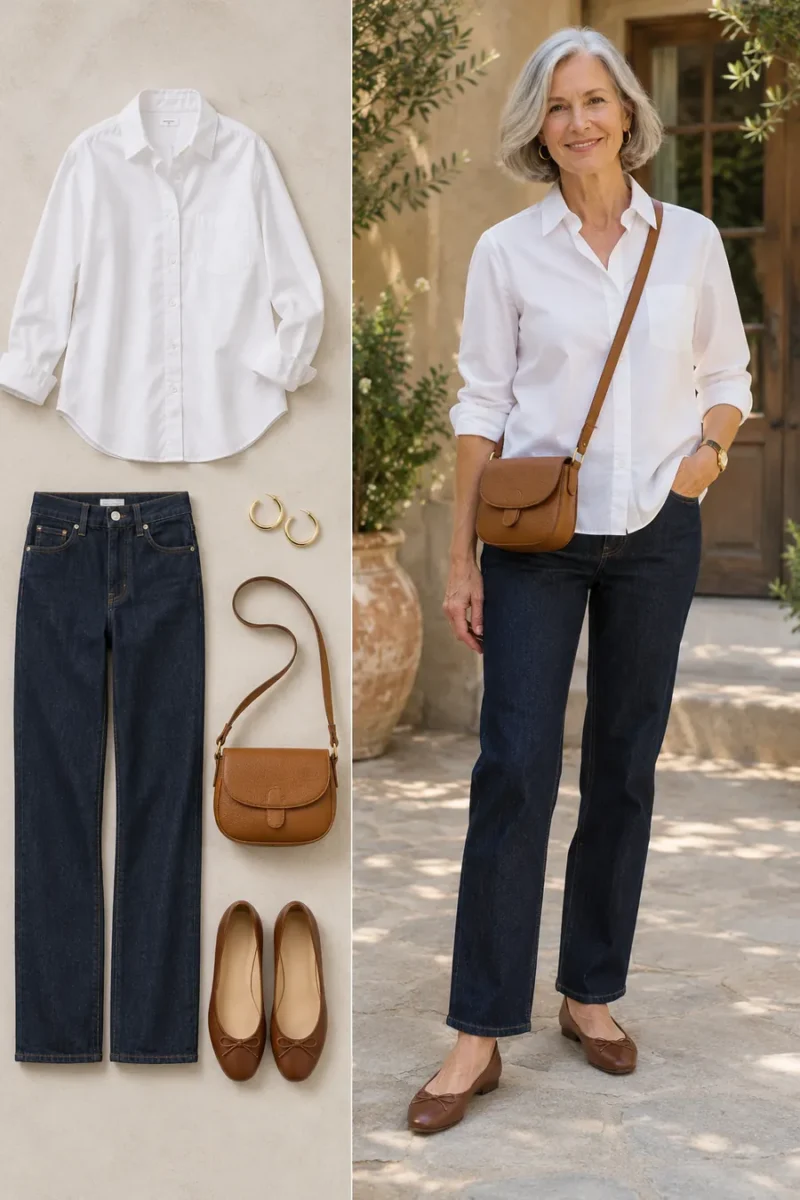
Open the first button of a white poplin shirt and roll the cuffs once. The open neckline breaks up the solid fabric. Stand by a window and check for pulling across the chest before you decide where to leave it open.
2. Swap stiff denim for an easy straight leg
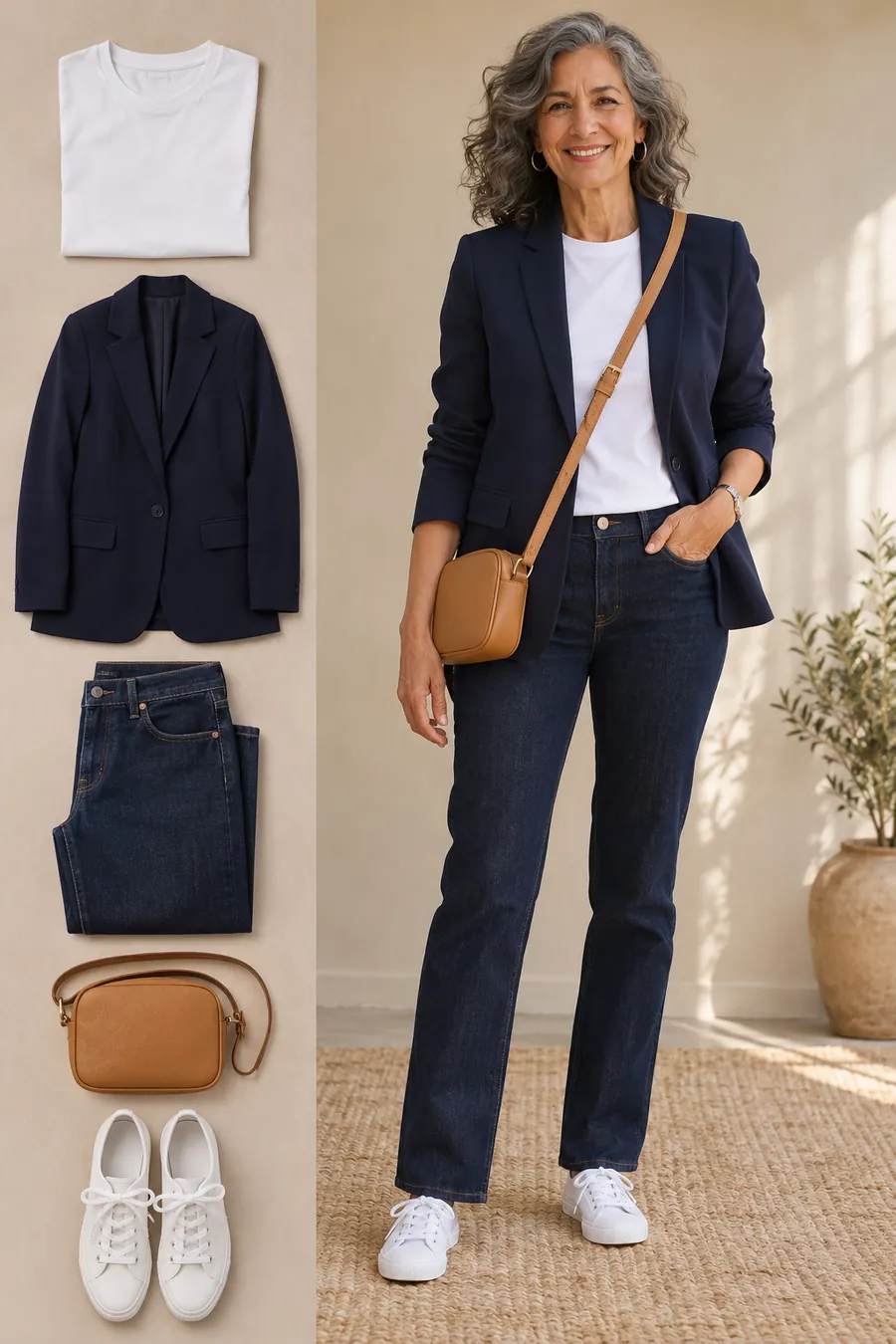
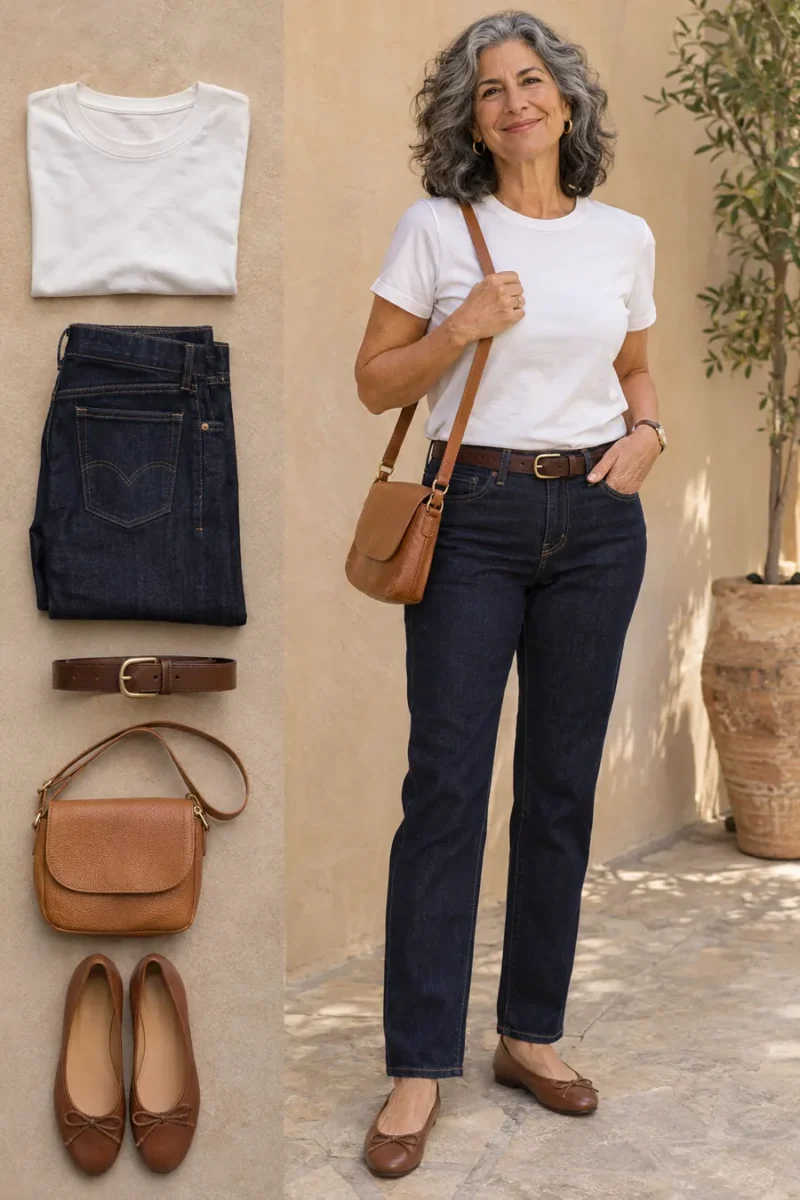
Use a dark straight jean without heavy distressing. The Levi’s 724 example is a high rise, so compare its rise to the jeans you already reach for. If the waist presses when you sit, keep the color and look for a lower rise.
3. Trade one heavy layer for a lighter one
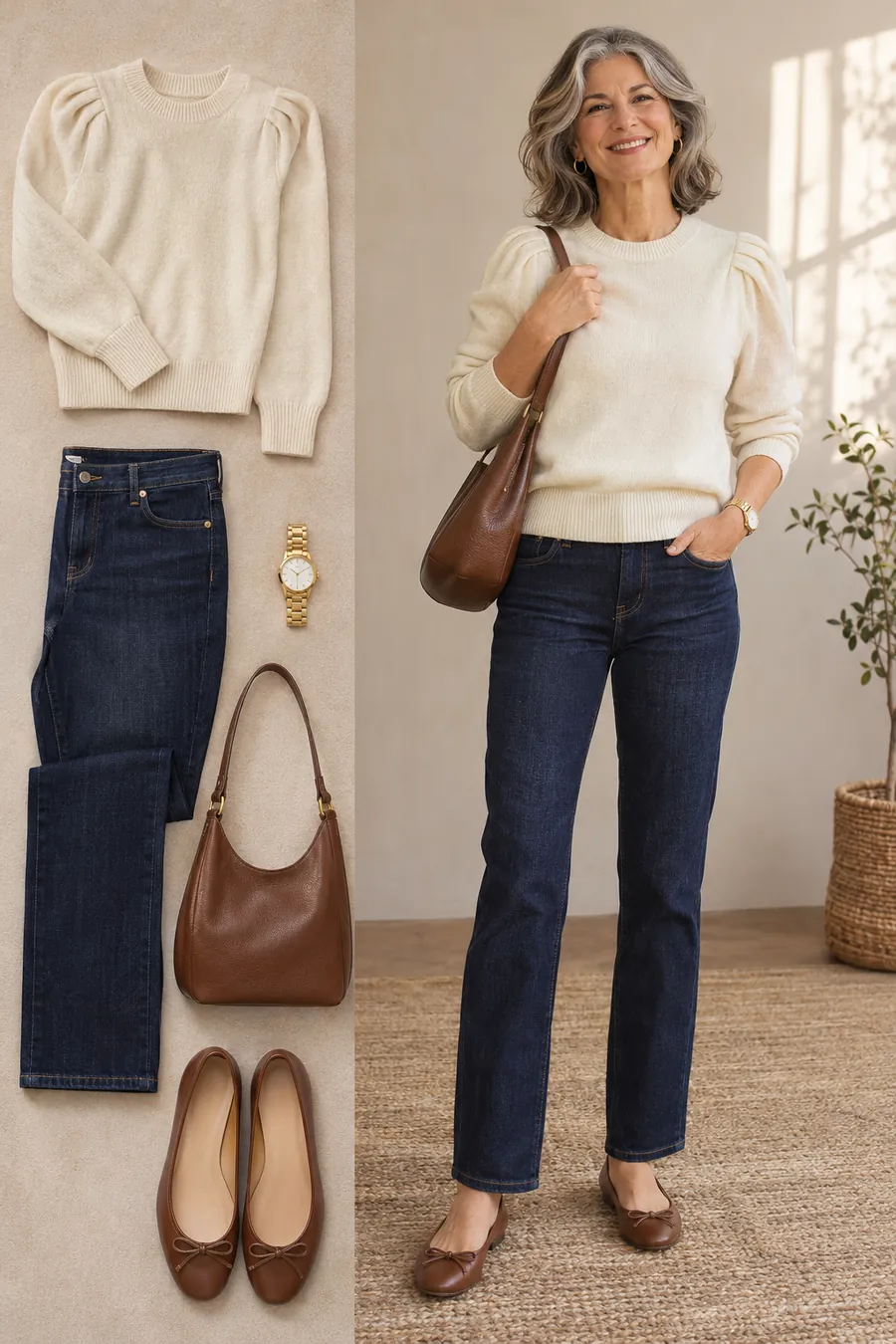
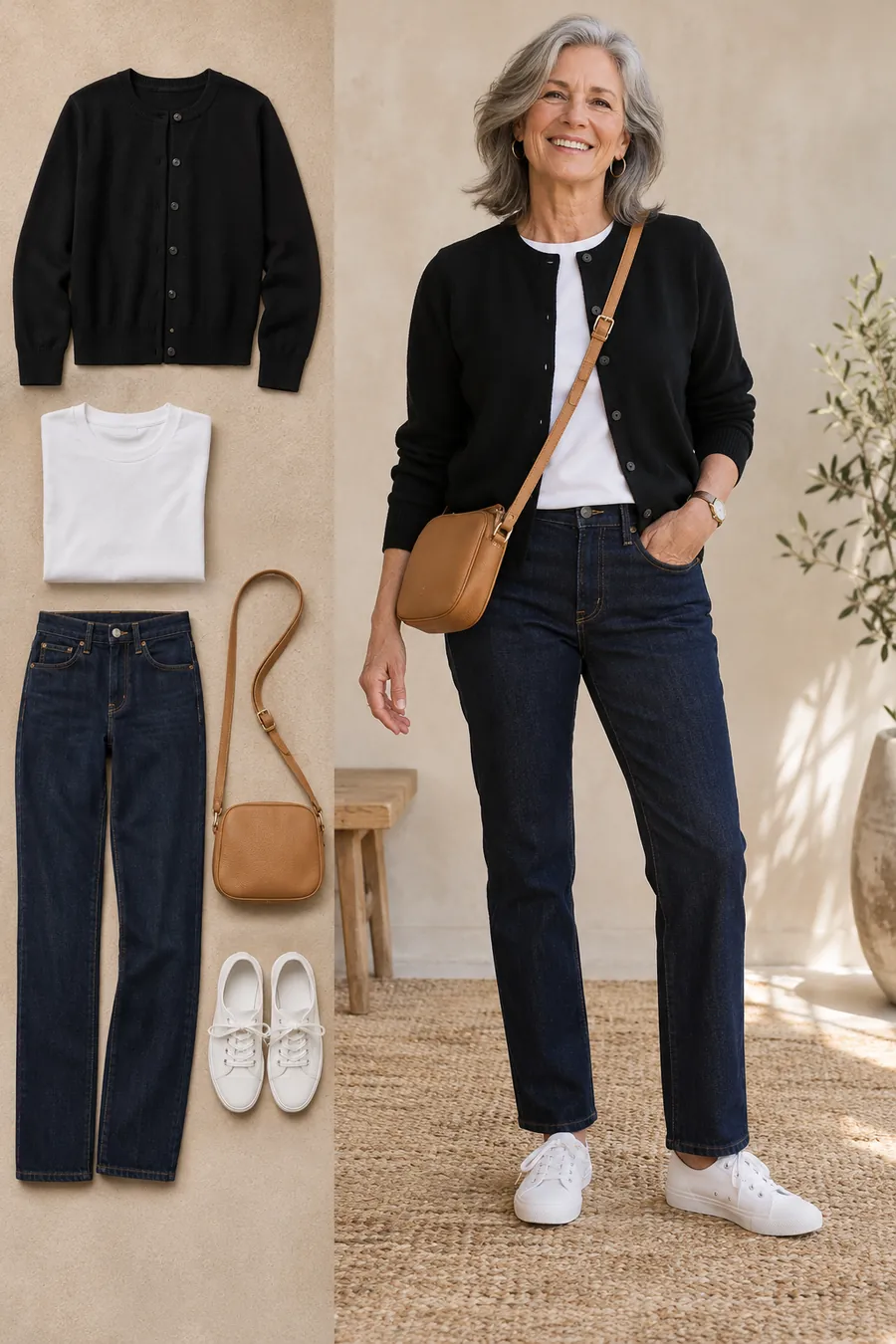
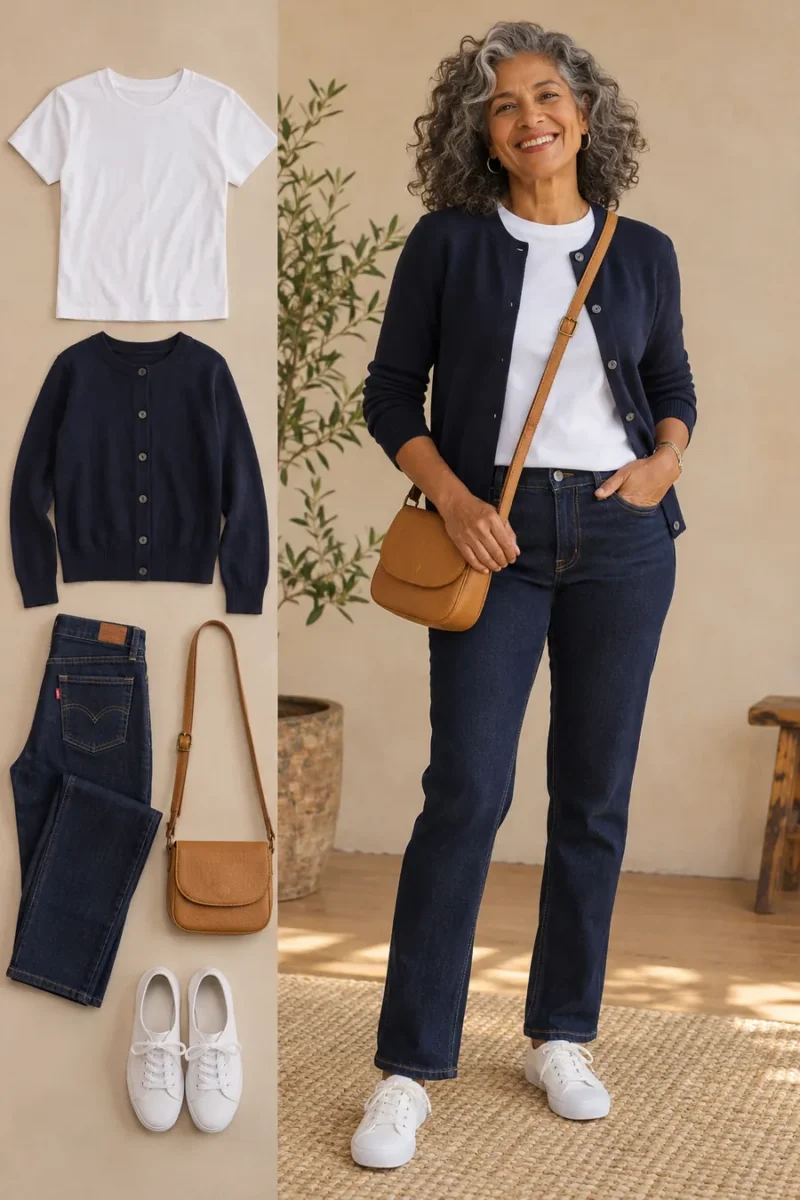
A black cardigan over a white tee still gives you contrast with less visual bulk than a full coat indoors. Try leaving the cardigan open. Check where the front edges land against the pockets of your jeans.
4. Repeat a shade from the top at your feet
White sneakers repeat the tee under a navy blazer. The repetition makes the sneakers feel like part of the outfit. An off-white sneaker can do the same job if the tee is ivory.
5. Use an accent you can move away from your face
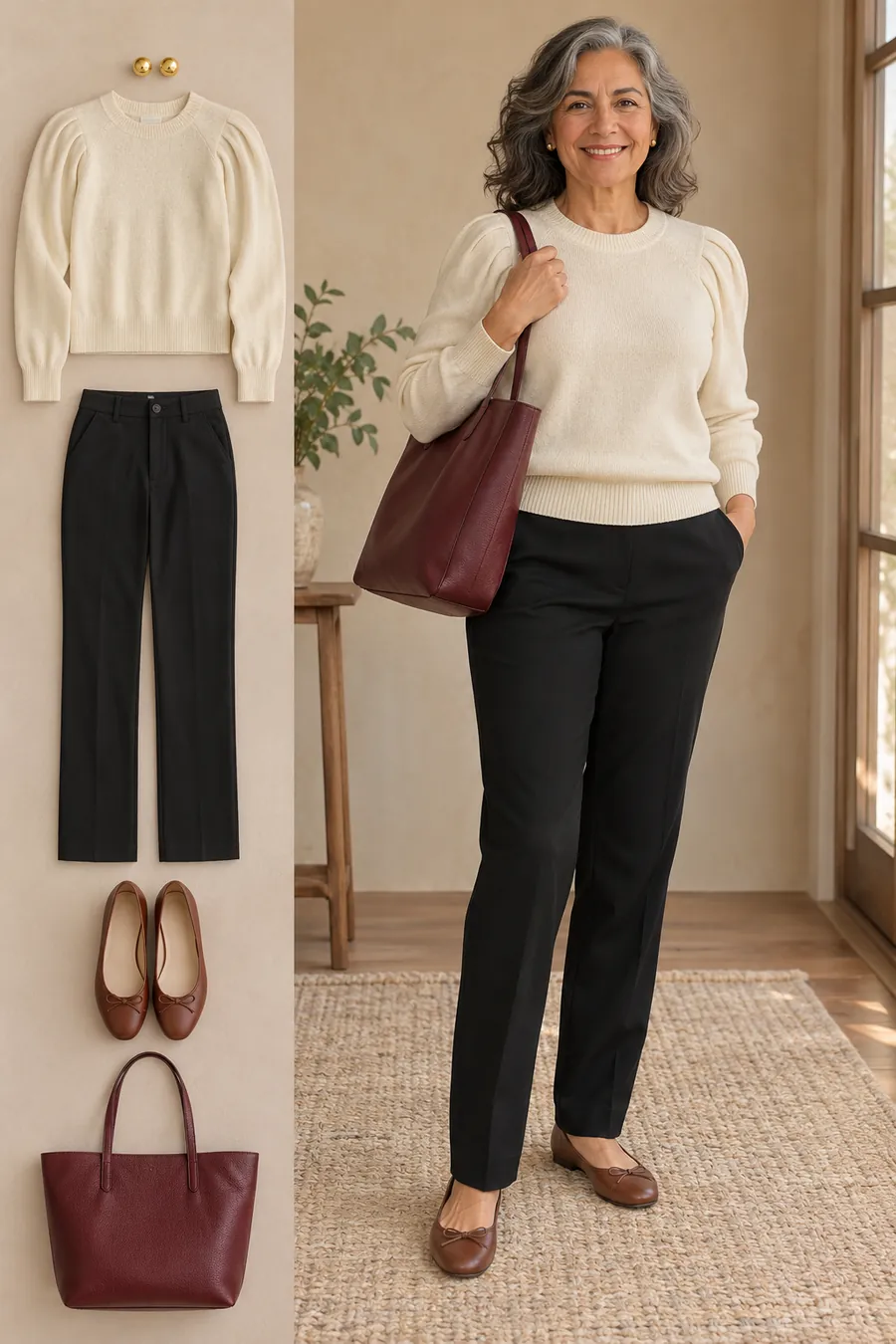
Try burgundy as a bag with ivory and black. If you like the color in a daylight photo, you can later try it in a scarf. Notice whether your bag feels heavy with everything you actually carry.
Use color, contrast and texture
6. Let one fabric supply the texture
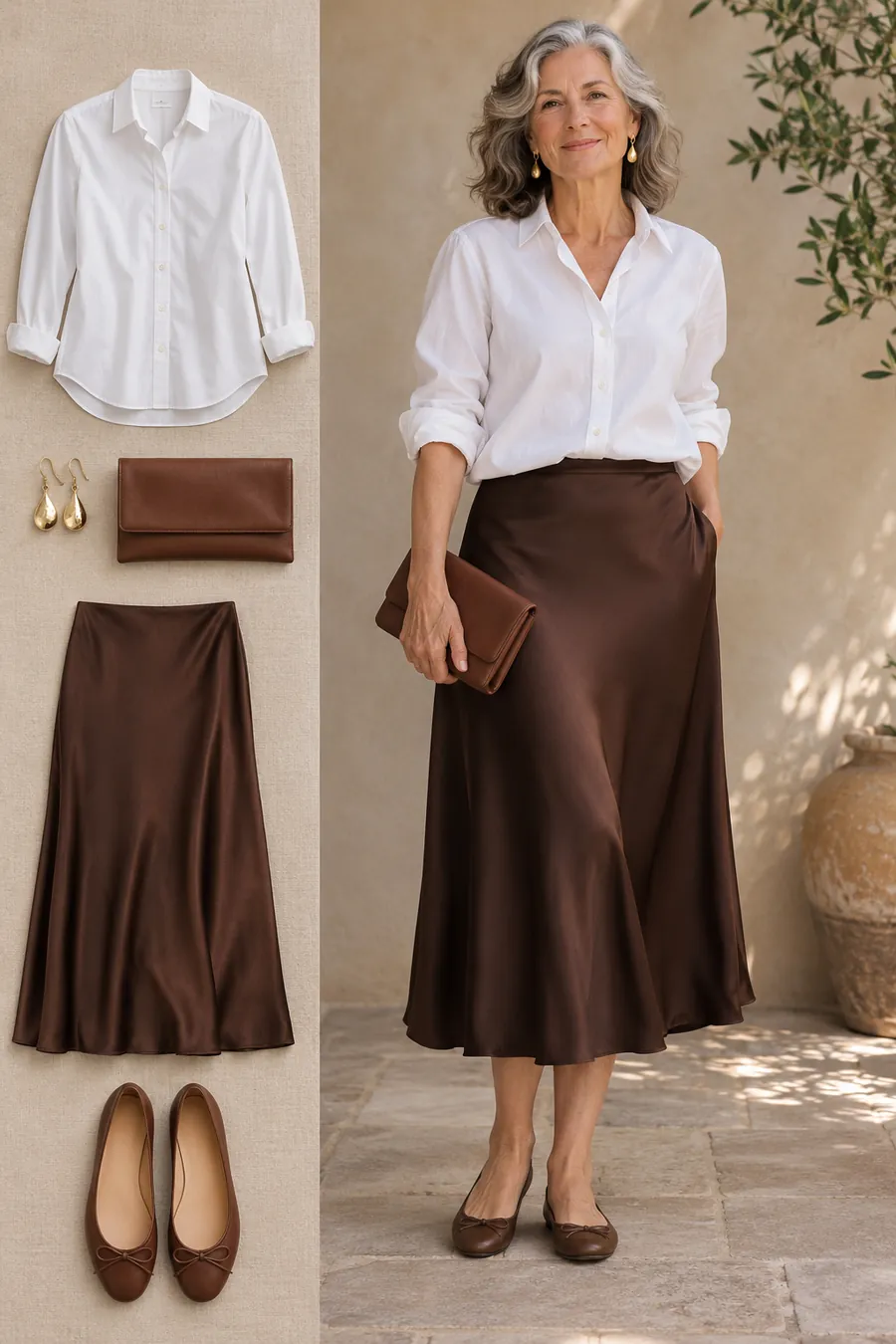
Wear crisp poplin with a satin skirt. The fabric contrast makes a quiet palette more interesting. If your satin shows every fold after sitting, a matte crepe skirt offers a similar shape with a softer finish.
7. Check the jacket at the shoulder
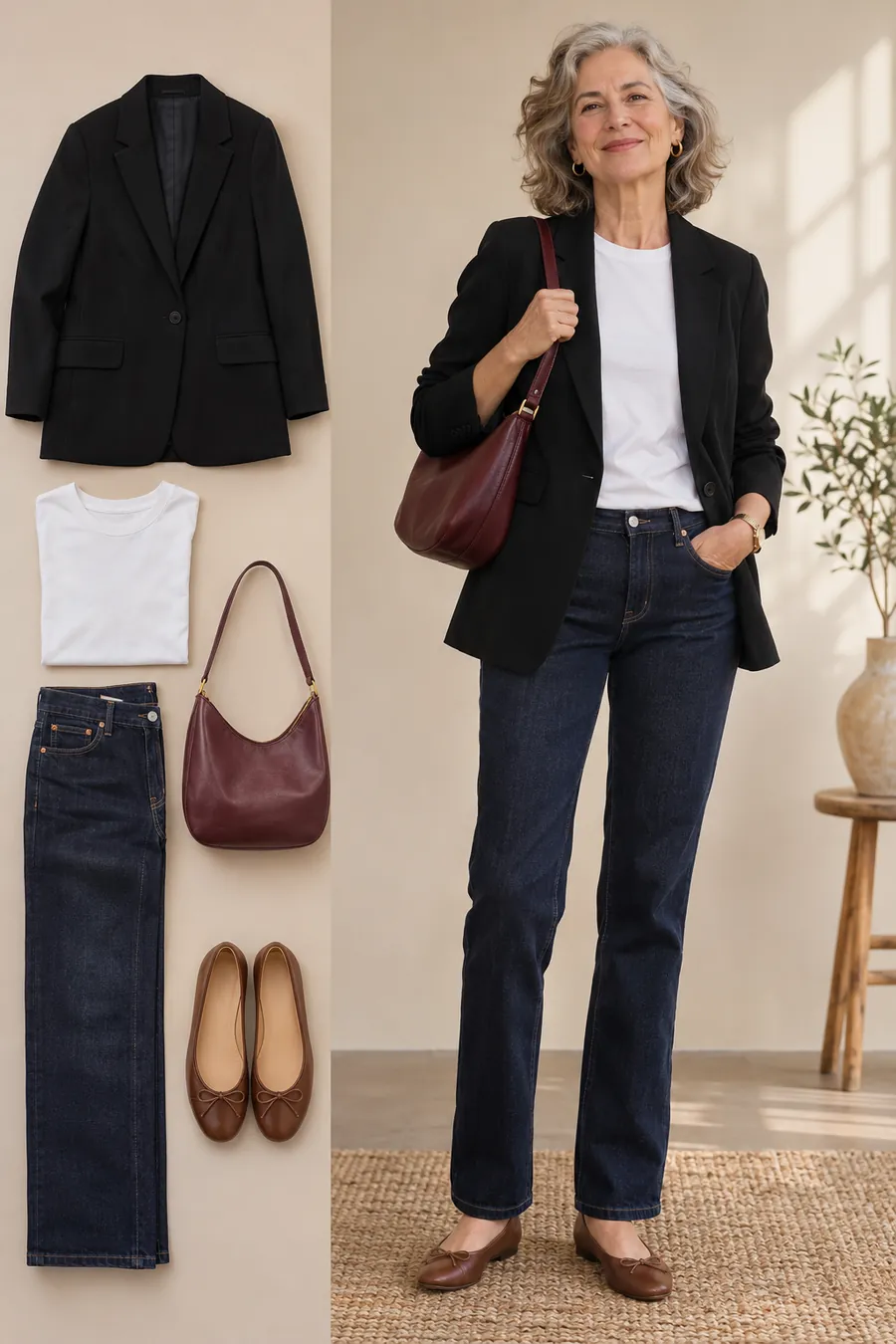
A jacket that lies smoothly at the shoulder can sharpen a simple jeans outfit. Reach forward before buying. If the lining pulls across the back, try a softer jacket or a different shoulder cut.
8. Make a dark outfit less flat
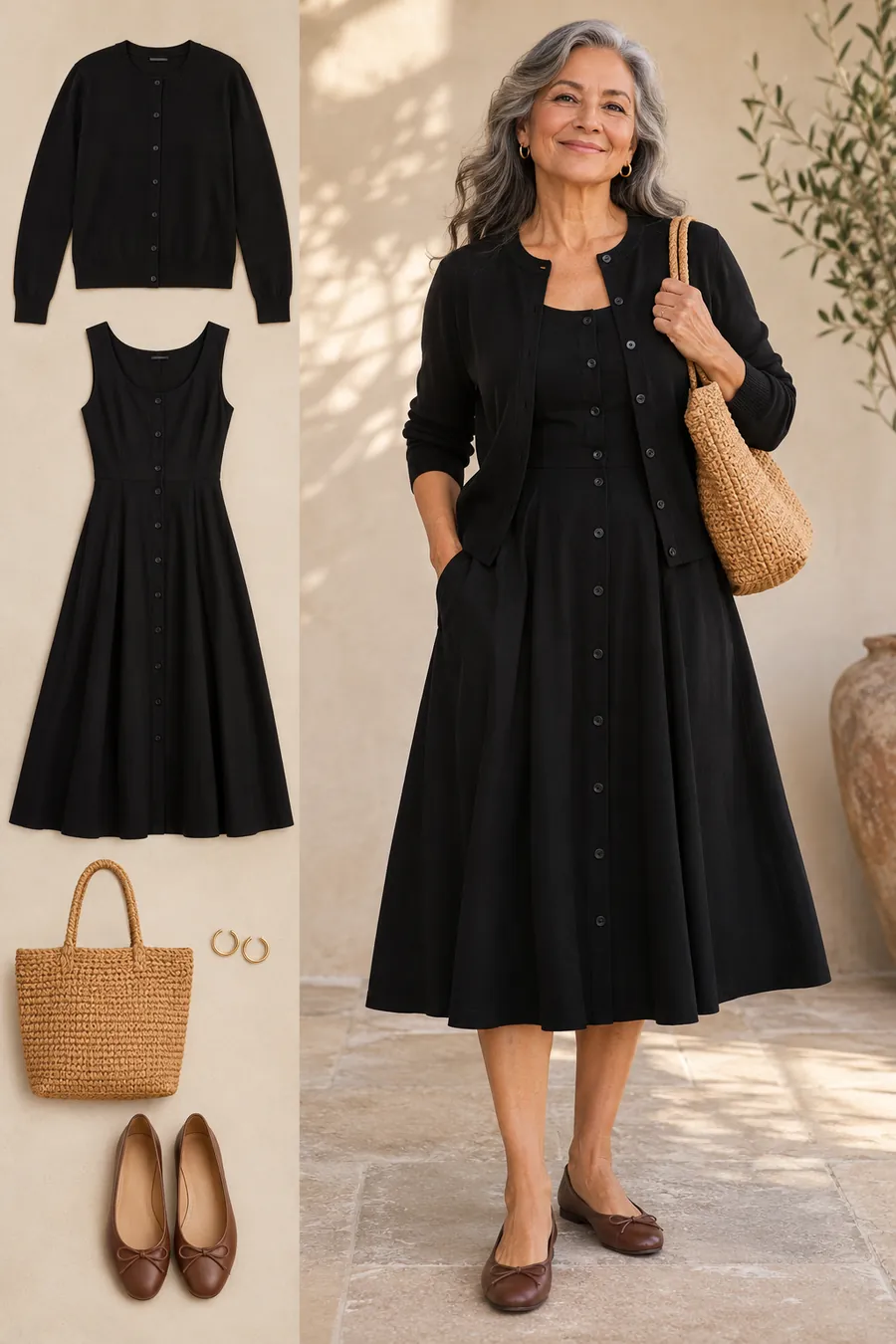
Use a knit cardigan over a woven black dress. Open one layer at the front so the button lines do not compete. Brown accessories warm up the outfit without making it busy.
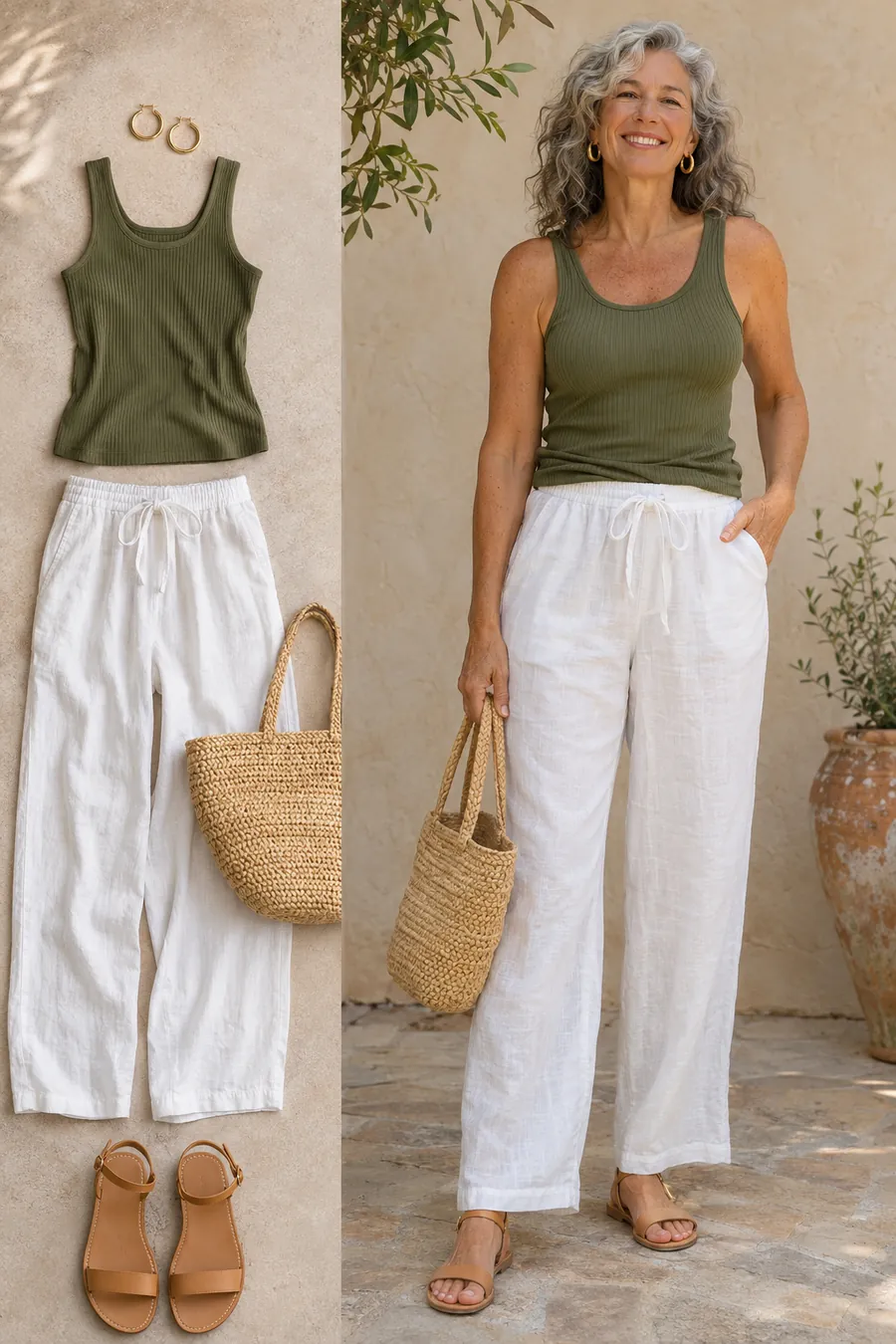
9. Show the shape of a wide leg
Pair a wide linen leg with a top that ends near the waistband. The top can skim rather than cling. Wear the sandals you plan to use before deciding whether the trousers need a hem.
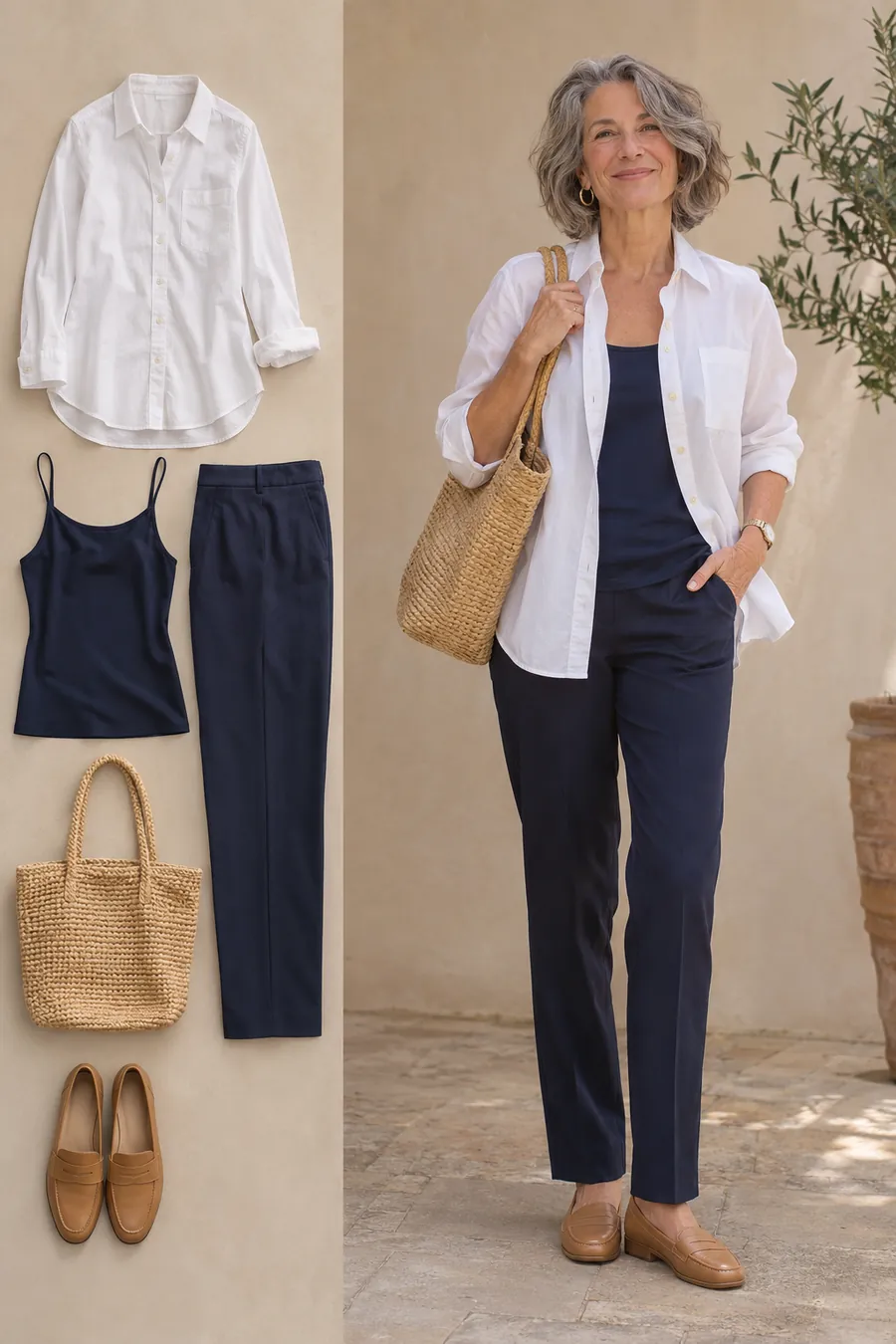
10. Use a longer layer to frame a slim palette
Wear the white shirt open over navy separates. The solid center keeps the look simple and the shirt adds movement. If the open shirttails flap against the bag, try a shorter overshirt.
Finish the outfit for your actual day
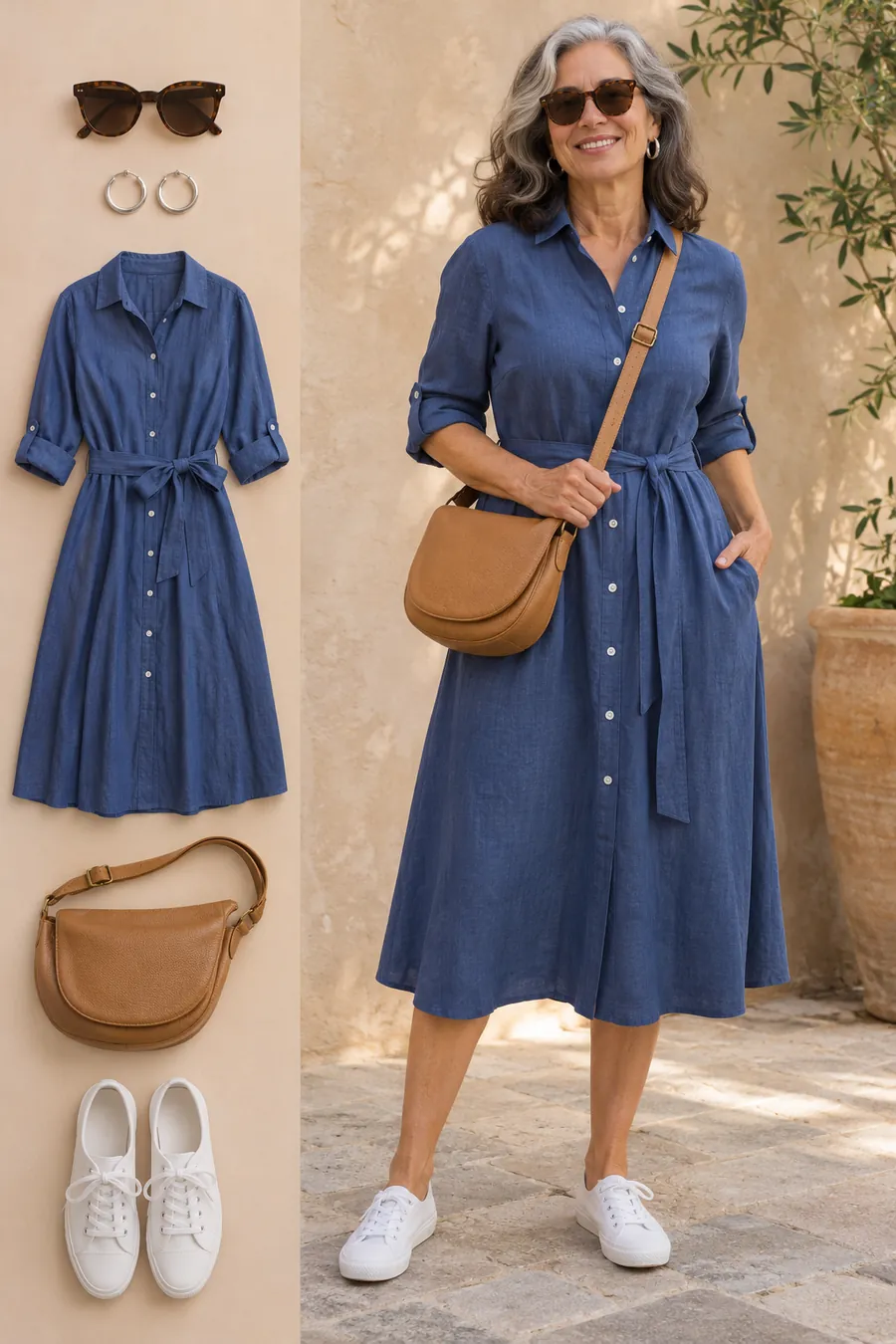
11. Test the skirt and the sneaker together
Try low-profile canvas sneakers with a blue shirt dress. Look at the hem from the side and walk a few steps. A hem that brushes your knees with every stride may be easier in a slightly shorter cut.
12. Choose a brighter white in small doses
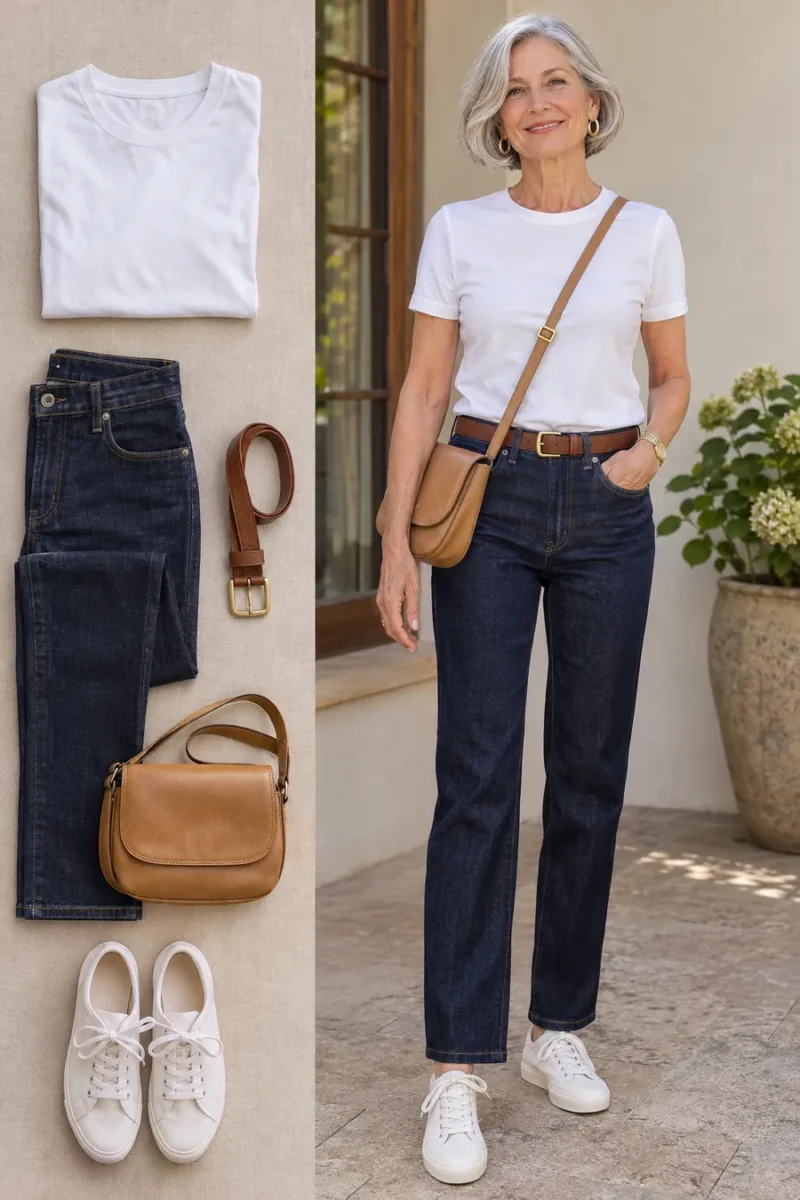
A white tee peeking from a black blazer can be enough light near the face. If you prefer softer contrast, substitute an ivory tee and keep the accent bag.
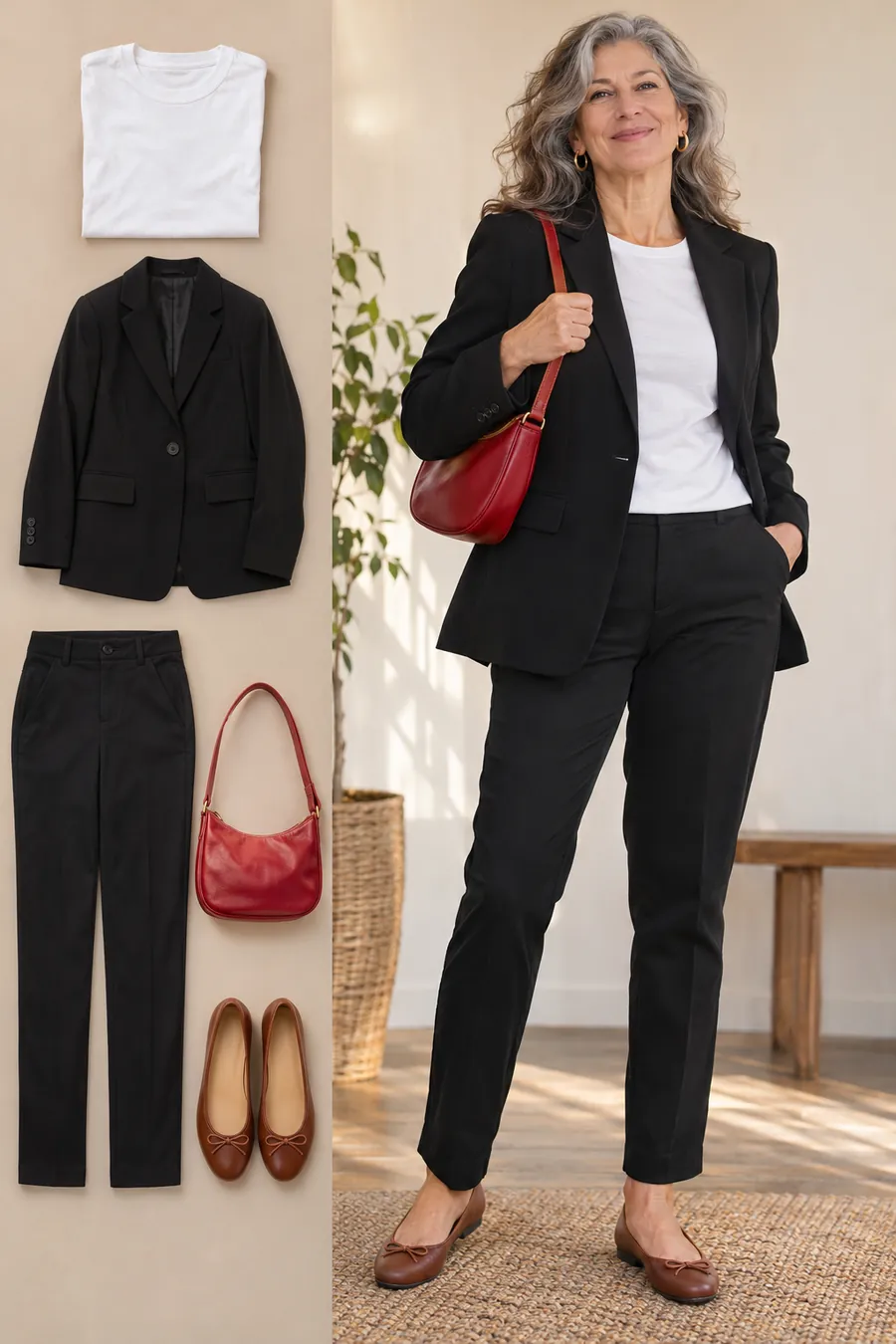
13. Try two neighboring whites
Ivory knit and white linen look deliberate when the fabrics are clearly different. Check both in daylight. If the shades look almost identical but feel off, separate them with a brown belt or a warmer bag.
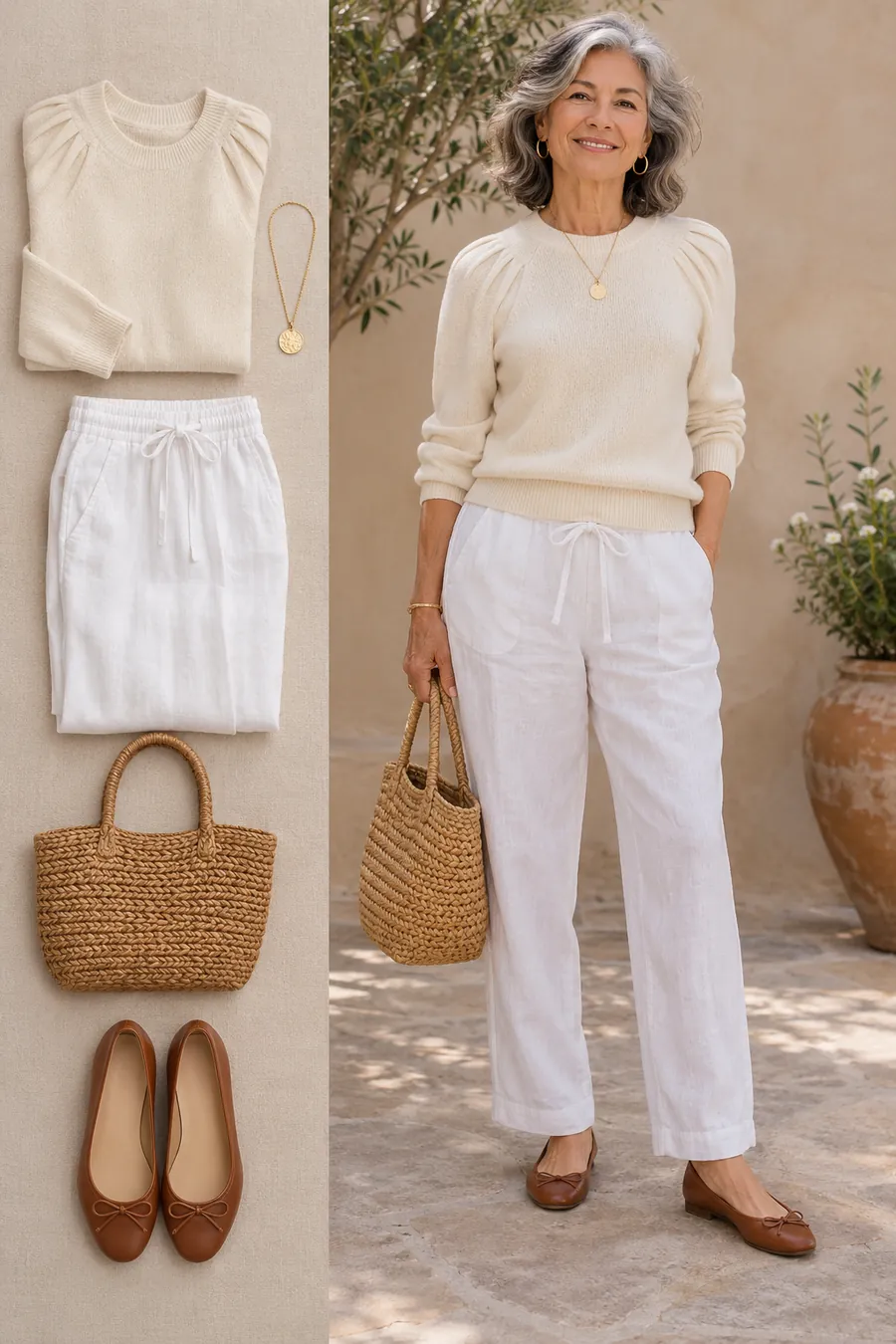
14. Swap a bulky shoe before changing the outfit
If the jeans seem to pile up around the shoe, try a lower-profile pair first. Check that the hem still clears the ground. A shoe change is a quick way to see whether the problem is the cut or just its pairing.
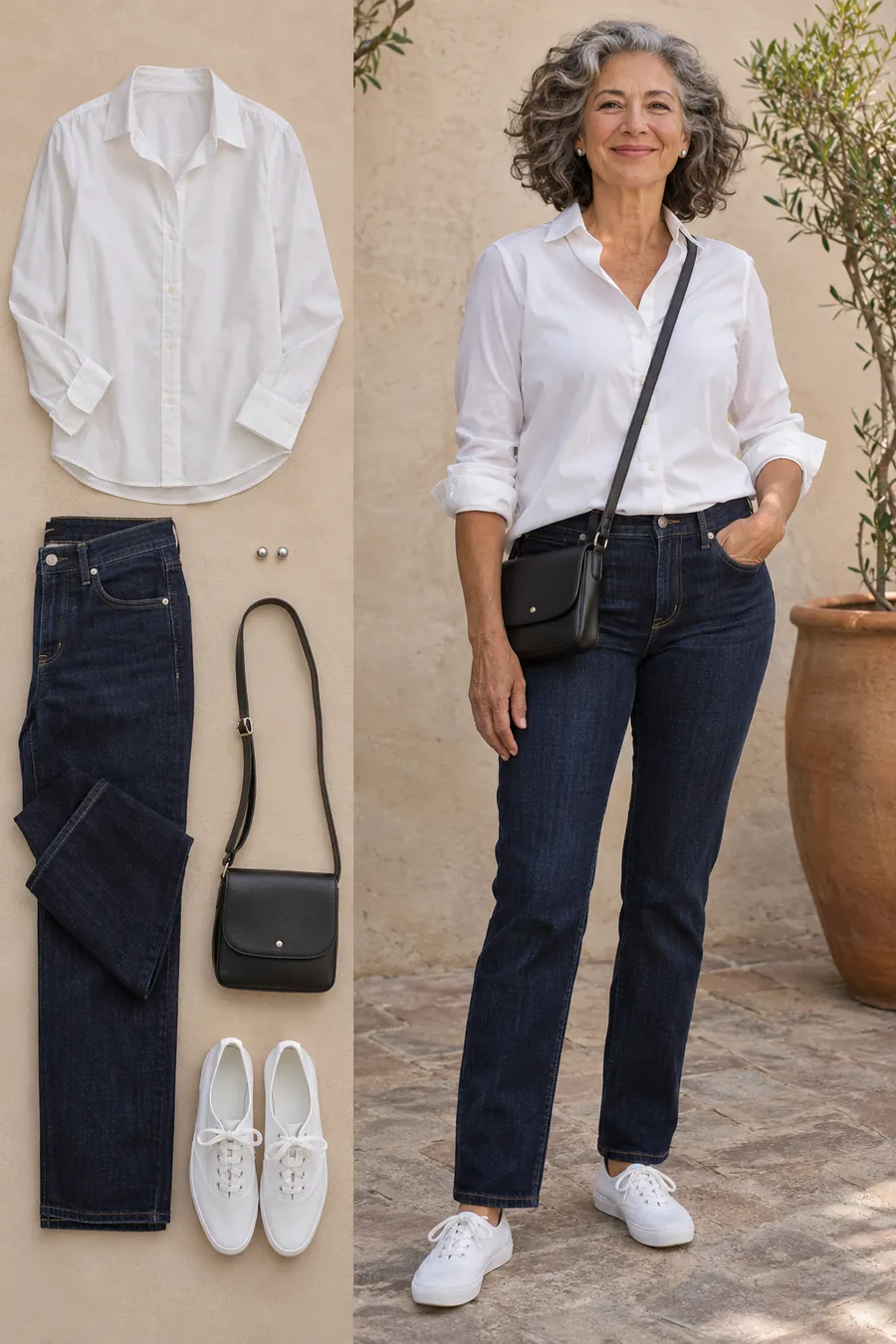
15. Save the look that feels right as it is
Take a front and side photo of an outfit that feels good standing and sitting. Keep the shoes in the picture. Next time you are tempted to replace several things, try recreating that outfit and changing one piece.
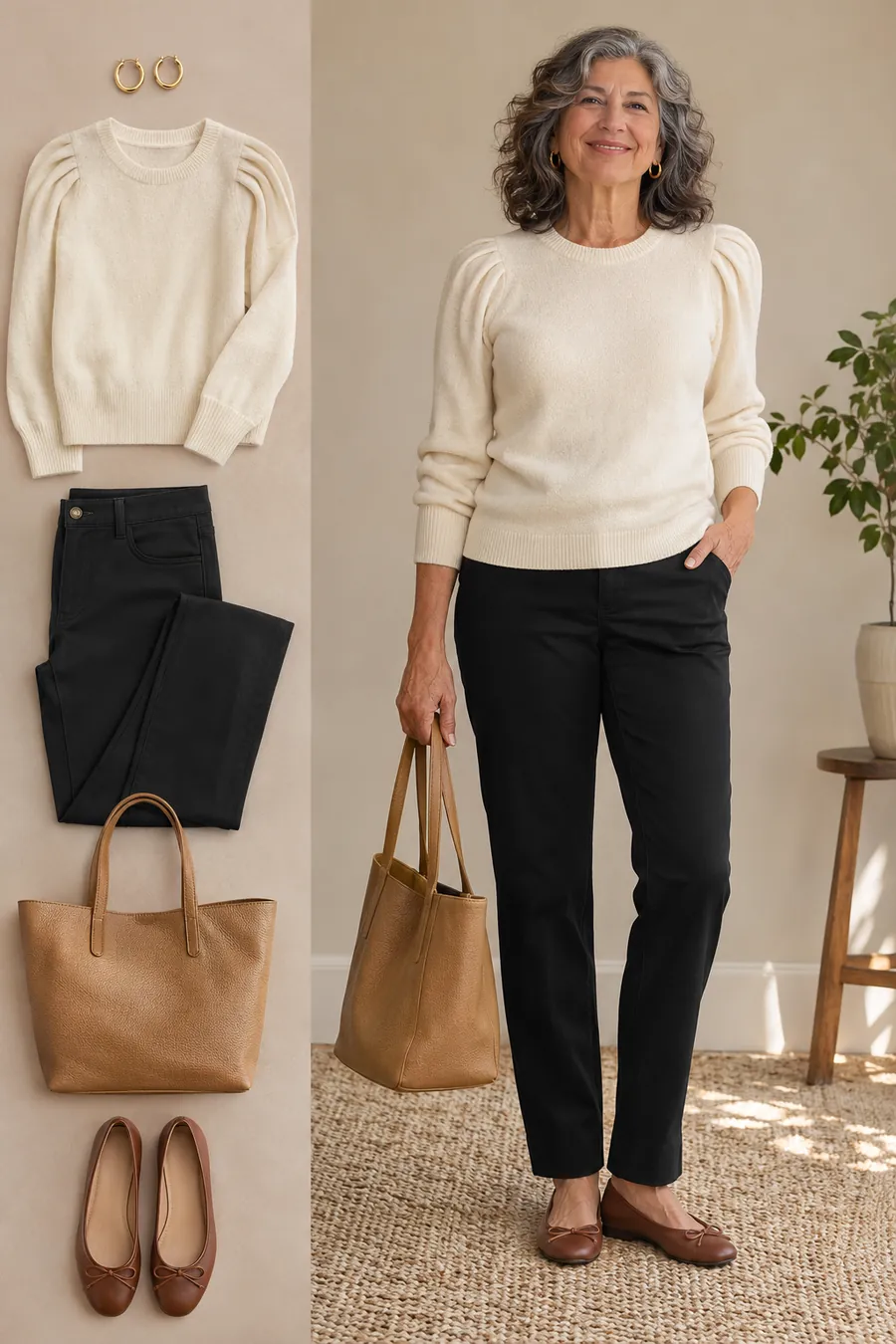
Try the same outfit three ways
Take a white shirt, dark jeans and brown flats. Wear it with the cuffs rolled and a tan bag for daytime. Add a black blazer for lunch where denim is welcome. For a weekend walk, use white canvas sneakers and a light cardigan. Check which change matters most to you, because that’s the version you’ll repeat.
If you want to shop, write down the change first: “My jacket drags the shirt out of shape,” for example. Then compare one lighter jacket or cardigan. A piece earns space when it works with at least two outfits you already wear.
Frequently asked questions
Can I make an outfit look fresher without shopping?
Yes. Start with an outfit you often wear and change the neckline, shoes or sleeve length. Take two photos in the same light. If one change makes the outfit work, keep the rest of the pieces.
What if I like wearing all black?
Keep the palette and vary texture. Use a matte knit beside a woven dress or add a bag with a different finish. If you want contrast, test a light tee or a brown accessory you already own.
Keep reading
25 everyday fashion tips · 12 rules for shopping for clothes · 30 wardrobe essentials
Leave a Reply