
This post may contain affiliate links. If you buy through them, we may earn a small commission at no extra cost to you. Read our disclosure.
When you’ve fallen out of the habit of getting dressed for yourself, even choosing a top can take longer than it used to. A smaller wardrobe exercise can help. Spend a few minutes each day building outfits that work for the calendar you actually have, then record which pieces make leaving the house easier.
For the first seven days, work from your own closet. Pick a morning or evening time you can keep, and use a phone photo or a line in a notebook to remember the result. The next eight examples show how to use the same process for situations like work, dinner or caring for grandchildren.
Affiliate disclosure. As an Amazon Associate I earn from qualifying purchases. AI-generated photos illustrate the ideas. The paid links lead to relevant Amazon product listings or searches for similar items. Check the color, fit and size on the listing.
In this post6 sections
Find a place to start
| Situation | What to try | What to check |
|---|---|---|
| Monday to Tuesday | Establish one everyday outfit and try sitting in it | List the first thing you adjusted |
| Wednesday to Friday | Add a layer, one accent and a repeat outfit | Notice which combination worked away from the mirror |
| Saturday to Sunday | Dress for the schedule and save three useful observations | Put tomorrow’s outfit beside the door |
Seven days to build a more dependable outfit rotation
1. Open-closet Monday
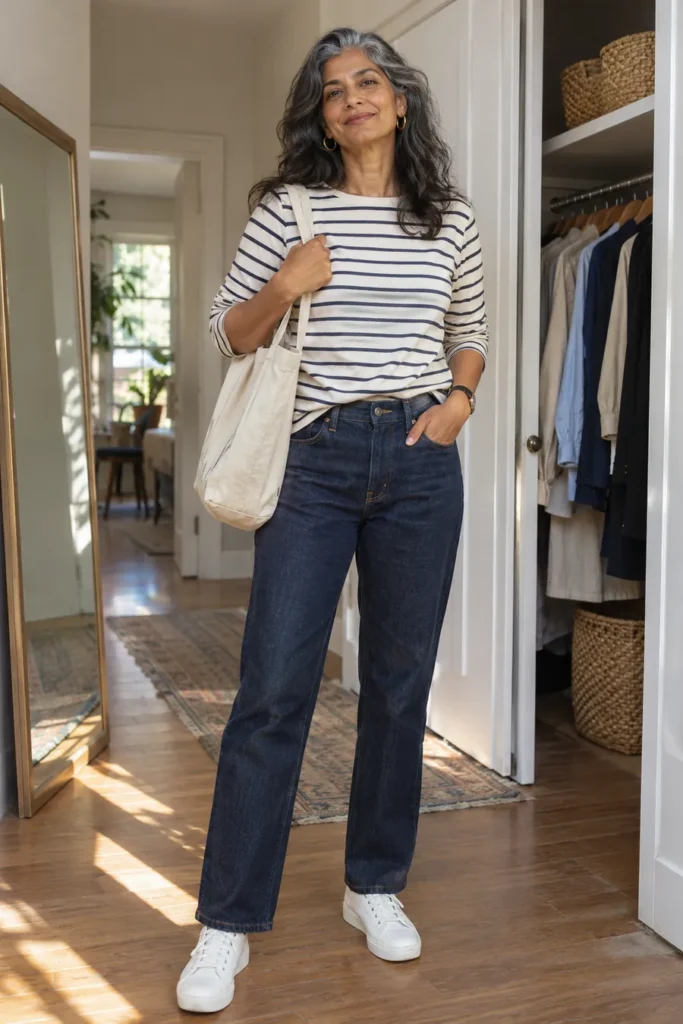
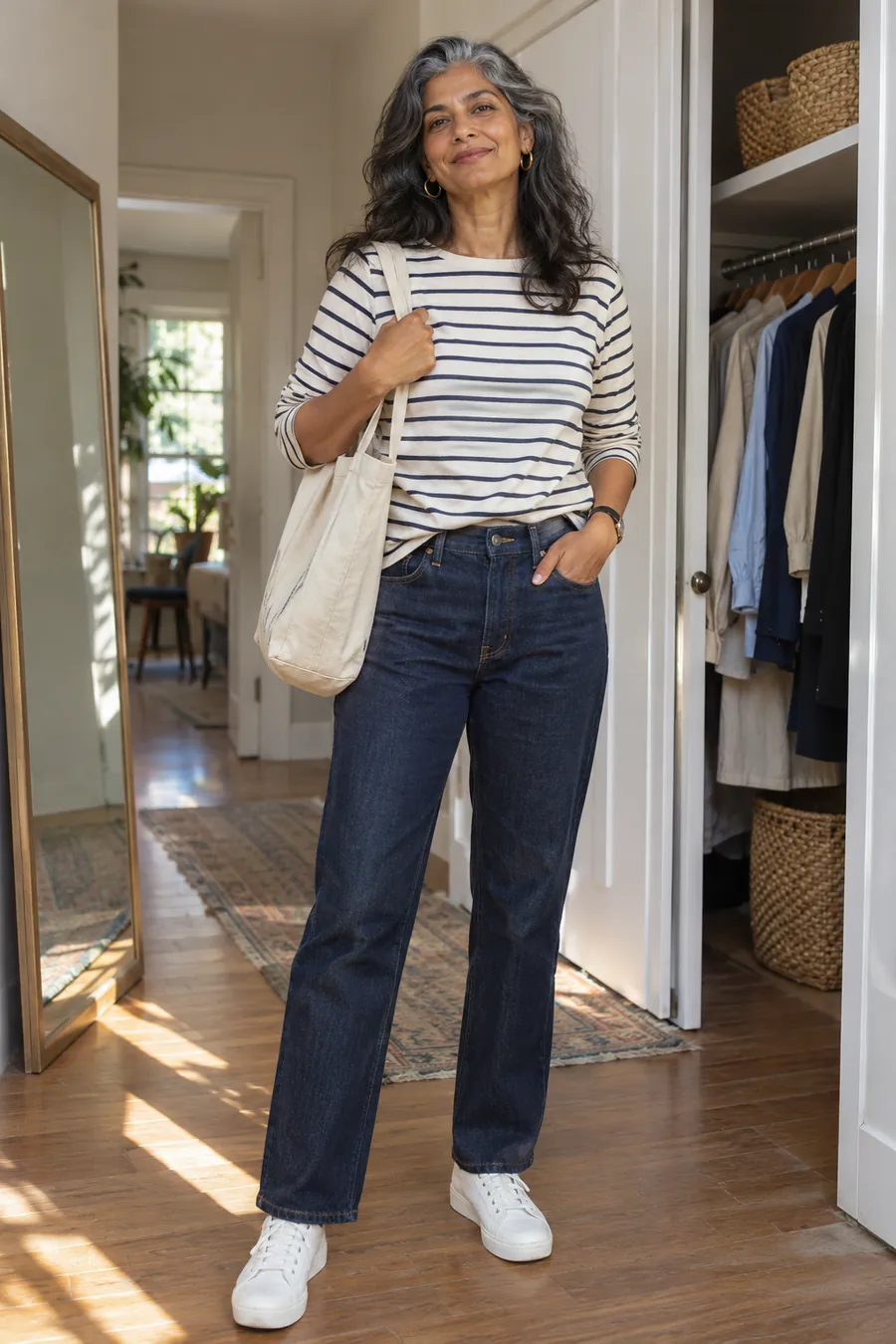
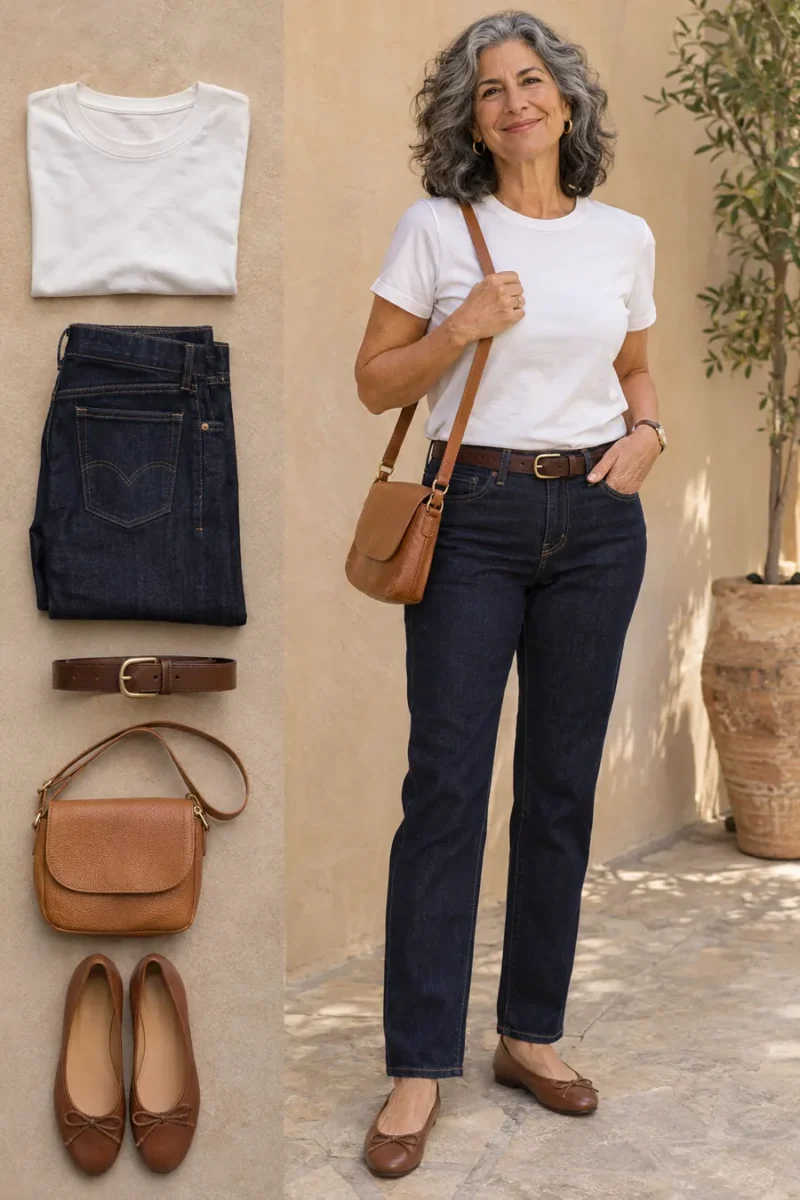
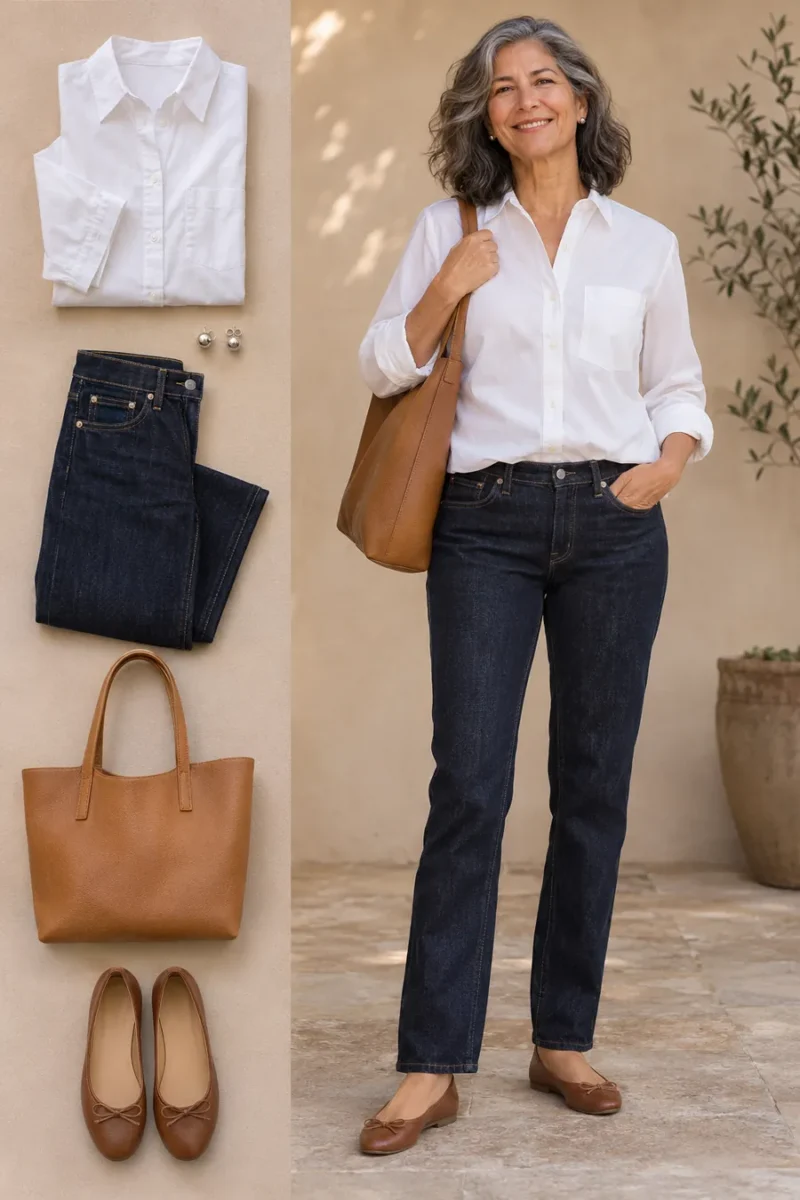
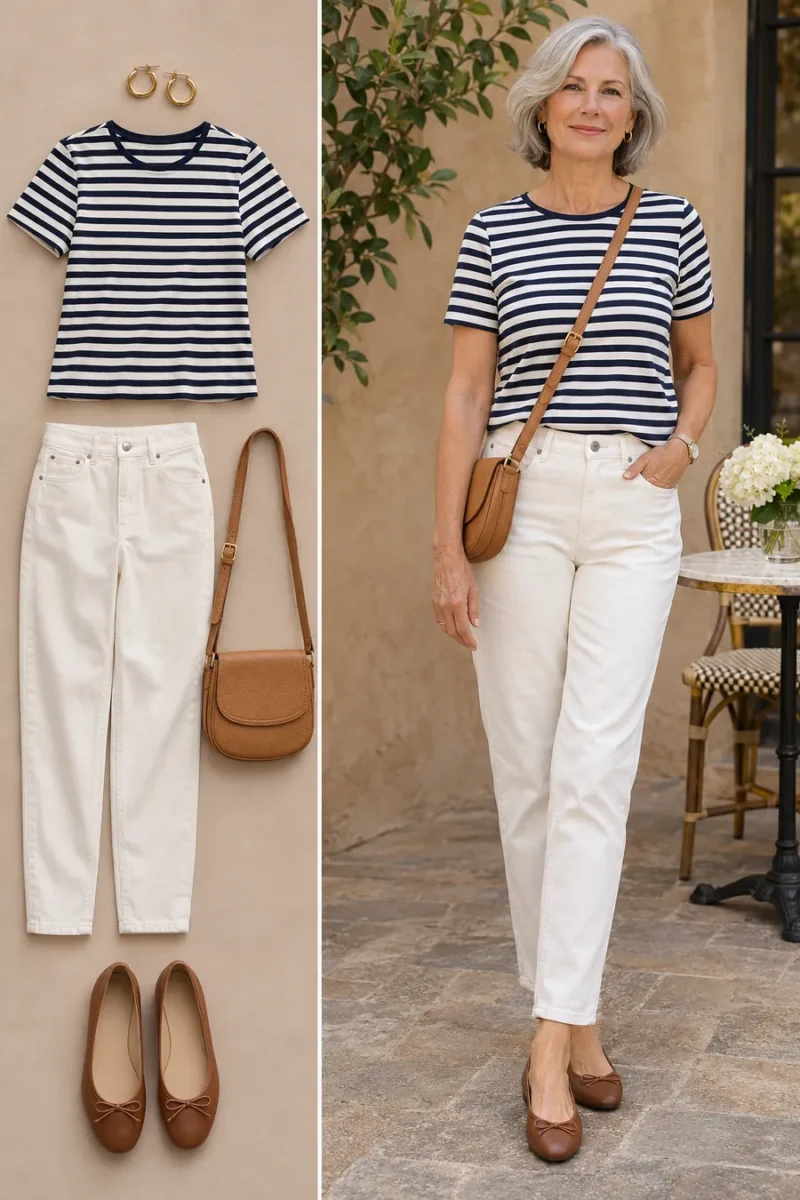
Put on the outfit you already reach for and change one element at most. A narrow stripe with indigo jeans is a good starting point because the two pieces are easy to identify in the closet and work on an ordinary morning. Take a quick full-length photo in the same shoes you’ll leave in. Write down what made this easy to wear, whether it was the sleeve length, familiar shoes or a bag you could carry hands-free. You’re collecting instructions for tomorrow.
2. A sitting test for Tuesday
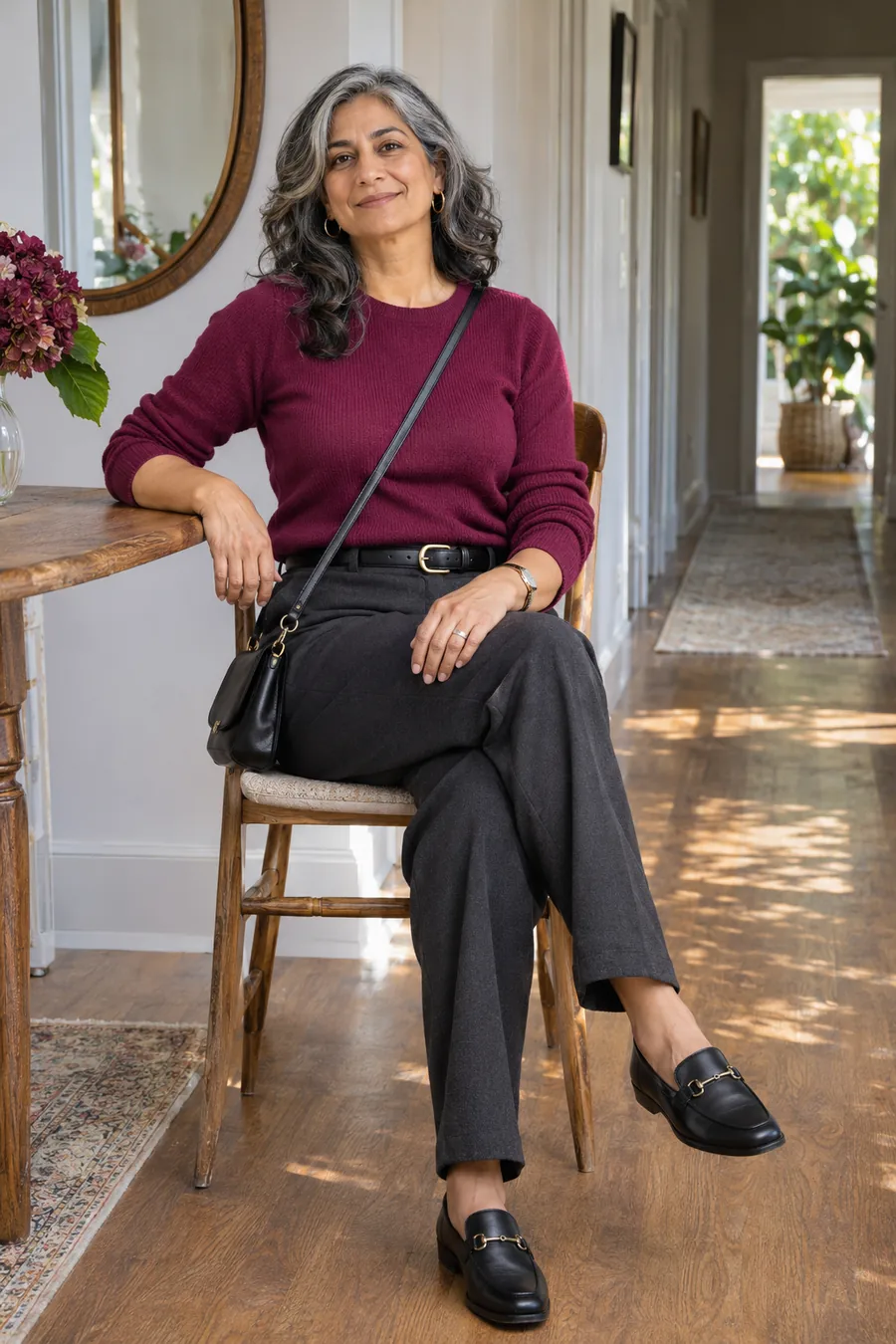
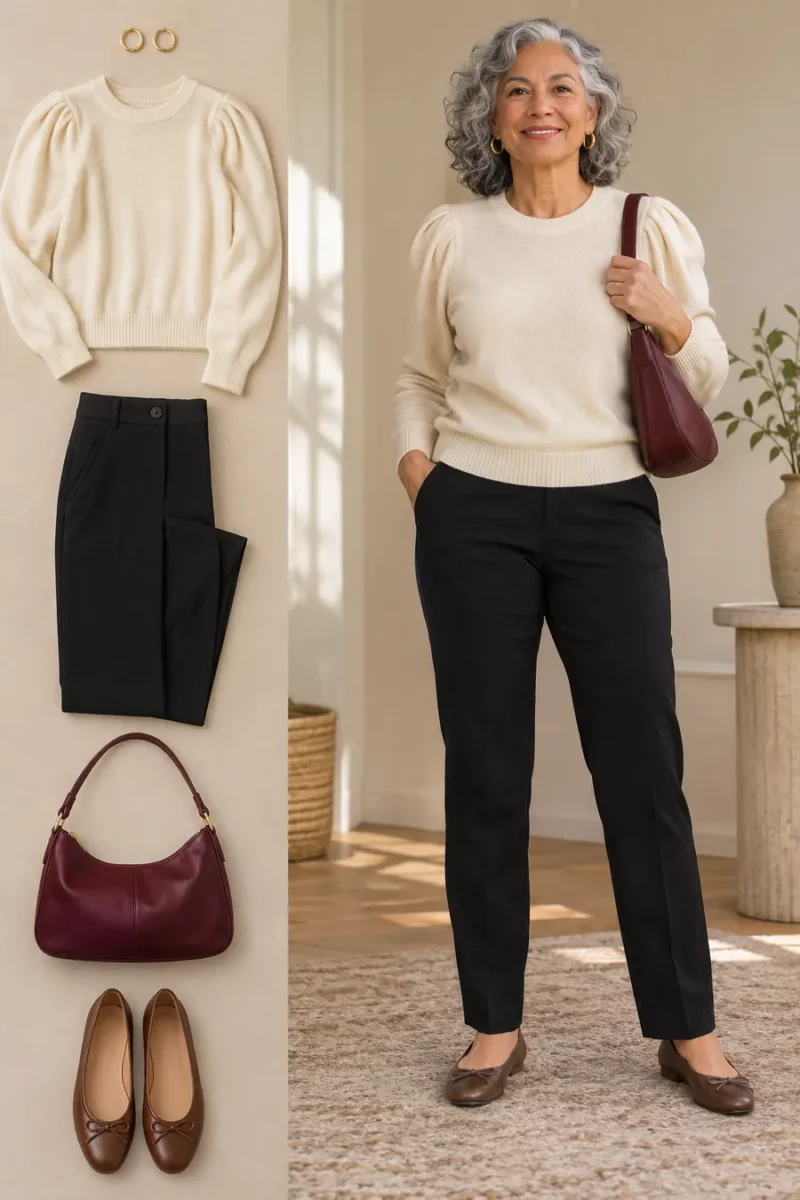
Wear the ponte trousers for breakfast before deciding they belong in your rotation. Sit in a dining chair, reach forward as if picking up your phone and get up without pulling the fabric back into place. If the black belt looks good but digs in, put it aside and check whether the waistband holds on its own. Keep the berry top if you like the color. Fit problems are easier to solve when you know which piece caused them.
3. A layer for Wednesday
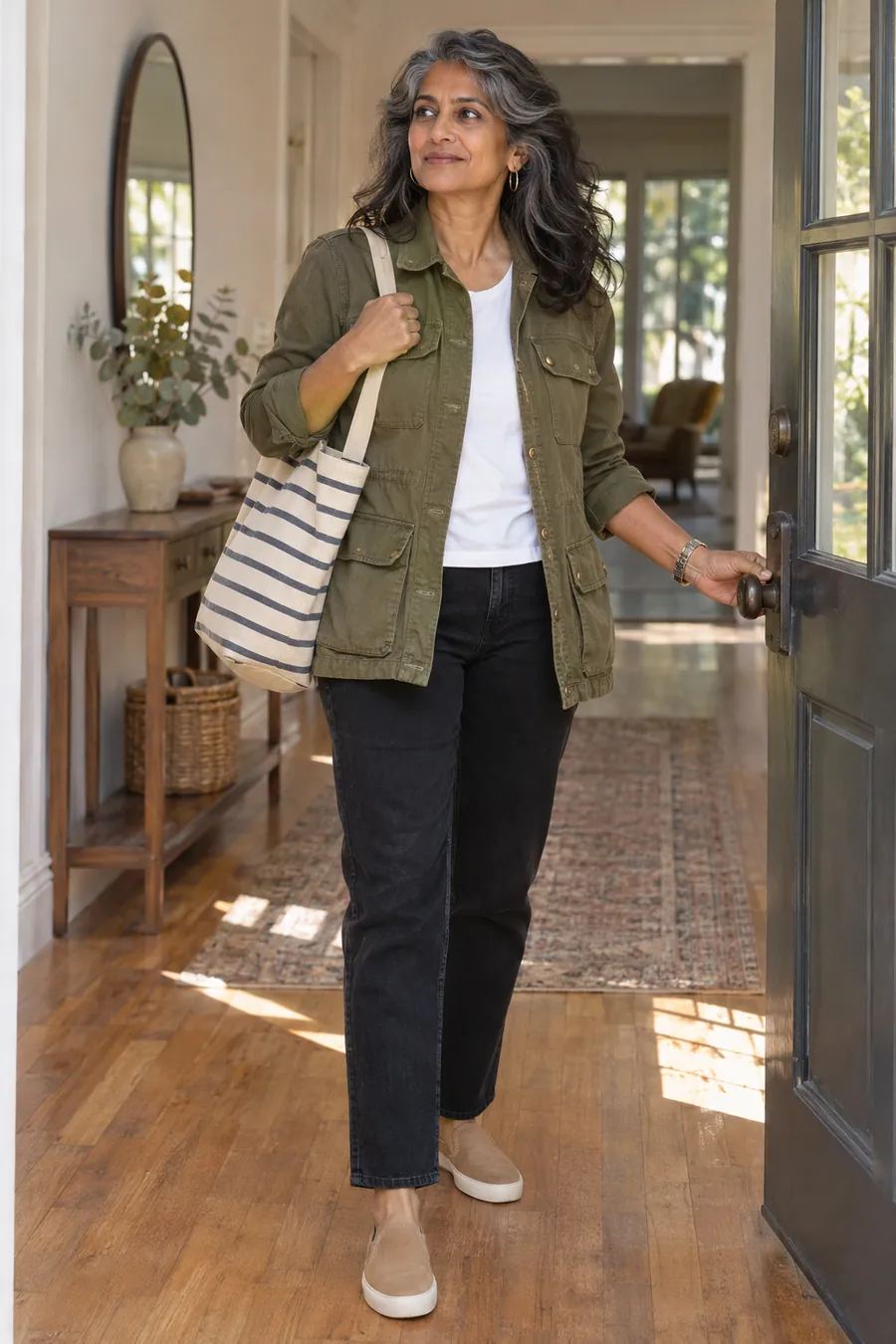
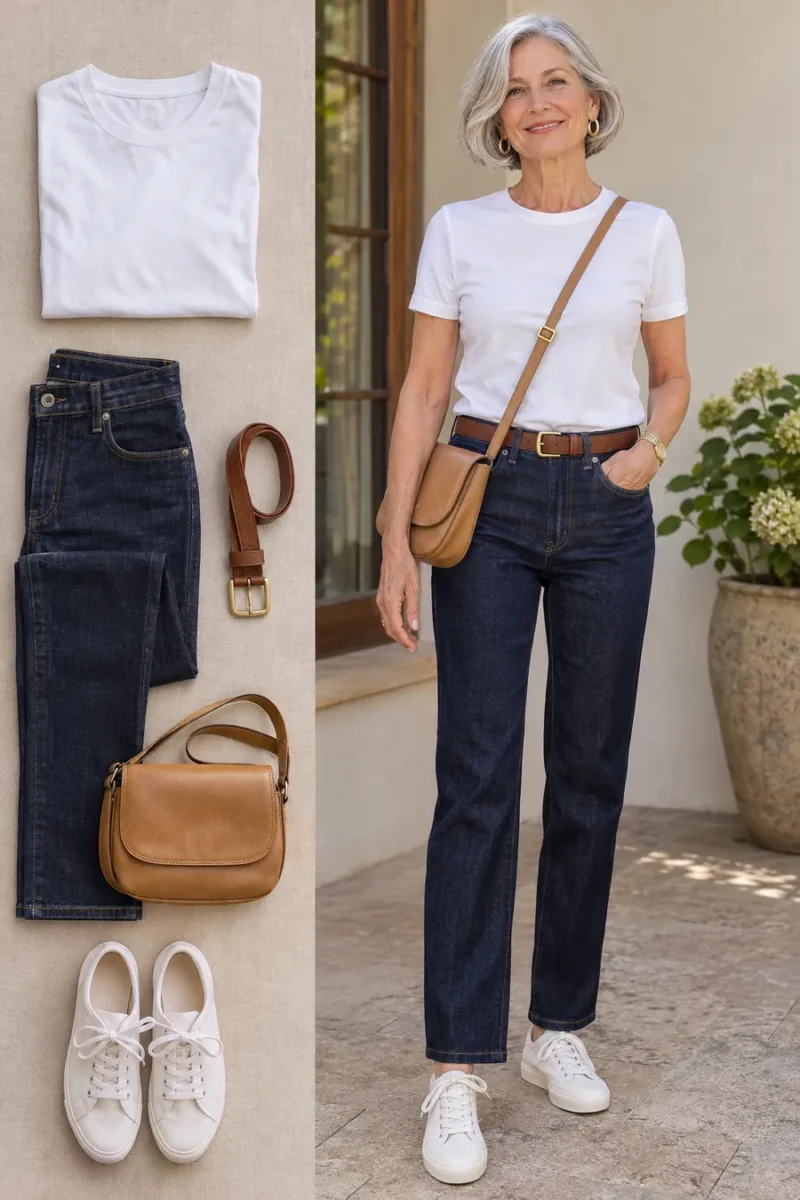
Start with the tee and jeans, then try the utility jacket open and closed. Open may feel easier if you spend much of the day indoors. Closed may be better for a walk in a breeze. Put your phone in the pocket you actually plan to use and see if the front twists. If you carry more than the jacket can handle, put those items in your striped bag and leave the pockets clear.
4. One personal touch on Thursday
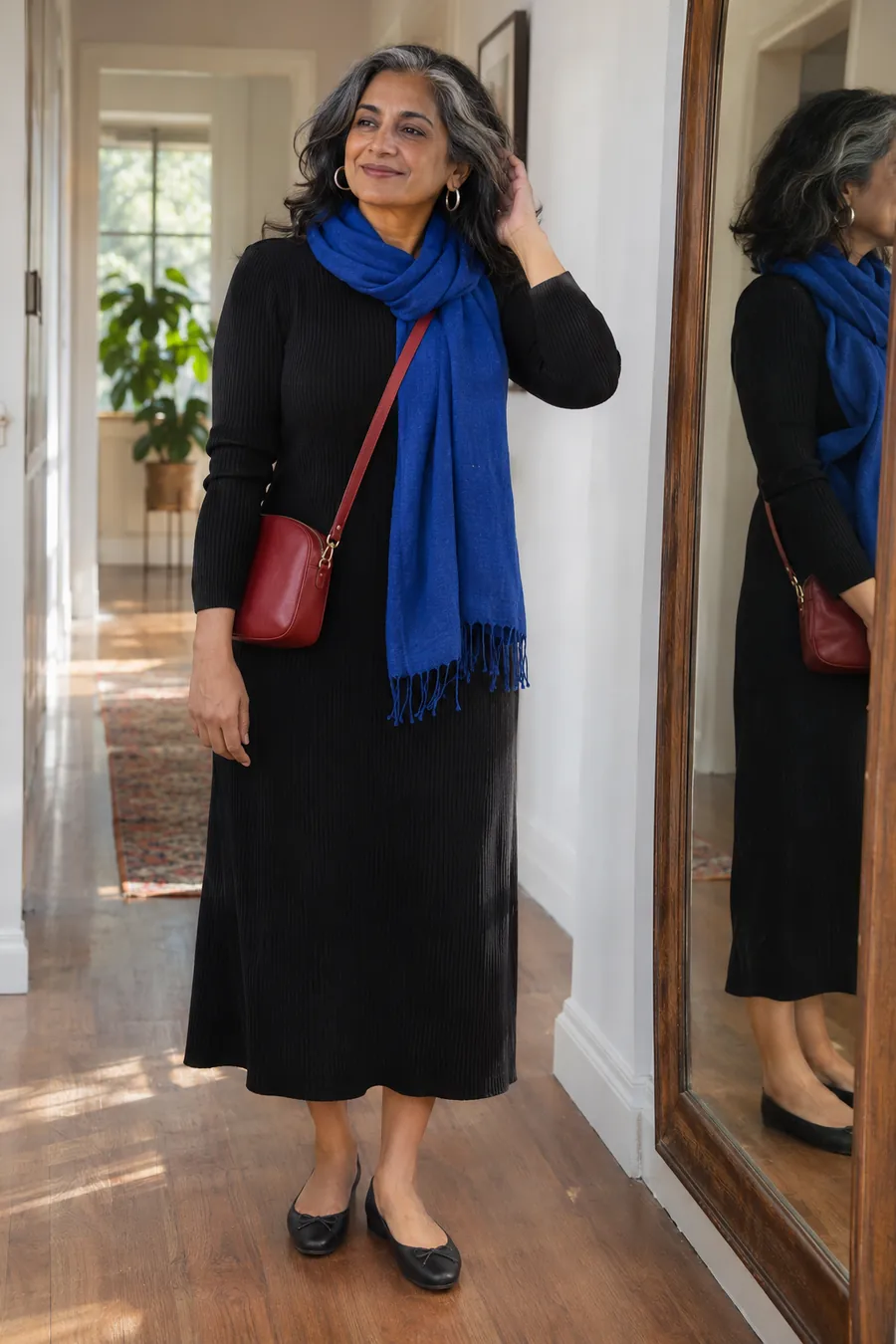
Choose one detail that reminds you of an outfit you loved before getting dressed began to feel like work. A cobalt scarf works beside a plain black knit dress because it stays visible in a coat and is easy to take off. You might choose silver hoops or the red bag instead. Take two pictures under the same light and keep the version you would happily wear out the door.
5. Friday’s repeat outfit
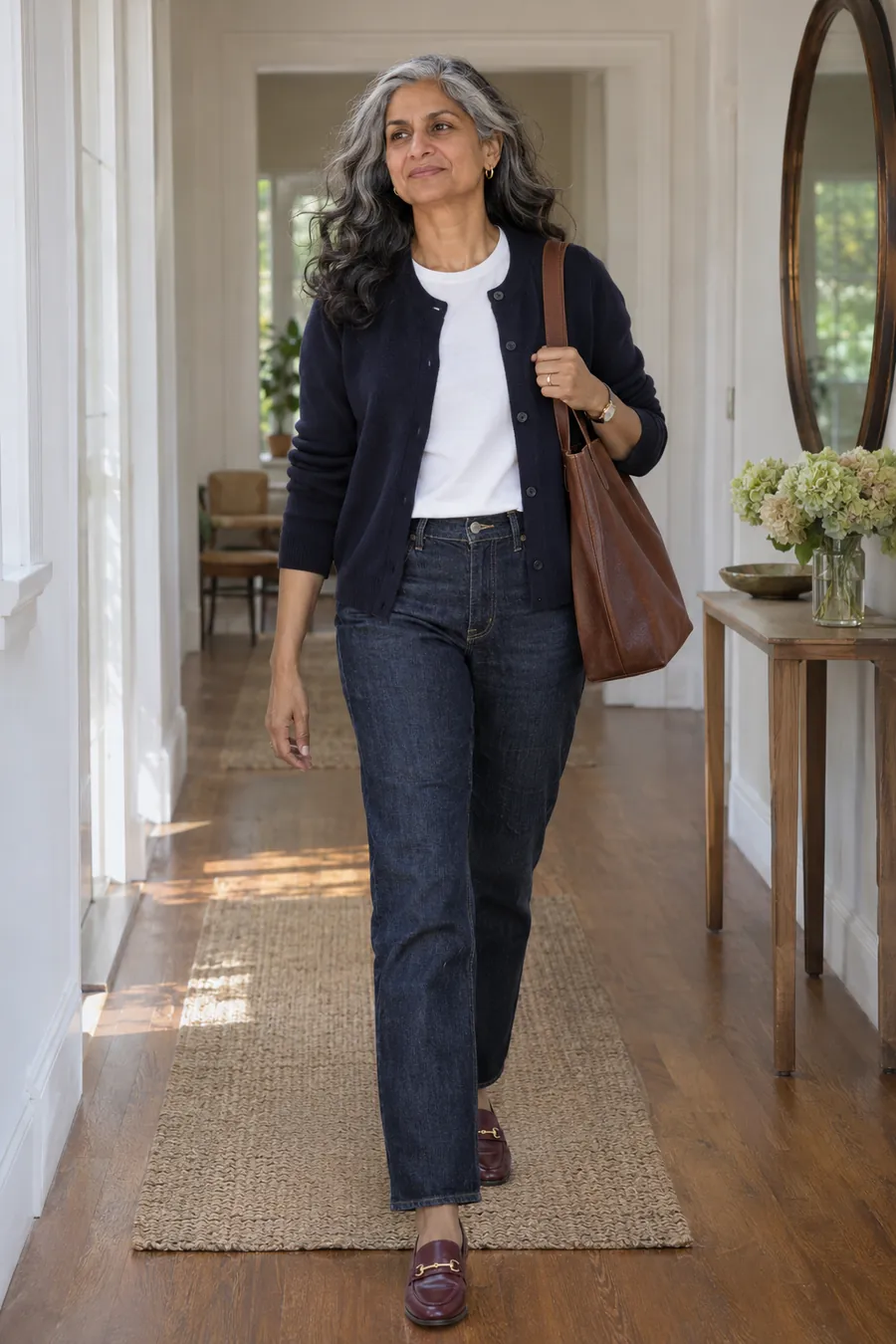
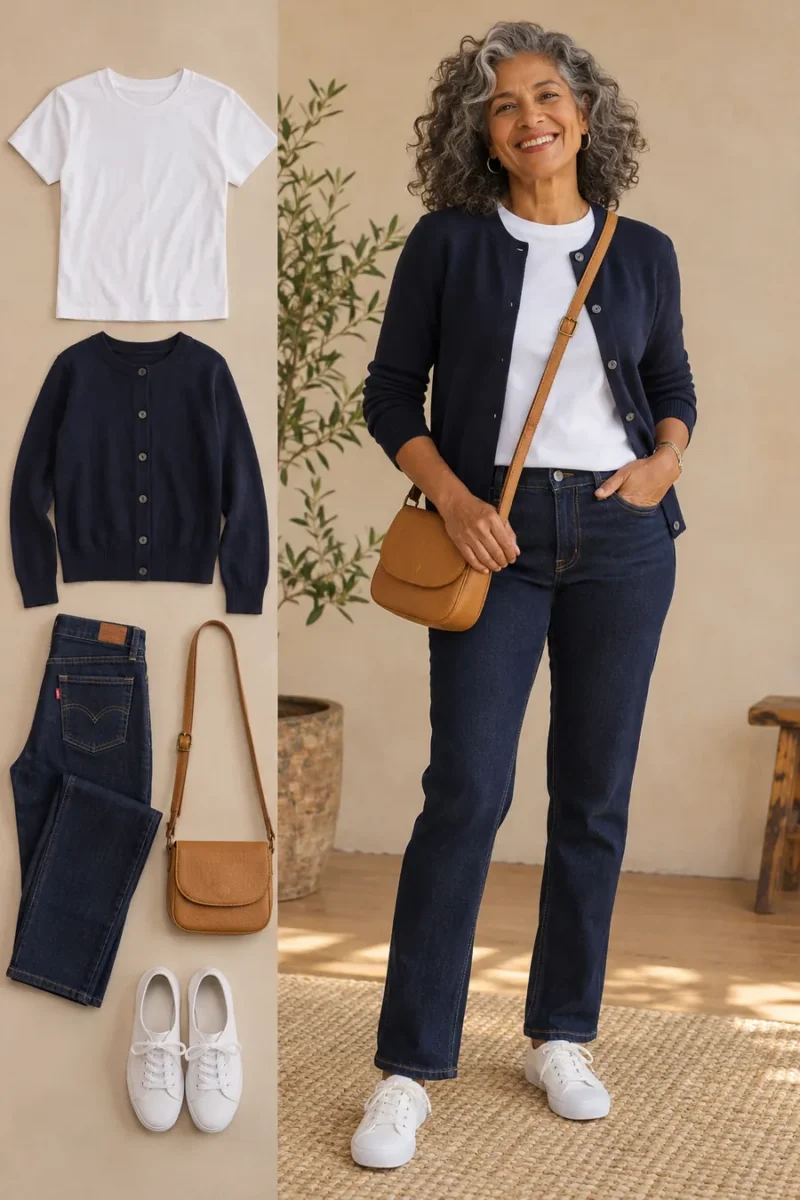
Repeat Monday’s jeans with the navy cardigan, white tee and burgundy loafers. Use the same outline if jeans worked for you, or repeat the trousers that passed Tuesday’s sitting test. Repeat the pieces you like with a purpose. If the cardigan was warm enough for the bus but fine at your desk, write that down. It tells you more about what will work next week than the outfit photo alone.
6. Dress for Saturday’s calendar
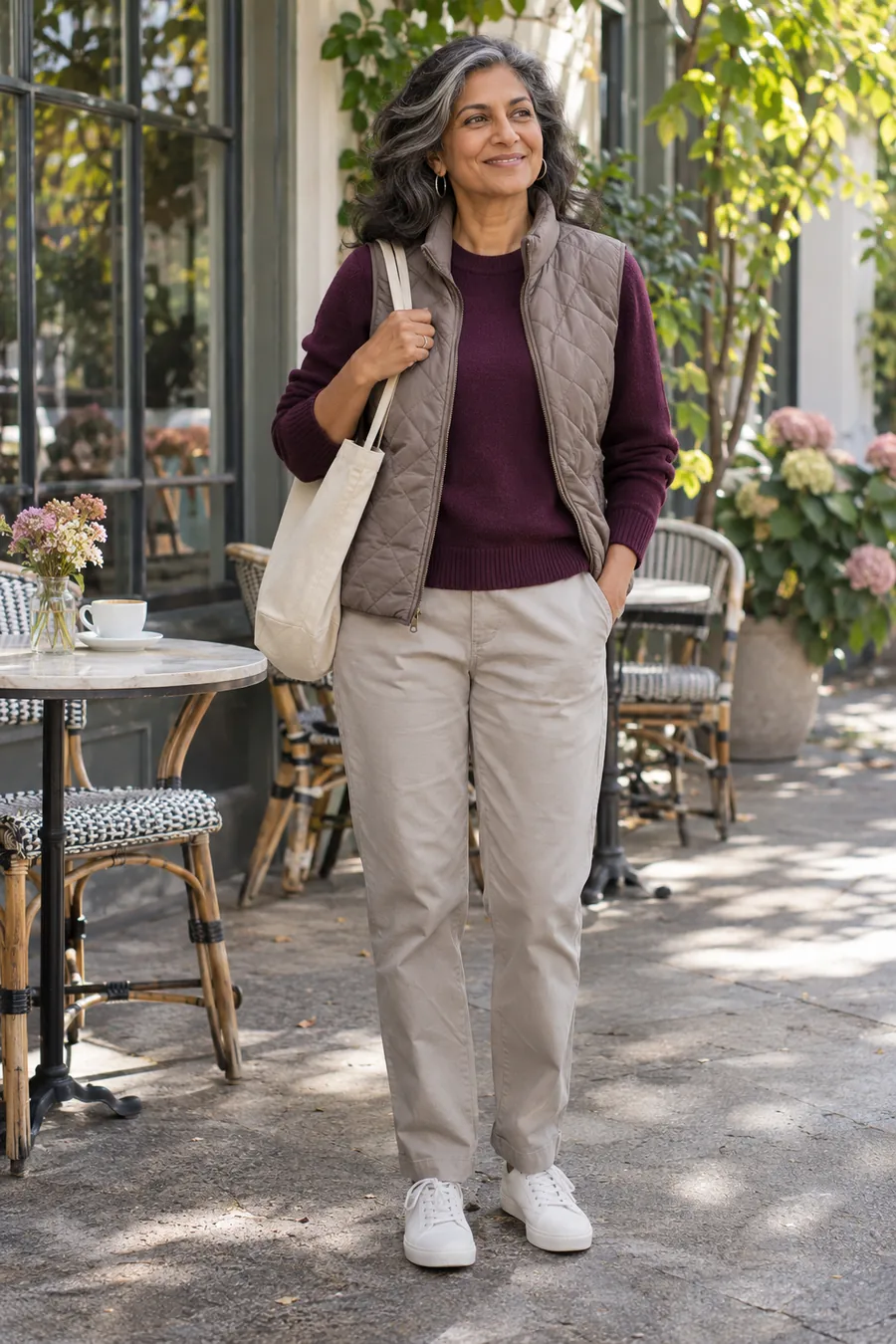
Pick your clothes after writing down where you’ll be, how long you’ll stand and what you’ll carry. A quilted vest leaves more freedom to reach than some heavier coats, which can help if you’re shopping or moving around at an outdoor event. Try the vest over the plum sweater and check whether your arms can move comfortably. Bring the same tote you normally use so you can test the strap over both layers.
7. Sunday’s outfit notes
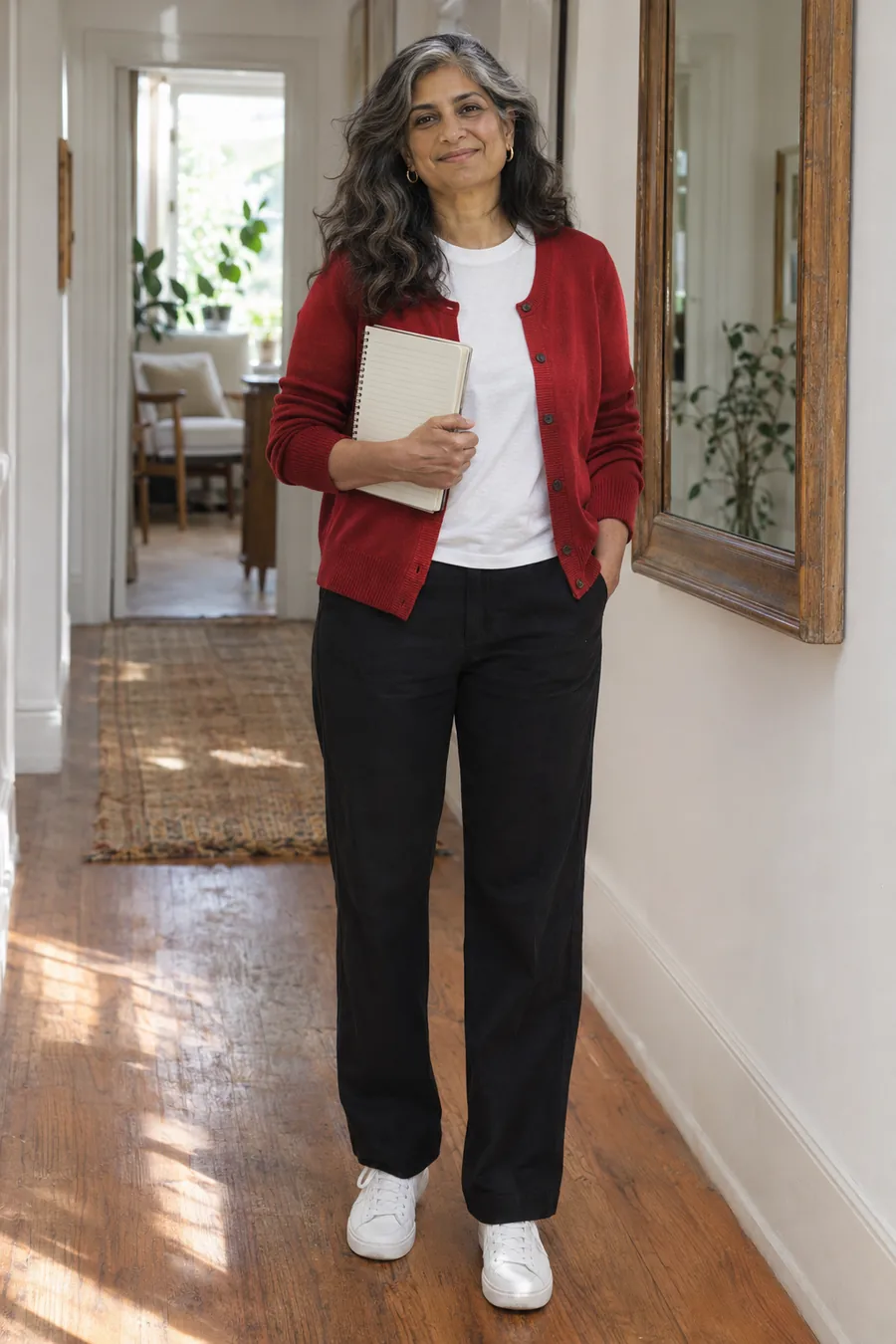
Look back at the week and note three things: a pair of shoes that stayed comfortable, an outfit you would repeat and a change you want to try. Store the picture in an album labeled with the actual situation, such as Friday errands. Leave tomorrow’s outfit where you can see it. The red cardigan is optional. The point is to record what helped you get ready on a real day with your real schedule.
Eight ways to use the reset in real life
Two blouse options
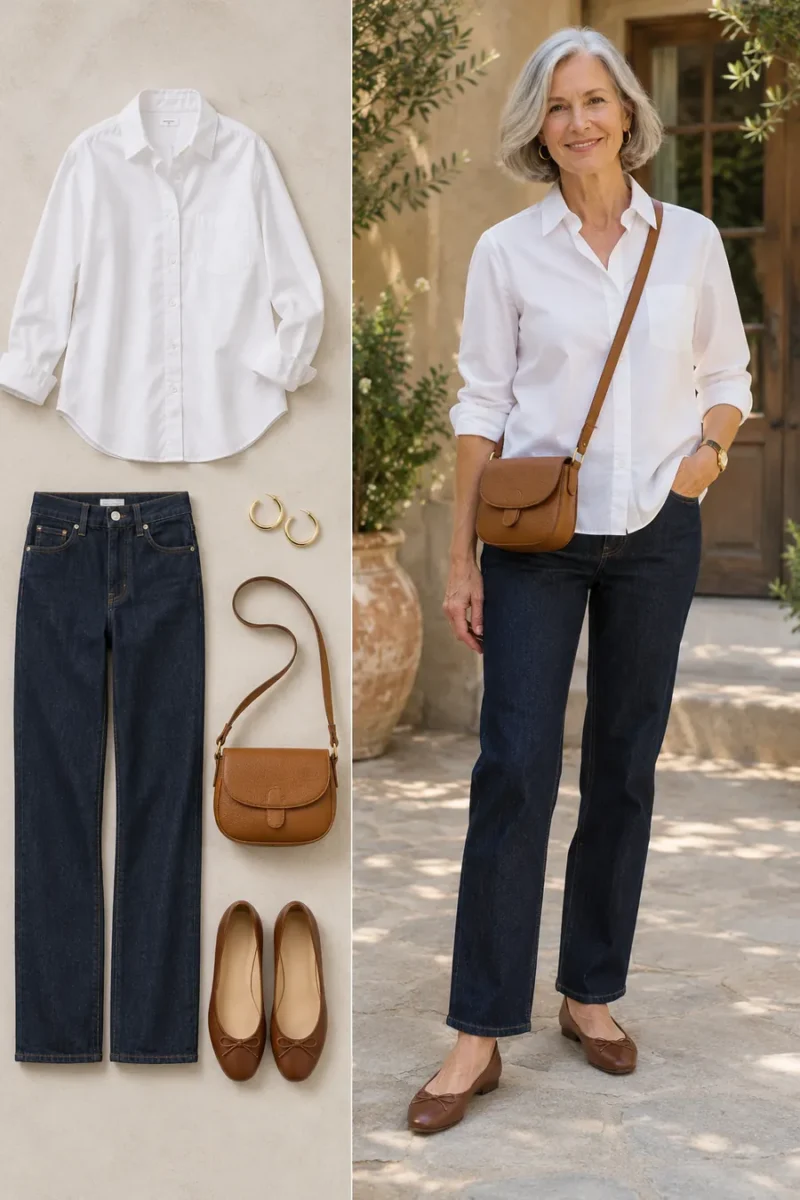
Set the ivory popover and chambray shirt beside the same black trousers. Wear each with the brown loafers for a minute and see which hem sits better at your natural standing posture. Then sit to check for gaps at the front. Keep the shirt you can move and breathe in comfortably, and write down the difference in plain words. For example, “Chambray works when I roll the cuff once.”
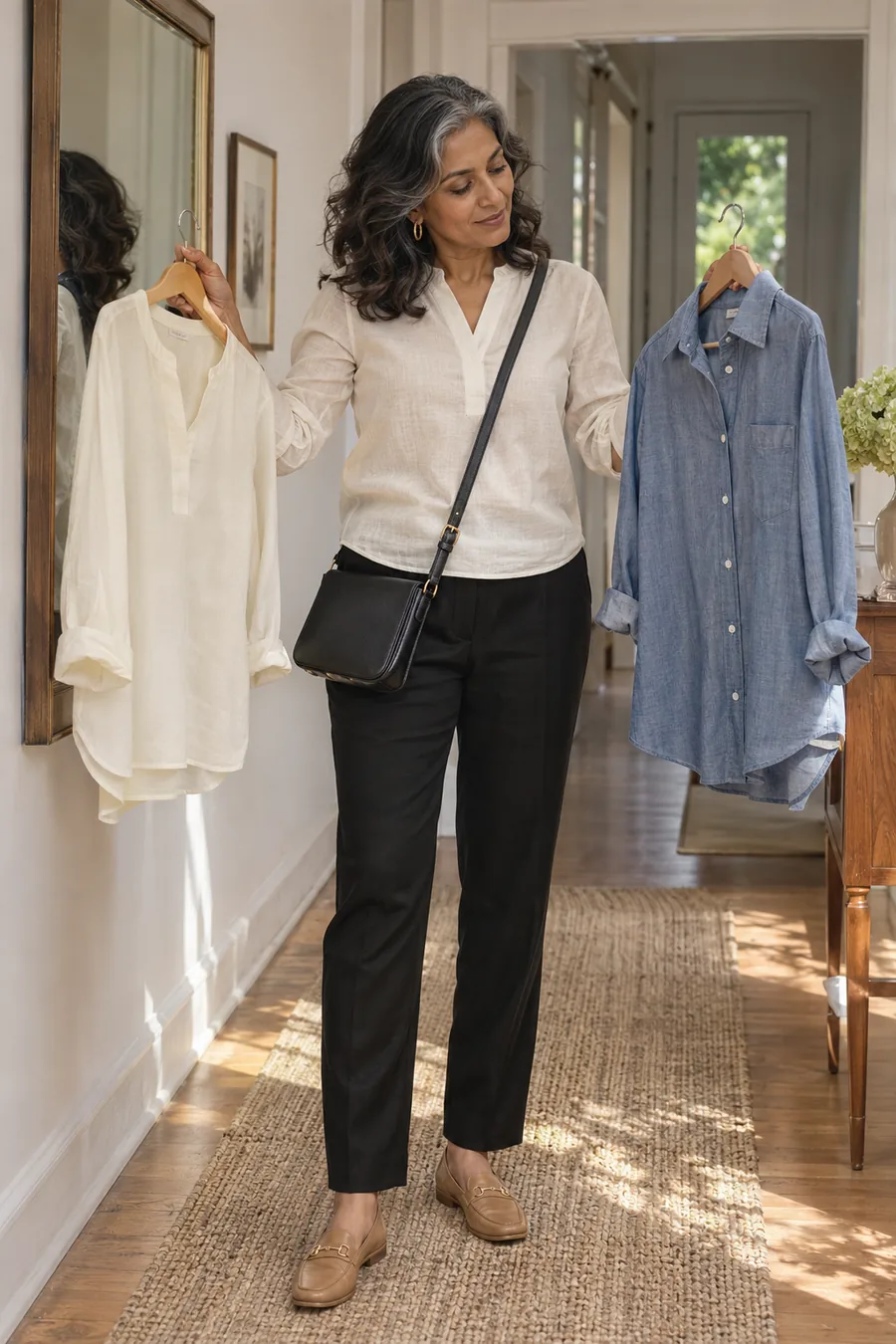
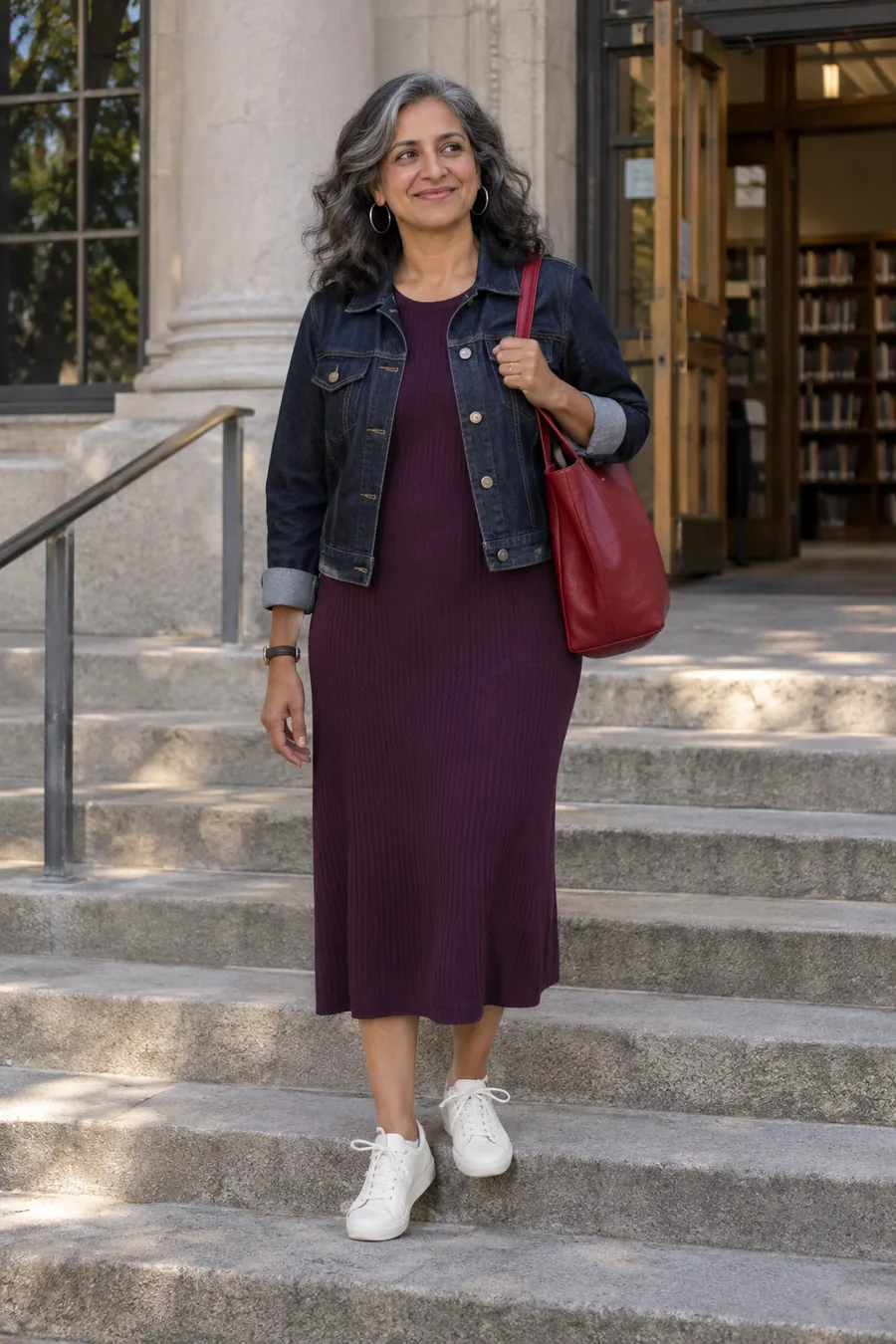
First outing after a break
Choose an outing you can keep short, like returning a book or stopping for coffee. A denim jacket can give a knit dress some structure while sneakers keep this outfit useful for walking the few extra blocks you might decide to take. Use a tote you already know fits the book or package. When you get home, note whether you thought about the clothes during the outing and what you would adjust next time.
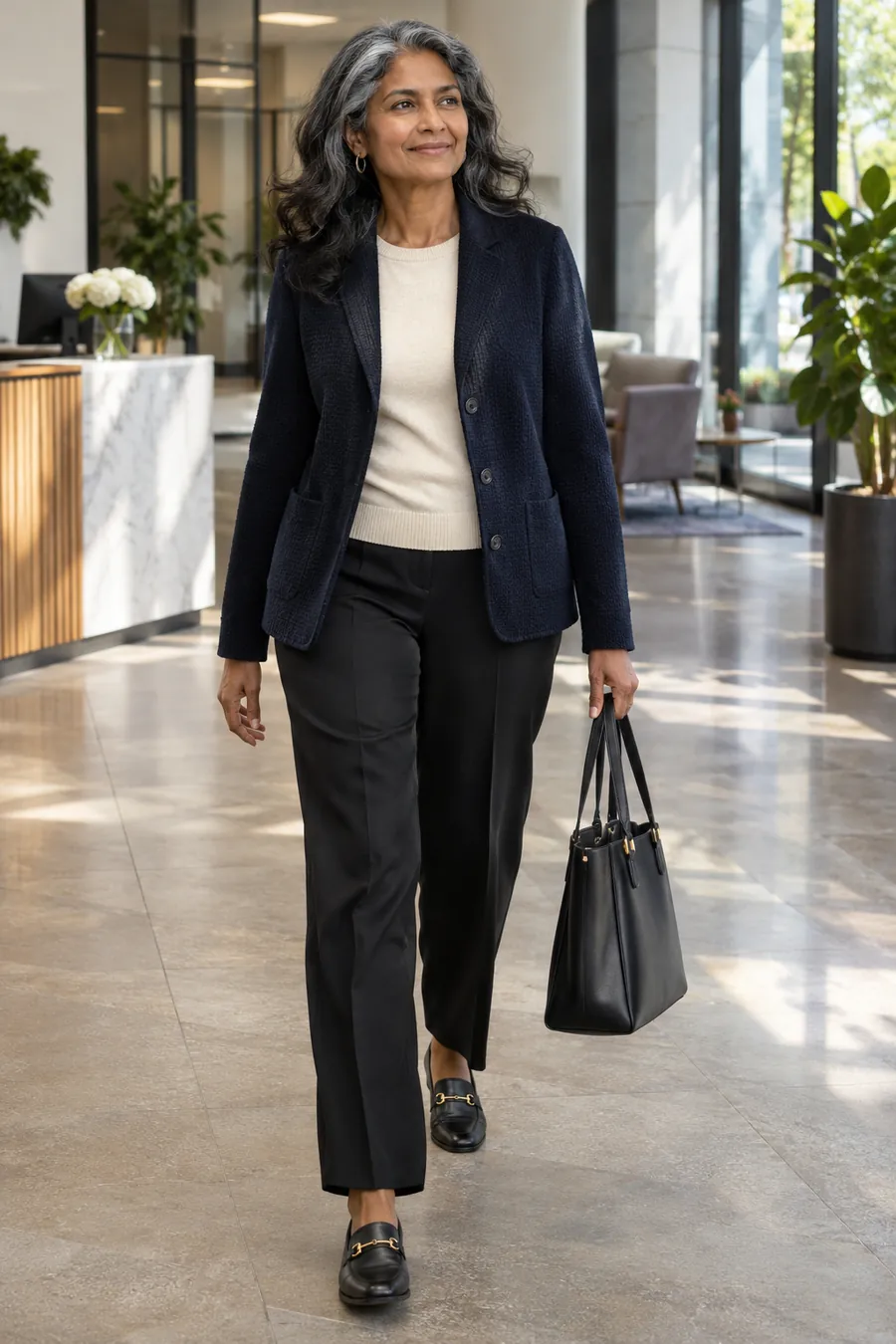
Returning to the office
Start with the trousers and shoes you know work on your commute. Add a cream shell and knit blazer at home, then try your work bag over the jacket. If the shoulder catches when you reach forward, see whether one thinner layer underneath helps or whether you need a different cut. Store this combination as your desk-to-meeting outfit so you can retrieve it on a busy morning.
Afternoon with the grandchildren
Try the striped tee and olive joggers with the shoes you can stand in and the jacket that fits into the bag. Bend to pick up something from the floor and walk a lap of the house. If the waistband needs constant adjustment, swap in a straight pair with a different rise. A crossbody zipped before you leave keeps hands free for the moments when everyone needs something at once.

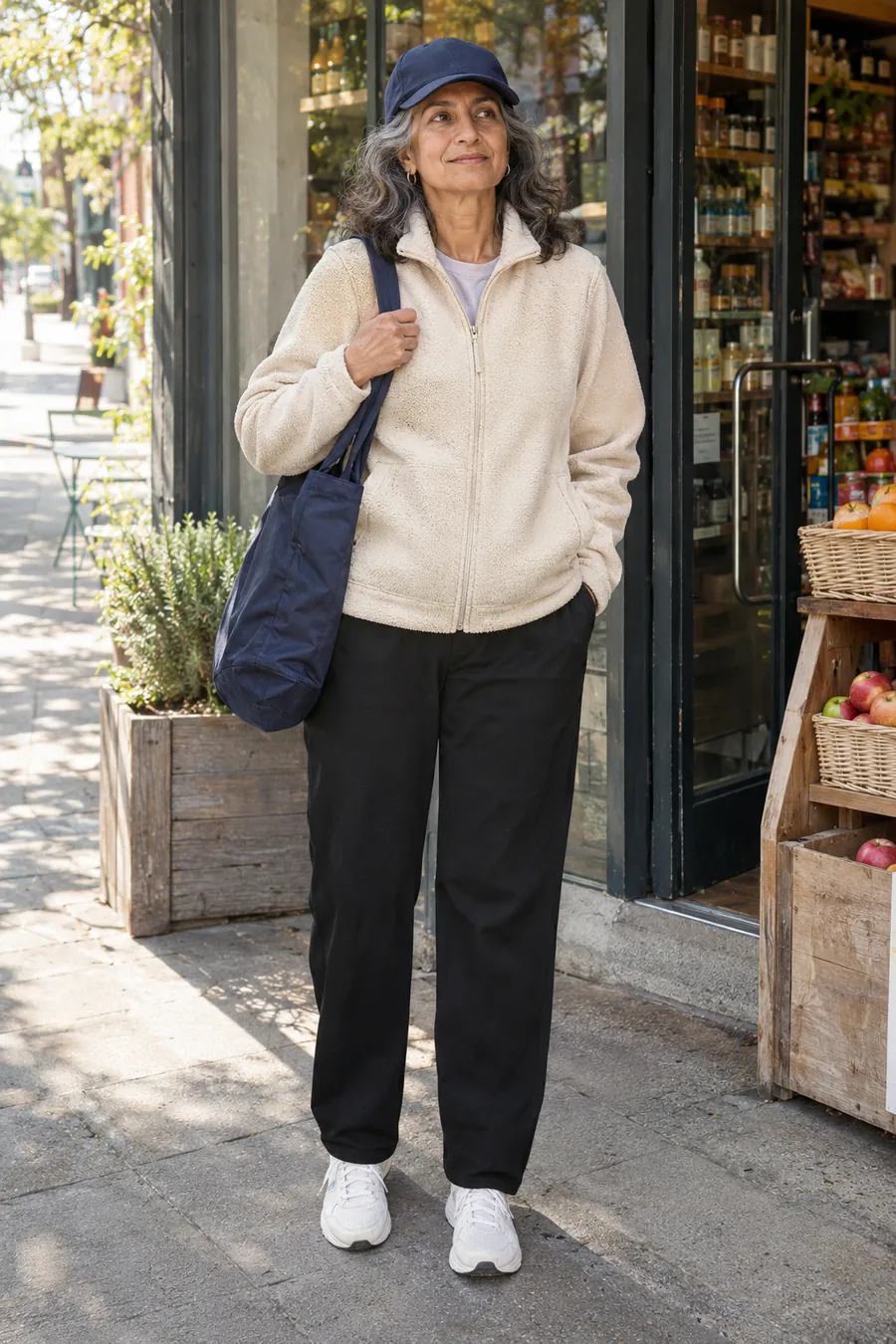
Low-energy errand outfit
Choose the shortest combination that covers the trip: a fleece to get out the door, soft trousers and shoes you’ve already worn. Slip the cap and tote by the door the night before when you can. If your plans change and involve sitting in a café, open the fleece to show the top underneath. The useful test is how easy it is to get dressed again next time the day starts this way.
A casual dinner with friends
Wear the teal blouse for 15 minutes at home with the jeans before deciding on shoes or jewelry. Try sitting down and leaning forward as at a table; smooth the blouse once and notice whether it stays there. A small clutch makes sense when the trip is short. If you need glasses, phone, keys and more, choose the crossbody that fits them all, then keep the necklace as your polished detail.

A warm-weather reset
Use a linen shirt as a light layer over an olive tank and choose trousers with room to move. Test the pale fabric in window light before you leave, especially around the knees and pockets. Pack the straw tote only if it’s comfortable with what you intend to carry. During a longer walk, use the sandals you already know can handle the distance.

A cold-morning reset
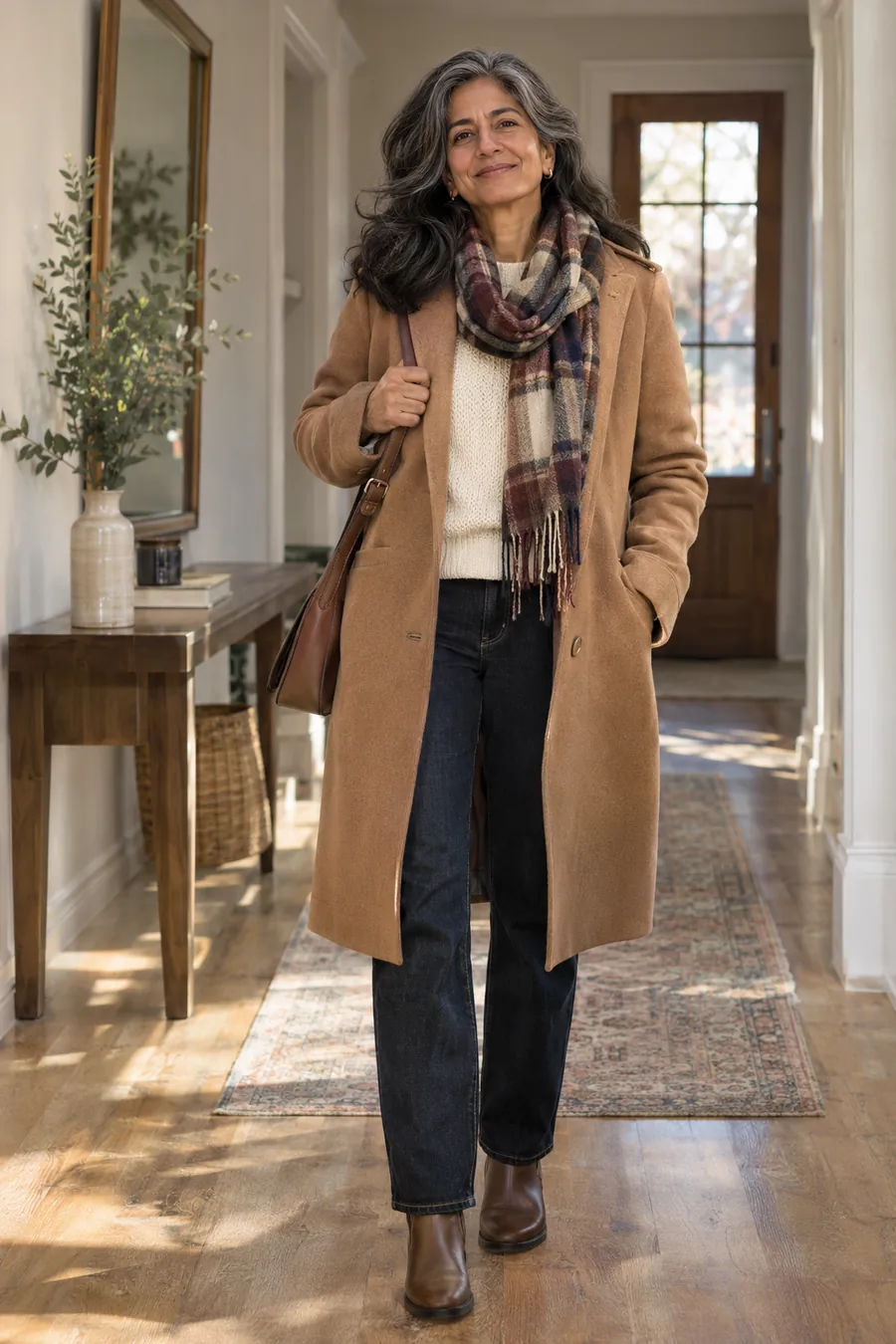
Wear the cream sweater under the coat and wrap the scarf once, leaving space at the neck so it doesn’t force your shoulders up. Try the jeans with the ankle boots you plan to wear before you decide on a cuff. Take several stairs at home. If the hem catches above the boot every time, switch to a slightly shorter or wider jean hem. Leave the finished outfit together for the next cold morning.
The note to keep on your phone
Save the date, where you wore the outfit, which shoes you used and what you’d change. Start with three photos that match the situations you dress for most often. When a rushed morning comes, look up the situation instead of paging through every photo in the gallery.
If you decide to buy something after the reset, describe the problem first. “A dark layer I can drive in without pulling at the shoulders” gives you a useful fitting test. Bring a top you already wear and try both pieces in a chair before you commit.
Frequently asked questions
What if I miss a day?
Pick up at the next exercise you can use. There is a specific purpose for each try-on, and you can use one outfit for two days.
Should I clean out my wardrobe first?
You can begin with a small group of clothes you actively wear. Put each finished combination back together. Sorting the rest can wait until you have evidence about what works.
Can I do this without taking photos?
Yes. Use quick notes such as ‘olive jacket open, white tee, flat shoes, comfortable for the library.’ Write down what you wore and how it worked.
Keep reading
Day 11 guide to dressing with confidence · Find your personal style over 50 · Fix common clothing fit problems
Leave a Reply